The central artery of National Chengchi University, Shiwei Boulevard (四維道), usually hums with the quiet footsteps of students rushing to the Dah Hsian Seetoo Library. However, since the semester began, that academic silence has been replaced by a festive roar. We’ve seen a revolving door of energy—three distinct markets in the first half of the semester alone, each transforming the campus for three days at a time. This frequent burst of commerce has earned NCCU a new, unofficial title among the student body: “Market University” (市集大學).
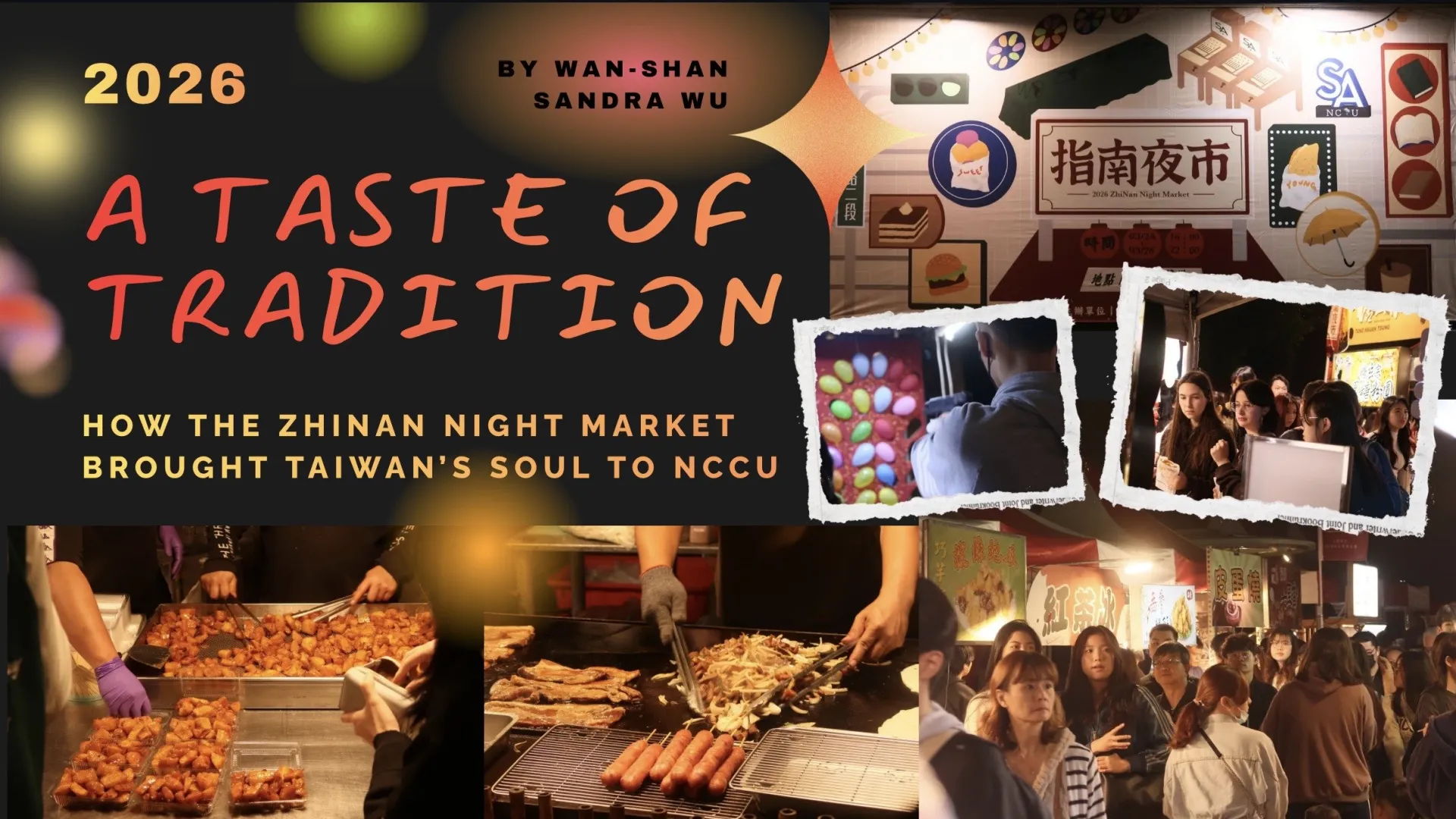
While previous weeks showcased handmade accessories and artisanal desserts, last week’s event was a total game-changer. The Zhinan Night Market (指南夜市) arrived, transplanting a 100% authentic Taiwanese experience directly onto our campus. It was a staggering sight. Organizers managed to bring the entire infrastructure of a city night market to our very own doorstep. The space was brought to life with the red-and-yellow signage, the rhythmic clacking of spatulas, and the high-pitched bells of gaming stalls.
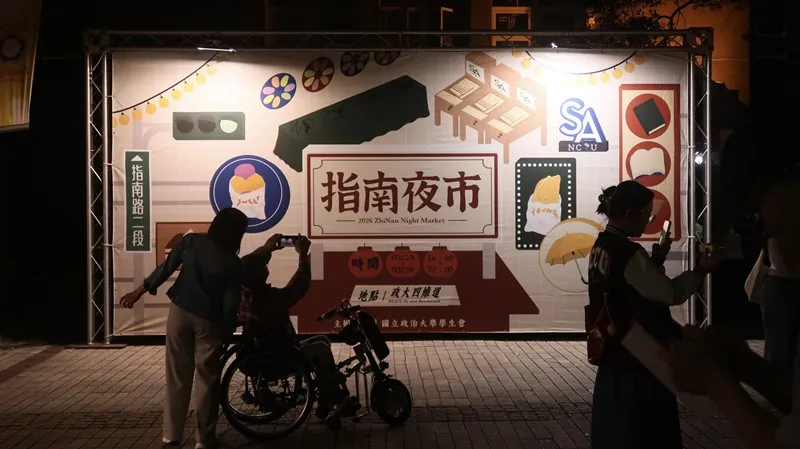
▲A commemorative backdrop in front of Shiwei Hall welcoming students to the 2026 Zhinan Night Market, organized by NCCU Student Association (photo: Sandra Wu)
A Bit of History
Taiwan’s night markets didn't start as the massive neon-lit hubs we see today. Historically, they began as small gatherings near temple gates or river wharfs where people naturally congregated. In the 1950s and 60s, these markets were the go-to spots for migrant workers to socialize and find affordable meals. Over the decades, they transitioned from "hole-in-the-wall" setups to centers of popular culture, yet they never lost their humble soul.
Bringing this culture to NCCU aligns perfectly with the Taiwanese spirit of "Small but Mighty” (小而強大). While these markets may appear to be nothing more than temporary stalls, their impact on a community’s social fabric is profound—seamlessly weaving culture, commerce, and connection into a single, vibrant experience.
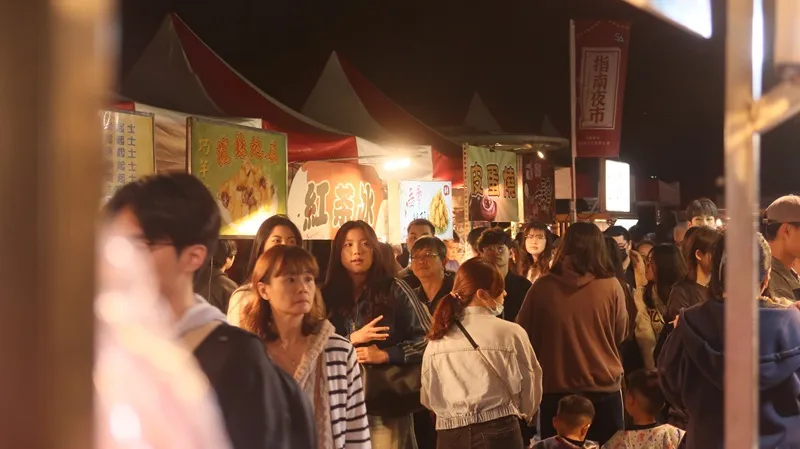
▲Brightly lit stalls and red-and-white tents create a festive atmosphere, drawing students and nearby residents in for this unexpected nightlife on the usually quiet campus (photo: Sandra Wu)
A Sensory Map of the Boulevard
Walking onto the boulevard during the Zhinan Market felt like stepping into a living, breathing microcosm of Taiwanese identity. The food was a collection of the island’s most famous snacks 小吃 (small eats).
On the savory side, visitors were treated to the "texture adventure" of Bah-wan (肉圓), or "Crystal Meatballs," featuring a translucent, chewy skin made of tapioca starch and rice flour, stuffed with savory pork. Nearby, the unmistakable, pungent aroma of Stinky Tofu (臭豆腐) wafted through the air. For international students, this dish is a rite of passage, a fermented delicacy that tastes infinitely better than it smells (Trust me!)
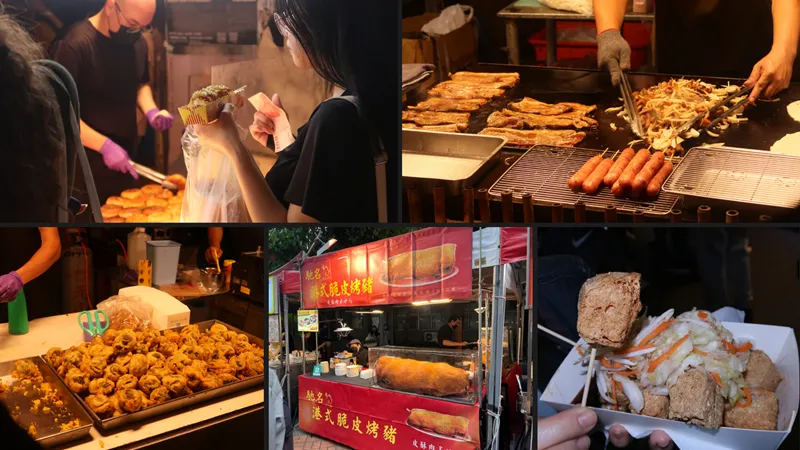
▲The market featured everything from the legendary "Bomb" Scallion Pancake (top left) and Taiwanese sausages (top right) to a whole roasted pig (bottom center) and the ever-present Stinky Tofu (bottom right) (photo: Sandra Wu)
Apart from the savory snacks, the market was a paradise for those with a sweet tooth. A crowd favorite was the Candied Sweet Potato Cubes (拔絲地瓜) and the iconic Deep-Fried Sweet Potato Balls (地瓜球), which are air-filled, chewy delights. Another nostalgic classic present was Tanghulu, or sugar-coated fruits on a skewer.
It’s clear the Taiwanese palate delights in a play of textures, moving seamlessly from a crisp, sugar-coated crunch to a center that is soft, bouncy, and quintessentially "Q” (a cute way of describing the chewy and bouncy texture.)
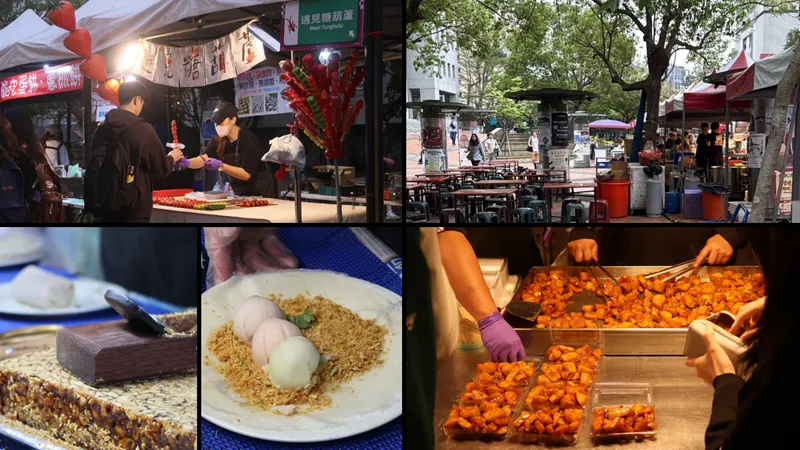
▲From the traditional crunch of Tanghulu (top left) to the famous Peanut Brittle Ice Cream Roll (bottom left) and golden Candied Sweet Potatoes (bottom right), the market offered a masterclass in Taiwanese desserts (photo: Sandra Wu)
While the Zhinan Night Market featured many staples, no discussion of Taiwanese markets is complete without the Peanut Brittle Ice Cream Spring Roll.
The process is as much a performance as it is a snack: a thin wrap is laid out with three dollops of ice cream and topped with fine shavings from a massive solid block of peanut brittle. While this treat is a personal favorite for many, it can be a "nightmare" for others because it is traditionally finished with fresh sprigs of cilantro. The good news? You can always ask the vendor to leave the greens off for you.
When wrapped up, it looks like a small dessert burrito. The combination of cold ice cream, crunchy peanut shavings, and that unique herbal hint of cilantro creates a flavor profile you won't find anywhere else. At just around 60 TWD, it’s the perfect sugar rush to keep you meandering through the market stalls.
Between the food stalls, students crowded around traditional games. Ring Toss, Balloon Darts, and neon-lit Claw Machines offered a playful break from the stress of midterm season, proving that a night market is as much about the "play" as it is about the "eat."
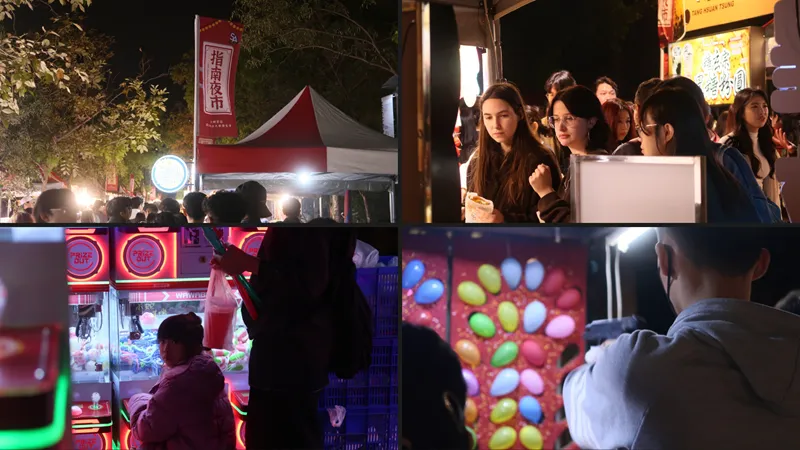
▲Students immersing in the festive community atmosphere and gaming zone (photo: Sandra Wu)
The "Walking-and-Eating" Ritual (邊走邊吃)
One of the most engaging sights was the "walking-and-eating" (邊走邊吃) culture. In a crowded space, portable food allows for continuous movement and cycle of engagement. It’s a win-win for everyone! Each visitor purchases a snack, starts eating, and moves on to the next stall to browse for clothing or accessories. It ensures that no single vendor dominates the space, allowing smaller artisans to thrive alongside the big food stalls.
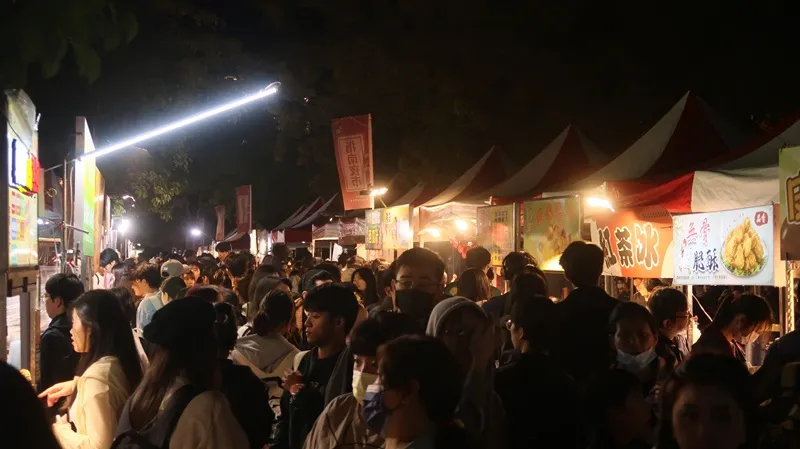
▲Zhinan Night Market packed with students and visitors (photo: Sandra Wu)
To get a sense of how the Zhinan Night Market impacted our diverse community, I spoke with two international students who found a "home away from home" on the boulevard.
Helen — Myanmar
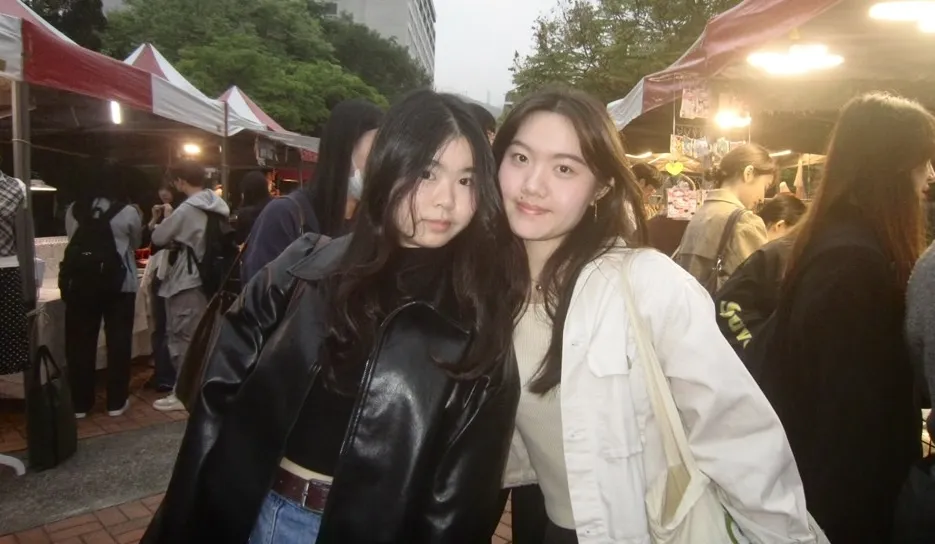
▲Helen (right), a freshman from Myanmar, found a slice of Taiwanese culture right on campus. (photo: Helen)
Helen, a first-year student, was stunned by the realism of the setup. "I didn't expect a campus event to feel so similar to a real Taiwanese night market," she shared. For her, the social aspect was the highlight. "At night markets, you can try many different kinds of food at the same time, which makes it really enjoyable. Sharing food seems to be a big part of the culture here."
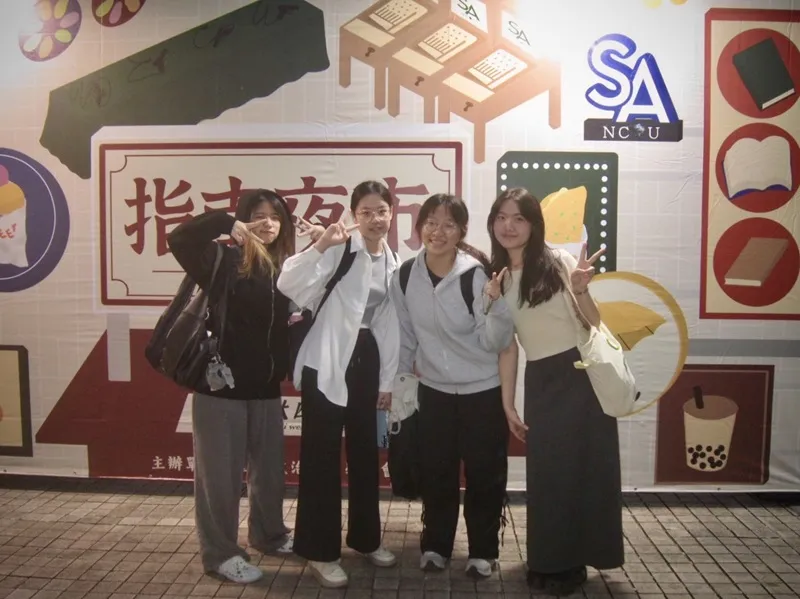
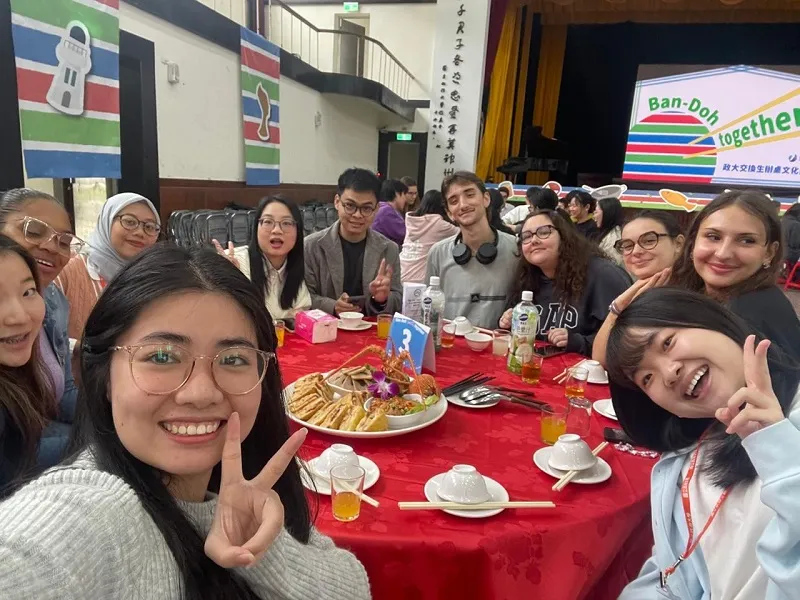
▲Helen (far right) smiles alongside her Taiwanese friends at the entrance. For international students, this is a great opportunity for building connections through sharing meals and learning about Taiwanese culture. (photo: Helen)
While Helen has fully embraced the "Market University" lifestyle, the Stinky Tofu remains a challenge. "It is just too smelly for me, so I still cannot get used to it," she laughed. However, she found her soulmate in the Bomb Scallion Pancake (炸蛋蔥油餅), specifically praising the perfect hit of pepper salt.
JobJab — Thailand
JobJab, a first year student in IMBA, enjoys the bustling campus. For her, the market was a welcome relief for her evening schedule. "Since I have evening classes, it’s incredibly convenient! I can just grab something delicious to eat before heading to the lecture hall," she noted.
Coming from Thailand, she immediately connected the Zhinan Market to the Temple Festivals of her home country. "That same buzzing energy and the smell of street food everywhere makes me feel a bit less homesick," she explained. While she missed the spicy kick of Thai markets, she was surprised and delighted by the adventure of Candied Sweet Potatoes and her personal favorite: a scallion pancake loaded with melted cheese. “The long line was totally worth the wait!”, she remarks, hoping to revisit them in the next market.
A Guide to Taiwan’s Night Markets:
If the Zhinan event left you craving more, then we recommend exploring the legendary sites across Taipei:
1. Raohe Street Night Market: Iconic for its ornate gate and the Michelin-recommended Black Pepper Buns. Easier to navigate with its linear layout, perfect for practicing your "walking and eating" skills without getting lost!
2. Ningxia Night Market: A "foodie’s market" known for its traditional atmosphere and some of the best Oyster Omelets in the city.
3. Shilin Night Market: The largest and most famous, offering a labyrinth of shopping, games, and an underground food court (recently renovated in 2025).
4. Tonghua (Linjiang) Night Market: Located near Taipei 101, it offers a more local, less touristy vibe with incredible fried chicken and sweet potato balls.
Pro-Tips for the International Student:
● Shared Platters: Night market food is best enjoyed in groups. Order one portion of several different things so you can taste everything without getting full too quickly.
● Look for the Line: The locals know the good stuff, and a long winding queue at a night market generally means only one thing—fantastic food. Think of it as a trusted peer-review system!
● The "5-Minute" Rule: Don't buy the first thing you see. Walk through the entire market once to survey the "battlefield”, then go back for your favorites.
● Bring Your Own Bag: In an effort to be eco-friendly, many markets now charge for plastic bags. Carrying a small reusable tote bag or cup holder bag.
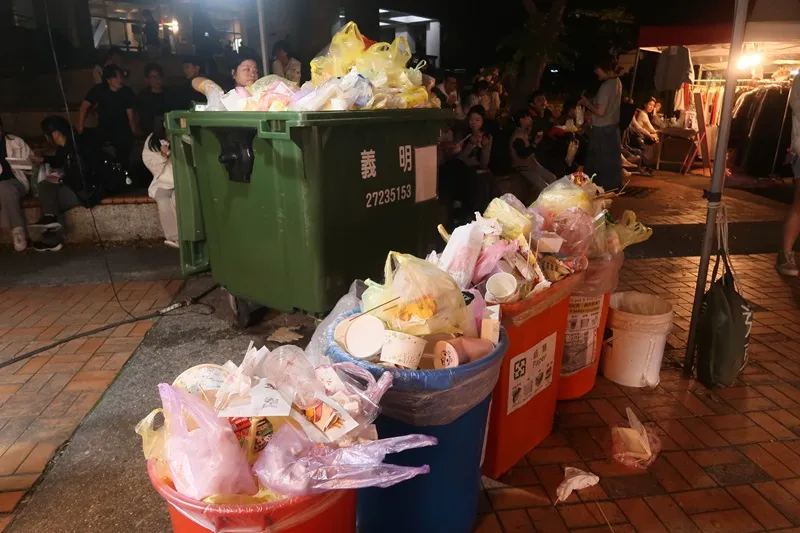
▲Overflowing bins highlight the "small but mighty" impact of the market, reflecting the modern challenges of waste management and sustainability in Taiwan's bustling night market culture (photo: Sandra Wu)