First Bites, First Impressions: Walking into a Taiwanese Ban-Doh
On a bright Saturday morning, November 22, 2025, Si Wei Hall buzzed with laughter, conversations in multiple languages, and the rich aroma of freshly prepared Taiwanese dishes as hundreds of NCCU students, both local and international, gathered for the long-awaited Ban-Doh Feast. The hall was decorated with colorful banners featuring traditional Taiwanese iconic symbols, stylized calligraphy, and festive motifs of Taiwanese traditional things, a warm celebratory glow over the space. Round tables draped in red cloth reflected the traditional colors of joy and good fortune, while a large screen displayed the message “Ban-Doh Together”, setting the lively and festive atmosphere typical of Taiwan’s outdoor banquet culture. Outside the hall, a temporary Ban-Doh kitchen had been set up, adding an authentic touch as steam curled from steaming pots, the sizzle of woks punctuated the morning air, and fragrant aromas of garlic, ginger, and freshly prepared seafood drifted inside, enticing students even before they entered.
Before the meal began, the President of NCCU took the stage to officially open the event. He warmly welcomed the students, emphasizing NCCU and OIC’s goal of introducing Taiwanese culture, building a sense of community, and strengthening connections among students from diverse backgrounds. His cheerful tone immediately lifted the room’s energy, “Thank you for joining us today, and welcome! We hope all international students feel at home and experience the warmth of Taiwanese culture. Wish you a wonderful lunch and my best wishes.”

▲ NCCU President Tsai Yen-Li delivers the opening speech at the Ban-Doh event.
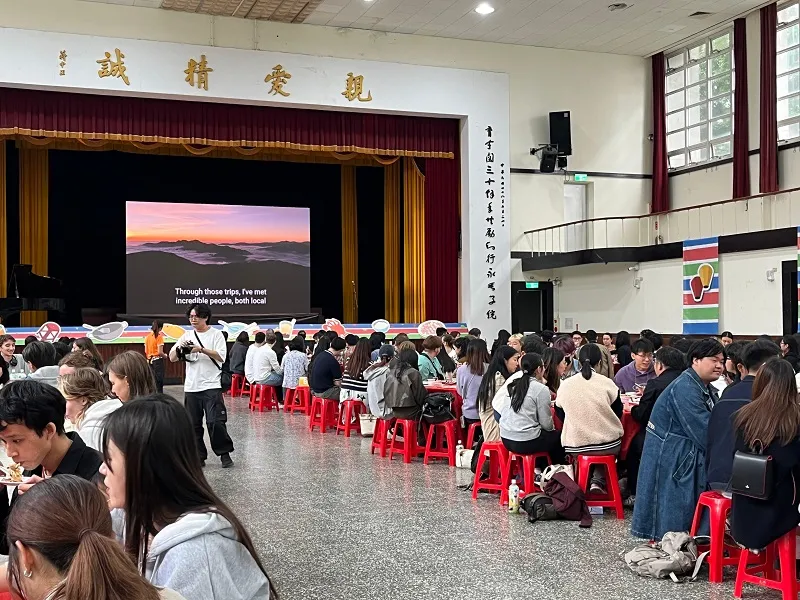
▲The Ban-Doh event at Siwei Hall bustling with local and international NCCU students.
Toward the end of his speech, he playfully compared the gathering to an American Thanksgiving “a time when friends and family come together to share good food and gratitude” eliciting laughter from the audience. He then raised his glass and invited everyone to join him, “Cheers! Please enjoy the delicious food and the wonderful company,” he declared, officially opening the Ban-Doh Feast.
To accommodate the large number of participants, Si Wei Hall was arranged with more than fifteen round tables, each seating around twelve students. The Office of International Cooperation (OIC) placed two Taiwanese student ambassadors from OICSA at every table to guide cultural exchange throughout the meal. These ambassadors were not only guides but also cultural interpreters, explaining the meaning behind each dish, sharing anecdotes about Taiwanese traditions, and gently facilitating conversation among students who had never met before.
OIC ensured inclusivity by offering vegetarian options, also can become halal-friendly options, and accommodating other dietary needs, reflecting the university’s commitment to cultural sensitivity. Participation was free for all NCCU students, with only a refundable NTD 500 deposit collected at registration, returned on the day of the event ensuring that financial barriers did not prevent anyone from experiencing the Ban-Doh feast.
The combination of aromas, visuals, and sounds created an immersive experience for international students. Many paused at the entrance to admire the hall, taking in the delicate decorations, the organized tables, and the bustling energy of the kitchen. Ana, a student from Lithuania, shared her impressions, “It’s such a big event! When I entered the hall, I didn’t expect it to be so grand. It feels almost like a luxurious banquet, with everyone serving and organizing everything so beautifully. We don’t have anything like this in my country.”
Her words reflected a common sentiment among students, a mixture of awe, curiosity, and excitement. Some students quietly observed the preparation, marveling at the teamwork between the chefs, and ambassadors. Others immediately began introducing themselves to tablemates, using the shared meal as an icebreaker. The event was not only a feast for the senses but also a vibrant cultural lesson in action where food, tradition, and conversation intersected to create connections that transcended nationality.
The Ban-Doh Tradition & OIC’s Cultural Mission
To bring Taiwanese culture closer to both international and local students, the Office of International Cooperation (OIC) NCCU hosted a Ban-Doh event in the campus hall. Its purpose is simple yet meaningful to give students the chance to experience a traditional Taiwanese custom that is increasingly rare in big cities like Taipei while fostering cross-cultural camaraderie.
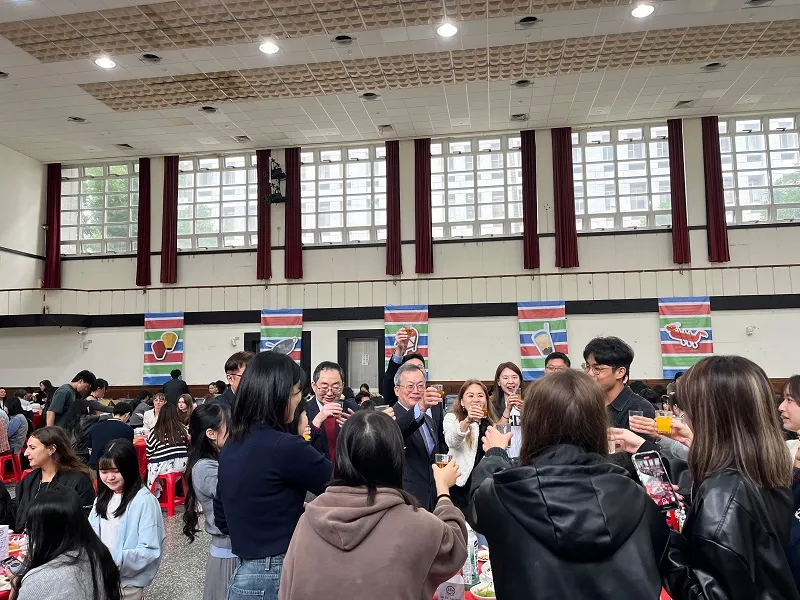
▲NCCU and OIC organizers go around the room, greeting students at each table with cheers.
According to information published on the official website of Taiwan’s Ministry of Foreign Affairs (MOFA), traditionally, bànzhuō (辦桌, Ban-Doh in Hokkien) is a large banquet held to celebrate important occasions, ranging from weddings, newborn celebrations, birthdays, harvests, to religious ceremonies and other community festivities. In the past, such banquets were held outdoors, often on streets or spacious yards, with bright tents and entertainment stages featuring singing or traditional dances. These gatherings allowed hosts to reconnect with family, neighbors, and the wider community. While Ban-Doh is becoming less common in metropolitan areas due to modern lifestyles, many Taiwanese communities outside Taipei still preserve the tradition.
Local students helped bring this tradition to life. Nini, from Miaoli, shared that Ban-Doh remains common in her hometown, often including large tents, small performance stages, singing, and traditional dances involving local residents.
Another Taiwanese student also shared her impressions of the event and her own experiences related to Ban-Doh. Betty, a student from Taichung and a member of OICSA, highlighted the personal impact of participating in the celebration, “Since I live at IHouse NCCU, every time I meet someone from a different country and culture, it really broadens my horizons. Even simple things like when I meet my new friend from the US in a Ban-Doh event here, and she is trying Bao, the same food but realizing we have different ideas of what ‘sweet’ tastes like helps me understand new perspectives. I love going out with friends, eating together, and talking with people. It's fun, and it helps me understand the world better.”
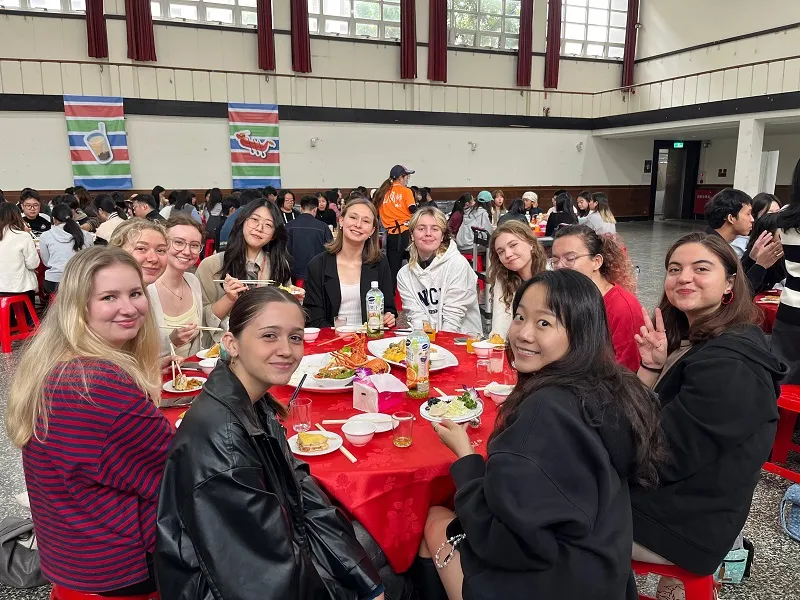
▲International and local students enjoying the Ban-Doh event together.
She described Ban-Doh as a gathering meant to bring people together and share her own story, “When we eat, we chat, we meet new friends. In my hometown, we don’t host Ban-Doh very often anymore, but my mom always told me stories about my grandpa, how he used to organize Ban-Doh all the time. He loved celebrating anything. Sometimes he prepared twenty tables and invited the whole neighborhood. Even strangers could join, eat, and take food home. That kind of generosity shaped my mom’s sense of hospitality, and she still keeps it alive every time relatives visit, she tells them, ‘If you like the food, take some home!’”
The version organized by OIC NCCU retained this spirit. The event took place indoors, while a temporary kitchen was set up outside the hall, replicating the field-kitchen concept typical of Ban-Doh. During the banquet, the organizers showcased various cultural content, including videos explaining what Ban-Doh is and testimonials from international students sharing their experiences of learning about Taiwan not only academically, but also culturally, through hands-on participation in events like this. Throughout the event, popular Taiwanese songs played in the background, including hits by Jay Chou, creating a lively and familiar atmosphere for both local and international students.
As Betty shared, “The music played during the event is really popular in Taiwan. These are the songs people usually sing when they go to karaoke, so it felt really familiar and fun for us, and I think it also helped international students get a sense of local Taiwanese culture.”
Sara, an exchange student from Germany, added her own perspective, making the experience even more meaningful, “It was my first time in Asia, and I’ve always known that Asian cultures value togetherness, but experiencing it today at Ban-Doh really made me feel it. I came alone, so everyone at my table was new to me, and we did cultural exchanges with students from Korea, Vietnam, and local students. Sharing food, chatting about our cultures, learning about traditions, and just laughing together made me feel welcome and part of a community. It was amazing to make new friends so quickly.”
In traditional Ban-Doh, the host usually circulates among the tables to greet guests. OIC NCCU revived this practice. The NCCU President, accompanied by OIC representatives, visited each table of international and local students to greet them, take photos, and perform tea cheers as a symbol of togetherness. This warm moment truly reflected the essence of Ban-Doh celebration, camaraderie, and connection. According to OIC, traditions like this are beginning to fade in major cities. Hosting a Ban-Doh on campus is therefore an effort to preserve Taiwanese culture and introduce it to young people and students from different countries.
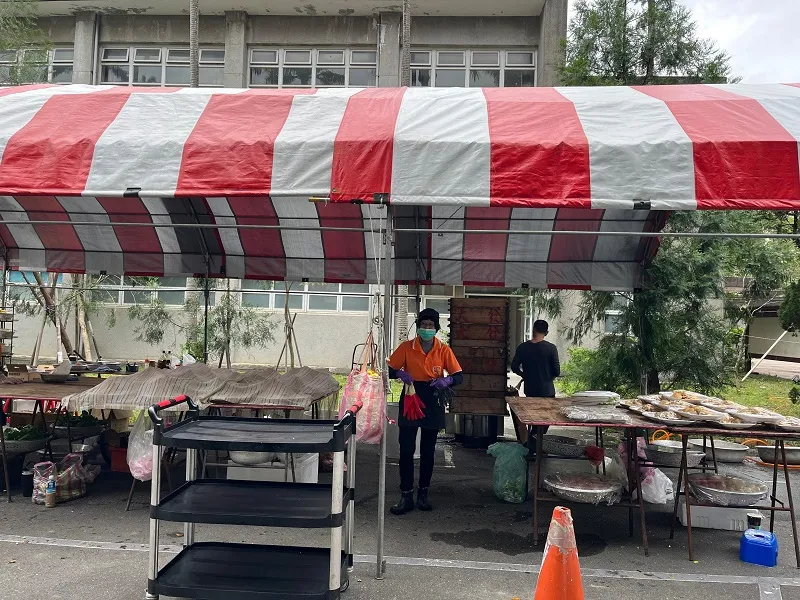
▲Ban-Doh Temporary Kitchen set up beside Siwei Hall, NCCU where the aromas and sights of traditional Taiwanese cooking come alive
Through the event, OIC NCCU not only served traditional food but also offered an immersive cultural experience, letting students see, smell, hear, and taste a living tradition, bringing together diverse backgrounds at a long table just as the philosophy of Ban-Doh, passed down through generations, intended.
A Feast of Flavors: Menu Highlights & Culinary Stories
The NCCU hall was buzzing with excitement as students gathered for the Ban-Doh feast. Round tables were set up neatly, decorated with traditional Taiwanese motifs, and the aroma of fresh food filled the air. The atmosphere was alive with curiosity and laughter, as students from diverse backgrounds eagerly anticipated the meal, exchanging guesses about the dishes and chatting about their day.
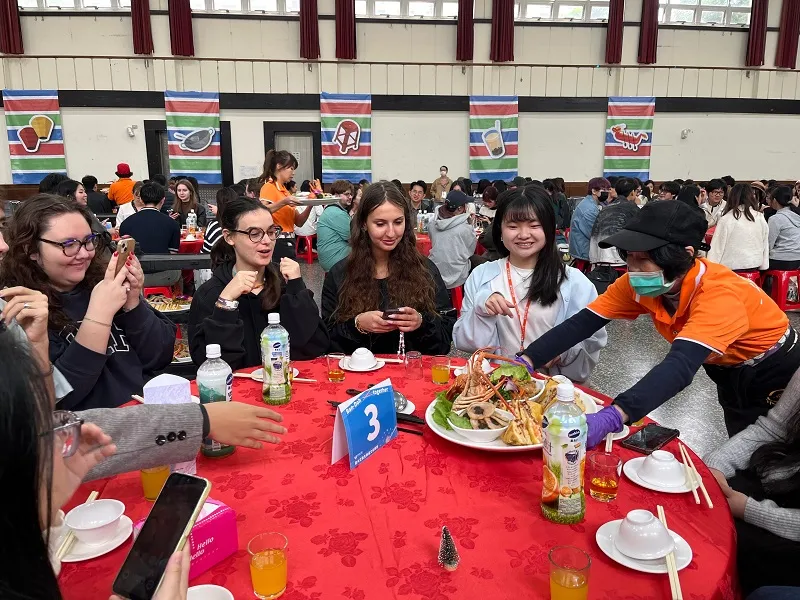
▲International and local NCCU students excitedly await the first Ban-Doh dishes being served.
The catering team from Tofu Master Taiwan, led by Chef Huang Chia-Yu, entered with trolleys stacked high with colorful dishes. Moving smoothly and professionally, they served each table with precision and care, creating a sense of theater and anticipation as each plate arrived. Popular Taiwanese songs played softly in the background, adding a familiar and cheerful touch, helping international students immerse themselves in the local culture even before tasting the food.
The feast featured a wide array of dishes; Golden Chicken, fresh seafood, Buddha Jumps Over the Wall soup, seasonal vegetables, vegetarian options, Tuí-khòo (pork knuckle), three-layer sandwiches, Oil Rice, thick soup, and more. Each dish was served sequentially, allowing students to appreciate the color, aroma, and texture as they arrived. Chef Huang explained, “Ban-Doh is a banquet, not street food. Everything is made fresh on-site. We started preparing at 4 a.m. Every dish takes time soaking rice, chopping ingredients, stir-frying, and braising. It’s a way to show hospitality and tradition.”
Chef Huang also explained the careful reasoning behind the menu, “Let me take a quick look. Today we prepared a special dish called tuí-khòo, the front leg portion of pork braised with bamboo shoots. It’s traditional and symbolic of Taiwan. We knew international students might be cautious because of the pork skin, but since they’re here, they shouldn’t miss the classics.”
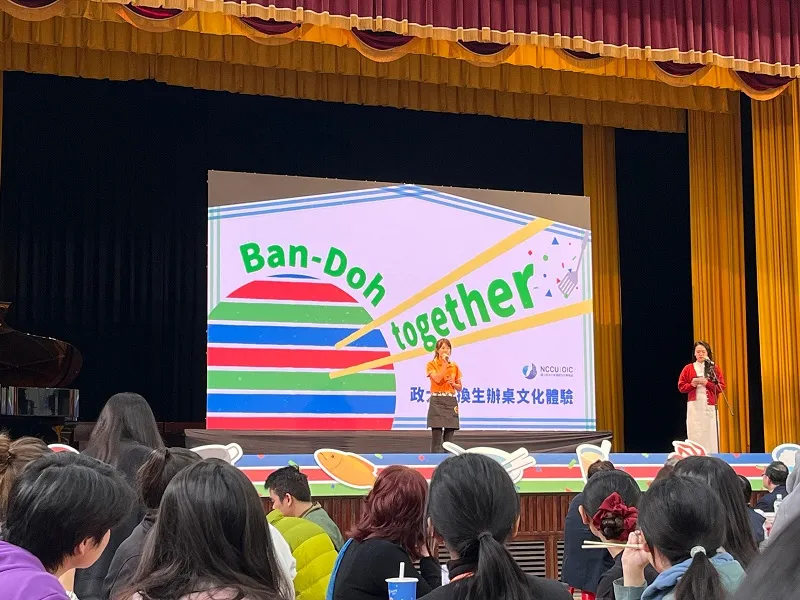
▲Huang Chia-Yu from the Tofu Master Taiwan team explains the meaning behind the Ban-Doh dishes to all participants.
She further described the thought behind the menu, “We considered our clients, and audience. Some dishes are deeply traditional, while others are more familiar to international students. Oil Rice and thick soup are classic comfort foods. The three-layer sandwich is a traditional appetizer. Every dish tells a story and brings people together.”
The freshly cooked nature of the food is what distinguishes Ban-Doh from standard restaurant meals, emphasizing both authenticity and cultural care, “Many restaurants just heat pre-cooked food, but we prepare everything fresh for the event. That’s the spirit of Ban-Doh,” Huang added.
As plates were placed on the tables, students leaned in eagerly, sharing bites with neighbors, discussing the flavors, and marveling at the textures. The circular seating encouraged natural conversation and sharing, echoing the traditional communal spirit of Ban-Doh. Laughter, curiosity, and delight filled the hall as students sampled each dish, discovering not just flavors but also cultural stories behind the food.
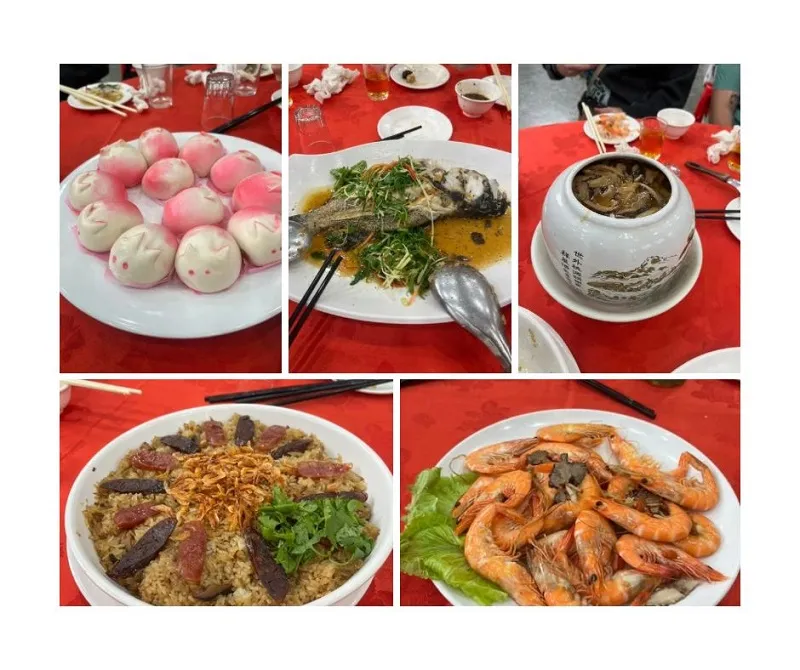
▲Every dish at the NCCU Ban-Doh feast brought students together to taste tradition, share stories, and experience the heart of Taiwanese culture
Betty, a Taiwanese student ambassador, explained the symbolism of Tuí-khòo, “This dish is traditional and symbolic, meant to bring luck or wealth. Its placement near the ‘pocket’ represents money. Every dish has its own philosophy."
International students shared their impressions enthusiastically. Sara from Germany remarked, “The rice with Sakura shrimp and the chicken were very special. I had tried rice before, but this flavor was new. The soups were unique, and the jelly pork too.”
Valeriia, a student from Russia, was particularly impressed with the soup, “Buddha Jumps Over the Wall is so rich and flavorful. I’ve never tasted anything like it!” Her comment highlighted how Ban-Doh exposed students to flavors and ingredients unfamiliar to them, giving a deeper appreciation of Taiwanese culinary traditions.
Meanwhile, Damaili, an American exchange student, reflected on her personal food journey, “In my country, we eat burgers and pizza daily. It’s a bit hard to adjust here because rice, noodles, and fish are common. You have to be open-minded. Food may not look familiar, but that doesn’t mean it isn’t delicious. I don’t know the name, but the first dish that came out was really good. I liked the sandwich. It felt homemade, the sauce inside was delicious, and I also liked the vegetables. It was my first time eating fish in Taiwan, and since the event was free, I felt encouraged to try it.”
Through these shared experiences, it became clear that Ban-Doh is not only about satisfying hunger, but also about fostering curiosity, cultural exchange, and connection. Each dish served as a conversation starter, an opportunity for students to compare traditions, learn from each other, and celebrate the joy of communal eating, a hallmark of Taiwanese hospitality.
Shared Tables, Shared Stories: Laughter, Learning & Bonding Moments
Humor and bonding continued throughout the meal. Damaili, an American exchange student attending NCCU for six months of intensive Mandarin study, bravely decided to try flipping a whole fish with chopsticks, a task she had never attempted before. Sitting at a round table with students from various countries, she laughed nervously, saying, “I’ve never used chopsticks properly in my life, but let me try for you!”
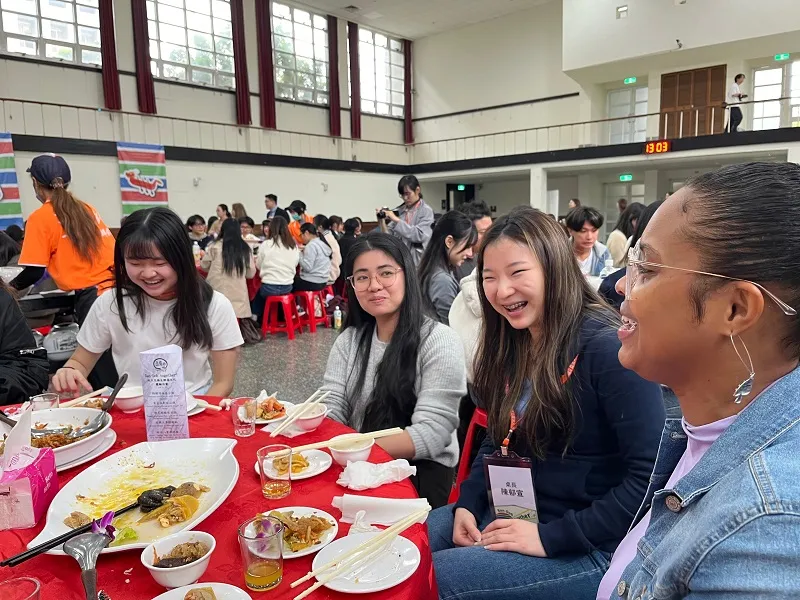
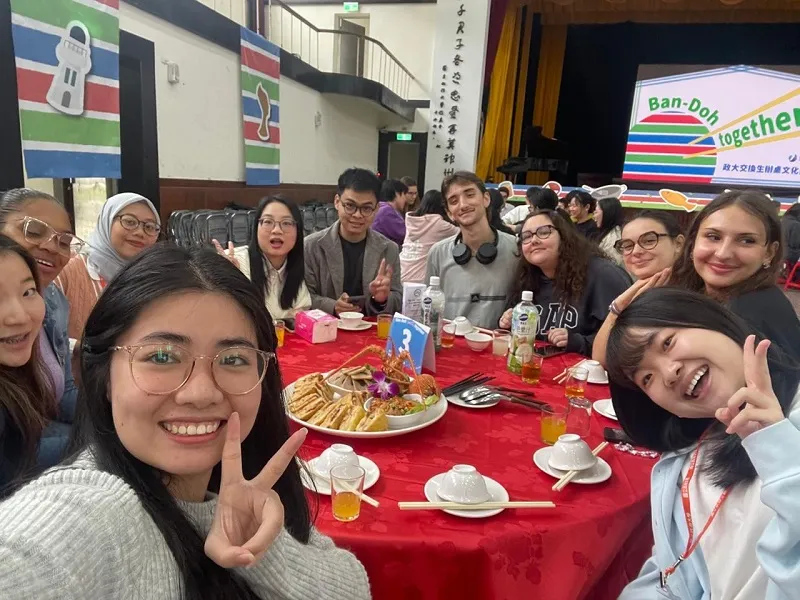
▲ Damaili’ team table mingle and enjoy the Ban-Doh event together
With careful determination, she managed to flip the fish perfectly, causing her tablemates to burst into laughter and applause. The success wasn’t just about the food, it became a symbol of learning and cultural exchange, a small victory that brought everyone closer.
Nearby, Brune, a student from France, shared her impressions. She was struck by how effortlessly students from different backgrounds bonded around the table. She recalled,“The funniest and most memorable part was seeing if Damaili could flip the fish properly. It was her first time eating fish in Taiwan, and she was so enthusiastic to help everyone at the table. The energy was contagious, and we all cheered when she did it successfully!”
The playful teasing didn’t stop there. As Damaili practiced saying “hambao” in Mandarin fluently, the Taiwanese student appreciated it, while other students at the same table joked, “If you eat the fish eyes, you’ll suddenly become more fluent in Mandarin!”
Such moments highlighted the casual, interactive atmosphere of Ban-Doh, where students laughed, shared, and learned together. They realized that even small gestures like flipping a fish with chopsticks carried a sense of togetherness, cultural discovery, and teamwork.
The round-table layout, the careful sequencing of freshly prepared dishes, and the attentive guidance of OIC student ambassadors all contributed to an experience that was both structured and spontaneous. Students explored the symbolism behind each dish, how Tuí-khòo (pork knuckle) represented wealth, how oil rice and thick soup celebrated prosperity and family, and how each bite could carry meaning for health, happiness, or good luck. The meticulous planning by OIC NCCU, from menu curation to cultural explanations and live demonstrations, ensured that each student not only tasted Taiwanese cuisine but also felt immersed in its tradition.
By the end of the Ban-Doh Feast, the hall was alive with satisfied smiles, animated conversations, and the exchange of Instagram handles. Every student expressed delight, curiosity, and gratitude. The success of the event was clear, no one left disappointed, and everyone had found new friends, cultural insights, and memorable experiences. Vincent, a student from Indonesia reflected on the occasion, saying, “This event was really wonderful. I got to learn about Taiwanese culture, and it also made me realize that in Indonesia we have similar kinds of celebrations. The food and decorations are different, but the idea of gathering, sharing a meal, and celebrating together is something that really connects people.”
It was a testament to OIC and NCCU’s commitment to building an inclusive, engaging, and culturally enriching environment.