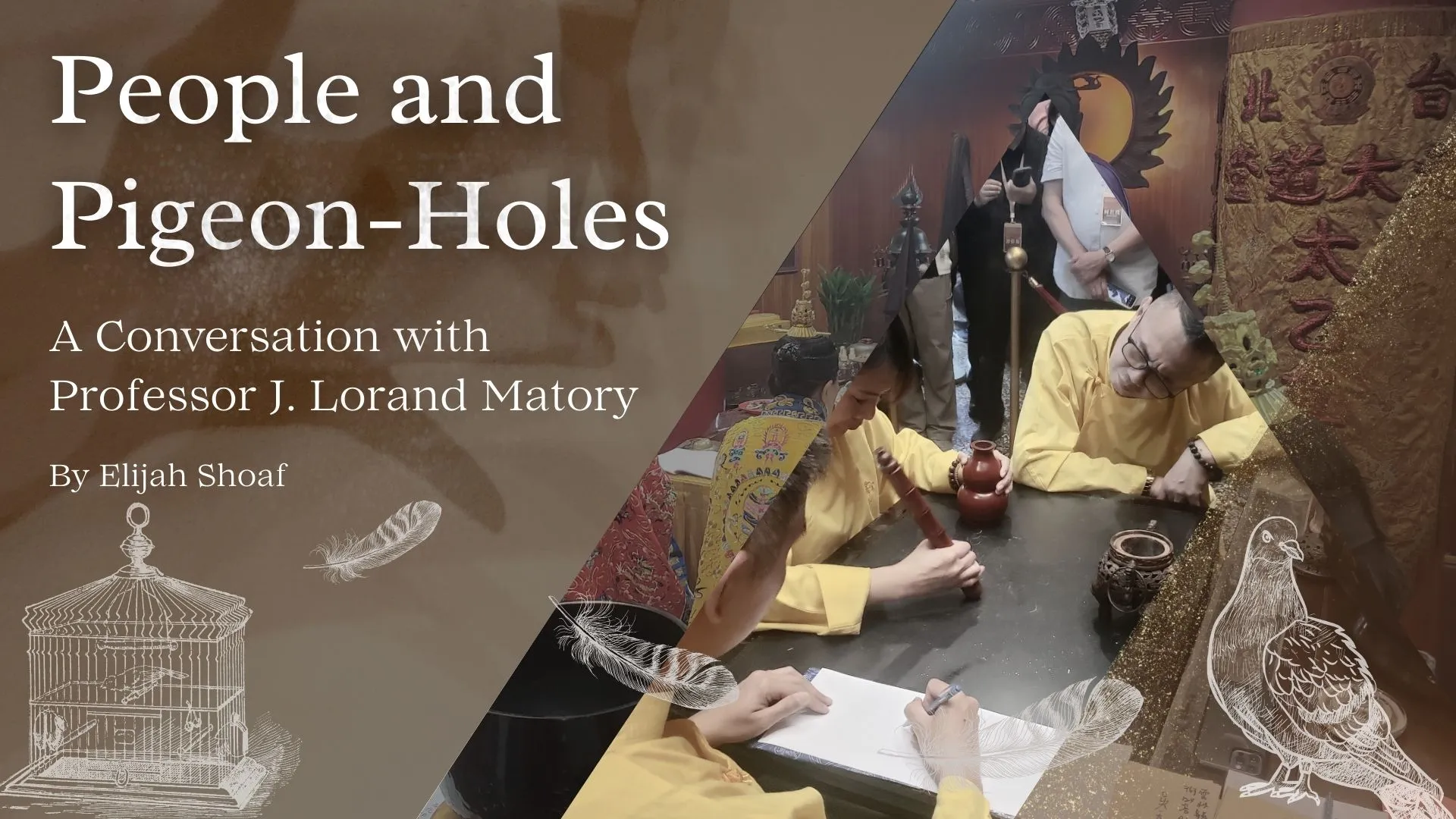
On its face, the connection might not seem obvious. Professor J. Lorand Matory is one of the world’s preeminent cultural anthropologists, a distinguished professor at Duke University whose life’s work has centered on the intricate social worlds of African-inspired spirit possession religions, higher education, transnationalism, and the construction of ethno-racial identity. His research has taken him deep into communities in Brazil, Nigeria, Cuba, Haiti, and the urban United States.
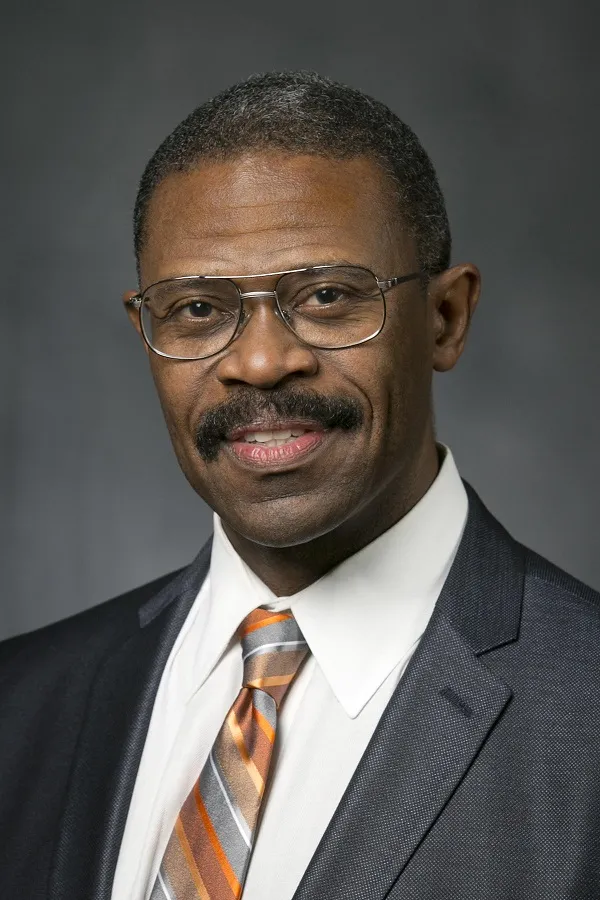
▲Professor J. Lorand Matory's headshot
Yet, this fall, Professor Matory is not in Bahia or Lagos. He is in Taipei, walking the campus of National Chengchi University as a distinguished visiting professor. His primary, self-assigned mission, alongside his teaching, is not directly related to his published work. His main objective is to improve his oral skills in Mandarin Chinese and deepen his understanding of Sinophone cultures.
This new linguistic pursuit is not a late-career hobby. It is the latest step in a deeply personal, decades-long intellectual quest to understand the complex, often contradictory relationship between the Mandarin-speaking world and the Black world. The journey began in an unlikely place: a radical bookstore he discovered while in high school in his native Washington, DC. There, he read Mao Zedong’s “Little Red Book” and, through it, imagined a coalition of all people of color against Western colonialism and white supremacy.
This potent image of China as a liberator would become jarringly complicated as he learned of attacks on African students in China during the early 1960s and, again, in the late 1980s, motivated primarily by local men’s objections to Chinese women dating African men. To give another example, in 2019, Professor Matory embarked on an academic tour in mainland China. While he was treated exceptionally well, a disorienting incident occurred during one of his lectures. He was speaking on the topic of Black anthropology, but he soon realized his translator was consistently using the term for ‘African’ anthropology. He inquired and was informed that this was intentional; the term ‘Black’ (黑, hēi) is used almost exclusively in a pejorative sense.
This moment brought a profound “discordance” into sharp focus. How could China, a nation he had once viewed as a source of liberation, simultaneously harbor such deep-seated anti-Black ideology? Professor Matory concluded this question was too urgent to be left to others. To explore it in an “open and clear-minded way”, as he described it, he would have to do the work himself. He began studying Mandarin that fall, a path that has now, fatefully, led him to Taiwan.
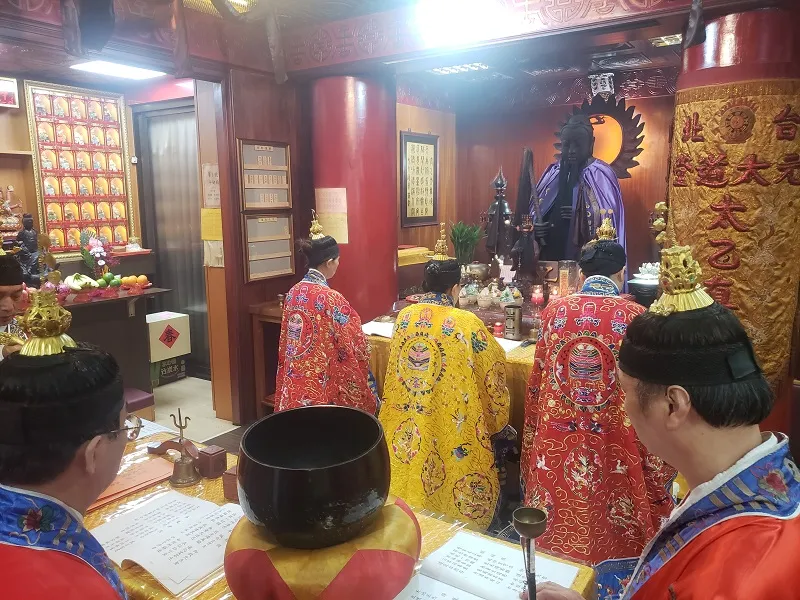
▲Local Chinese folk religion
Professor Matory’s intellectual focus on identity, culture, and global social hierarchy is deeply rooted in his own upbringing. He grew up in Washington, D.C., in a predominantly Black, professional community, living in proximity to Howard University, a historical center of Black intellectual life. This environment was soon contrasted by his time at a predominantly elite and white private junior high and high schools, where he encountered the strange assumption that he was a natural athlete rather than the highly capable scholar he actually was, highlighting the constructed and often arbitrary nature of social categories.
This early interest in cultural diversity and arbitrary social hierarchies led him down a path of academic excellence. He attended Harvard College and graduated Magna Cum Laude; taught at the prestigious Phillips-Andover Academy; earned his PhD in anthropology from the University of Chicago; and held a postdoctoral position at Princeton before securing a position as an assistant professor back at Harvard University in 1991. There, in 1998, he rose to the rank of full professor. In 2009, he moved to Duke University, where he serves as the Lawrence Richardson Distinguished Professor of Cultural Anthropology and Director of the Sacred Arts for the Black Atlantic Project.
As a cultural anthropologist, Professor Matory specializes in the study of religions, with a particular focus on gender as a metaphor in the Afro-Atlantic religions, where most possession priests are women or cross-dressing men, both of whom occupy highly respected positions in their communities. But his work extends far beyond one region or topic. He is a scholar of transnationalism as well, arguing that cultures stretch across national borders and diasporas can transform their homelands.
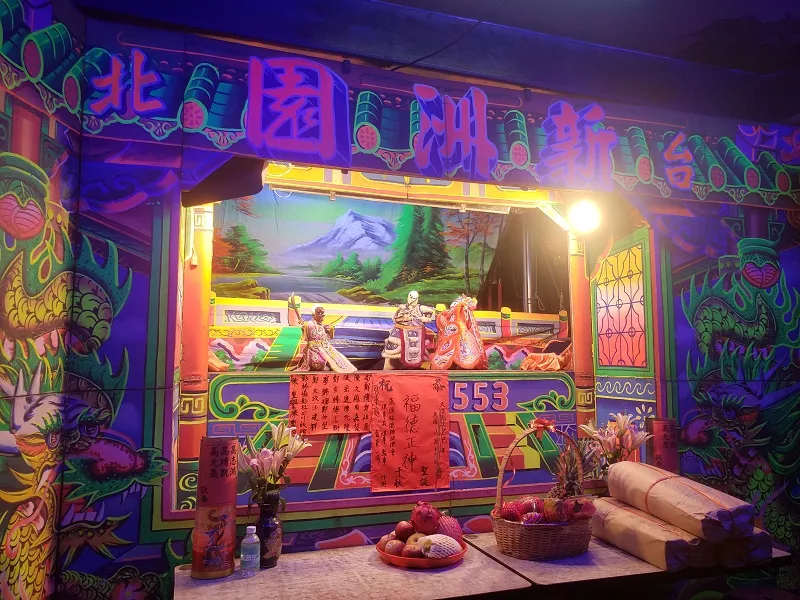
▲A puppet show for the gods that he observed in Taiwan
His thinking engages with the very foundations of social theory, from Marx and Freud to the ways European society rebranded itself from an aristocratic system to a republican one. He examines how groups, from ethnically-distinctive Black nationalists to assimilated Jews in Europe, have navigated their positions as “out-groups” and “in-groups”, often by distinguishing themselves from others to justify their place as ‘citizens’. This deep, critical analysis of how identity is formed, claimed, and contested is the bedrock of his scholarly career.
This intellectual mission is deeply tied to his personal goals for his time in Taiwan. His primary objective, he states, is to improve his oral Chinese skills. This linguistic skill has already been a core part of his work. His journey has also included teaching in the mainland at Central Minzu University, an institution in Beijing focused on ethnic minorities. He poignantly likens the institution to Howard, given its similar focus on the uplifting of marginalized minority groups. But while he is learning like a student here in Taiwan, he is also serving as a participant, teaching a course on “China and Africa: Connections and Misconceptions” and, most importantly, learning from scholars and non-scholars alike about numerous aspects of Taiwanese society.
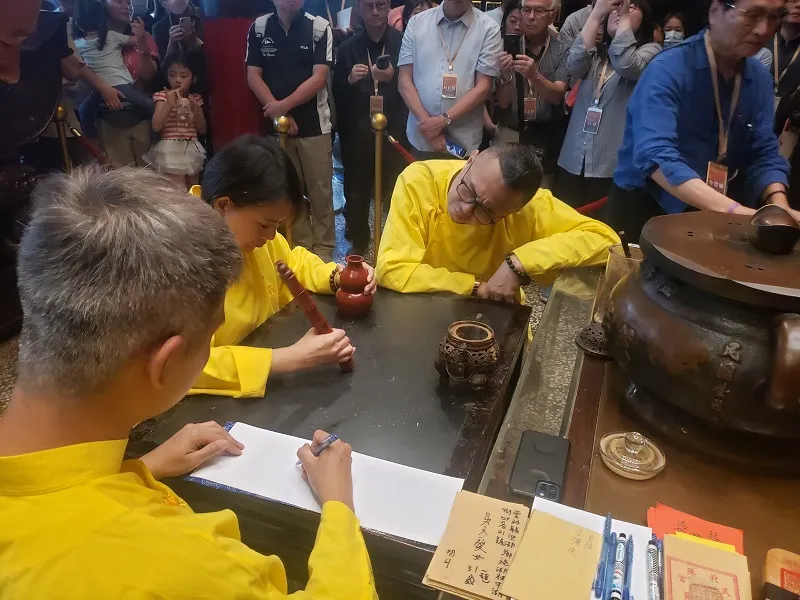
▲A spirit writing event that he observed in Taiwan
He finds Taiwan’s atmosphere inviting, with this extending into academic life, as he describes the Taiwanese scholar community as “warm and welcoming”. Further, in a crucial observation, he notes that “they engage truthfully” about the past and present complexity of their society. This environment of open intellectual exchange is vital for the work he hopes to do. That work includes, most fascinatingly, a desire to “maximize the chances that China will not behave the way the West did” in its treatment of other peoples. It’s a goal that reframes his early-life interest in Maoism, seeking a path for a non-Western power that avoids the pitfalls of colonial oppression he has critiqued his entire career.
While his core research goals are clear, Professor Matory is also an anthropologist at heart. He is quick to add a layer of self-reflection to his present observations, aware that his own position in society colors his experience. He notes that as an older, married man, he experiences society very differently now compared to when he was a ‘young, strapping fella’. With that context in mind, his impressions of Taiwan have been shaped by a warmth he finds remarkable. He notes that Taiwanese and Chinese people, much like the Brazilians and Nigerians he has worked with, are “astonishingly generous”. He has found Taiwanese folks to be exceptionally friendly.
He is taking full advantage of his time on the island, saying he loves exploring the local temples and immersing himself in the rich religious life of Taiwan, a living extension of his lifelong academic focus on religion and culture. Indeed, he has successfully established a personal relationship with three Chinese gods. To clarify, he has discovered his affinity with these gods, and consecrated effigies of them have agreed to accompany him when he returns to the US. They will take their place in his home alongside his pantheon of Nigerian Yoruba, Brazilian Candomblé, Cuban Lucumí, and Haitian Vodou gods.
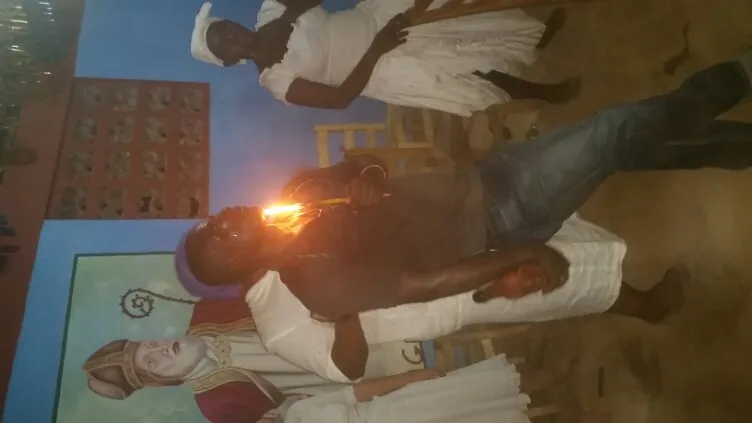
▲A Haitian Vodou ceremony that he observed
When asked why anthropology remains a vital field for students in 2025, Professor Matory sets aside his specific research projects and speaks from a place of deep personal conviction. His answer reveals the moral and intellectual engine driving all of his work. For him, he explains, anthropology is a “get-out-of-jail-free card”. He describes growing up feeling “pigeon-holed” into categories and ways of being that he didn't feel comfortable with. Anthropology, he discovered, was a tool—a passport that grants the bearer permission to explore other societies, cultures, and histories, only to find that they, too, are impacted by their own “pigeon-holes”. That discovery, he explains, is a source of empowerment. The moment you see how differently other
societies categorize the world, “you discover this categorization is not natural”. The profound, life-altering takeaway, he said, is that “the way you grow up thinking is not inherently natural, it is shaped by a local confluence of traditions”.
This realization, for Professor Matory, is a deeply political and moral one. It dismantles the authority of received wisdom and forces one to question the very foundations of inequality. Just because a worldview is dominant does not make it correct; power does not make it true.
It is this fundamental observation—this refusal to accept an unequal status quo as “natural”—that connects his earliest critiques of Western power to his current exploration of China and its complex global role. By learning Mandarin and listening to Taiwanese scholars, priests, and friends, Professor Matory is doing what he has always done: using the tools of anthropology to see the world as it is, all while challenging us to imagine what it could be.