Stepping off the high-speed train and into the humid, slower-paced air of Tainan during winter break, you can immediately notice the contrast with Taipei’s frantic, rain-slicked streets. But, standing before the weathered red bricks of Fort Zeelandia (Anping Fort), the shift feels deeper than mere geography. Looking at the foundations laid by the Dutch East India Company in 1624, I realized that I wasn’t just in a different city; I was stepping into a version of this island that existed long before the current political structures of the Republic of China (ROC) were even a blueprint.
For many international students at NCCU, “Taiwan history” often feels synonymous with the post-1949 era: the KMT’s arrival, the rapid democratization that followed, and the ongoing standoff with Beijing. However, Tainan offers a different view. It is a city where the pre-ROC identity of the island is on full display. Here, the story of Taiwan is told through Ming loyalists, Qing administrators, and European traders. I knew that my visit to this special city this winter was not just a chance to get away from the capital, but it was also an opportunity to reckon with the deep-rooted, multi-layered history that defines the soul of Taiwan today.
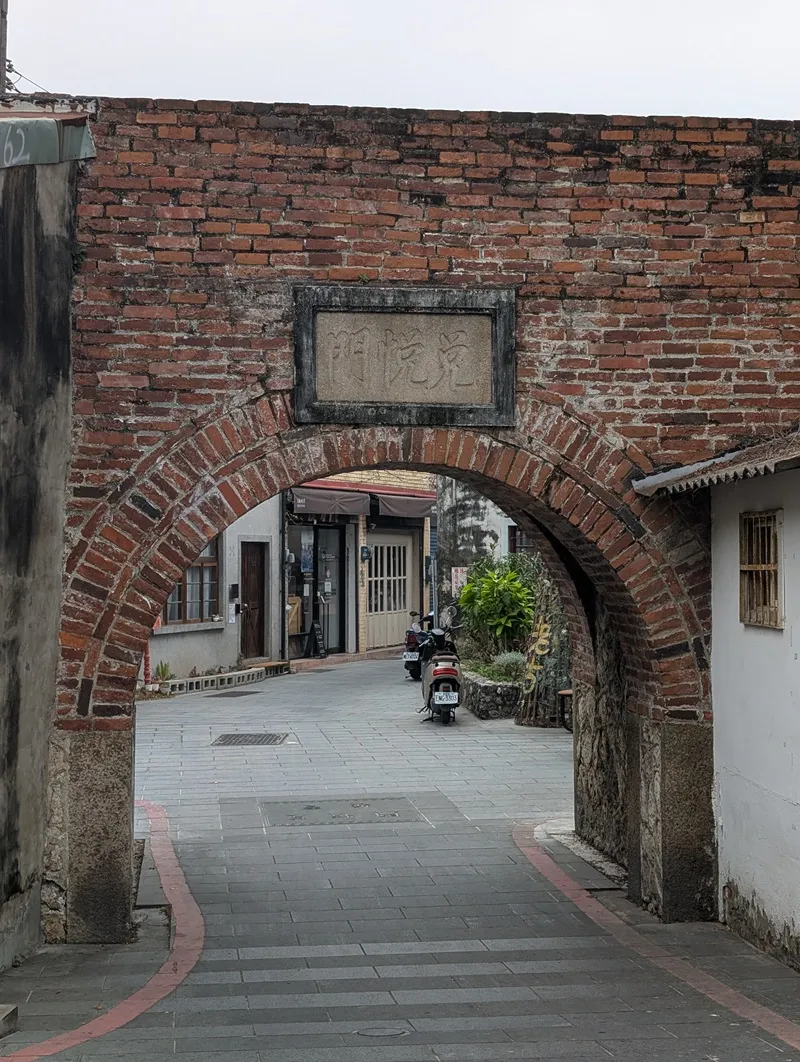
▲The old gates and walls around Tainan speak to its long history
To understand Tainan is to understand that it was the center of the Taiwanese universe for far longer than Taipei has been. Walking through the city’s winding, labyrinthine alleys, you quickly realize that the urban planning here wasn’t dictated by the wide, grand boulevards typical of the ROC’s post-war development. Instead, every corner reveals a shrine to a folk deity or a plaque marking a Qing-era gateway, reminding you that this was the political and economic heart of the island for over 200 years under the Qing Dynasty alone.
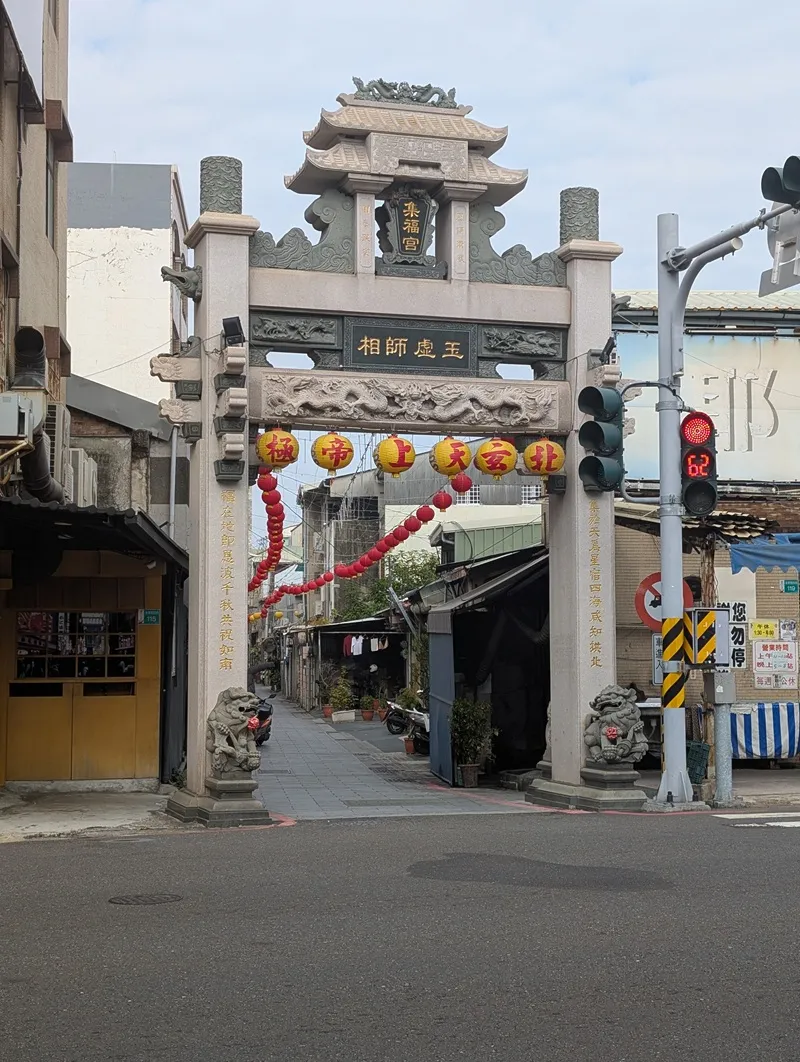
▲Narrow and winding streets like this are common in Tainan
The city’s “pre-ROC” character isn’t only found in its aging buildings, but it’s also found in the local cultural identity. In Taipei, the character of the city often feels segmented, split between the Japanese colonial era and the subsequent arrival of the Nationalist government. Tainan, however, feels like a continuous thread. It’s where Koxinga (Zheng Chenggong) established the Kingdom of Tungning, effectively ending Dutch rule and setting the stage for the island’s integration into the Sinosphere. For an outside observer, this is a crucial distinction: Tainan’s character originates in an era in which Taiwan was already a sophisticated, globalized trade hub; a time when the site of modern Taipei was still largely marshland.
Because Tainan was the ‘first’ capital, its residents carry a specific pride. There is a sense that the ‘real’ Taiwan, one defined by local traditions, Minnan dialect, and a seafaring heritage, resides here. When we look at Tainan as a symbol, we see a defiance of the “Year Zero” mentality that sometimes accompanies post-1949 history. It is a reminder that the island’s story didn't begin with a retreat from the Mainland, but with centuries of indigenous presence, European ambition, and maritime power.
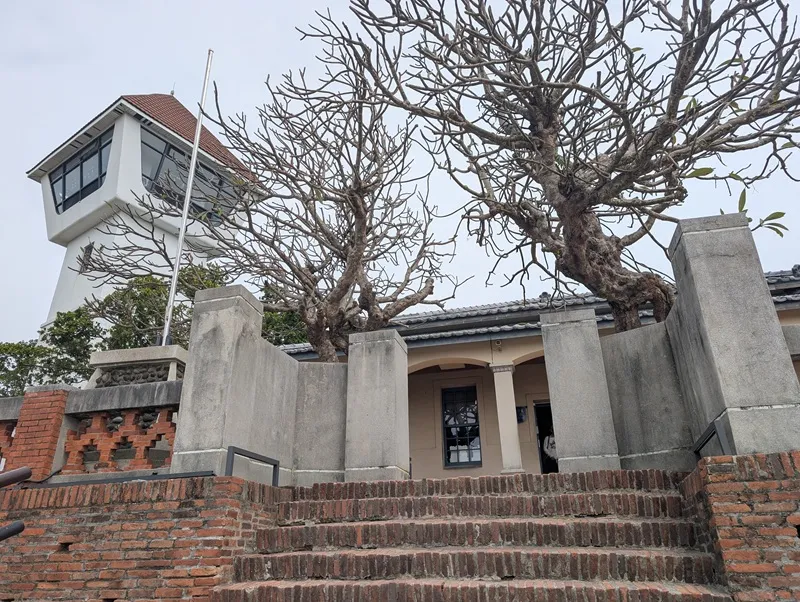
▲Today Anping Fort serves as a tourist attraction
It’s no wonder then that I felt this historical weight at Anping Fort, where the Dutch East India Company established Fort Zeelandia in 1624. For nearly forty years, this fort was a vital node in a global maritime network connecting Batavia, Nagasaki, and Amsterdam. The Dutch period introduced the first formal administrative structures to the island, but it was an era defined by extraction and trade rather than settlement. Walking through the ruins today, you can still see the “Dutch bricks” from Batavia held together by a traditional mixture of sticky rice, syrup, and oyster shells, a literal layering of European ambition held together by local resources.
This colonial experiment ended abruptly in 1662 when Koxinga, a Ming loyalist fleeing the Qing conquest of the mainland, laid siege to the fort. Koxinga’s victory transformed Tainan from a trading post into the capital of an independent kingdom. This was a pivotal shift in Taiwanese history, marking the beginning of large-scale Han Chinese migration and the establishment of Confucian schools and traditional civil examinations on the island. Tainan would thus become the vessel for ‘high culture’ on the island, a role it solidified after the Qing Dynasty took control in 1683.
For the next two centuries, Tainan served as the island’s undisputed political, cultural, and economic center. While the north remained a rugged frontier, Tainan flourished with grand temples and scholar-officials. Thus, when visiting the city, it is important to understand that during these pre-ROC centuries, the foundations of modern Taiwanese society: its language, its religious syncretism, and its cultural connections to the sea, were poured and set into the very soil of the south.
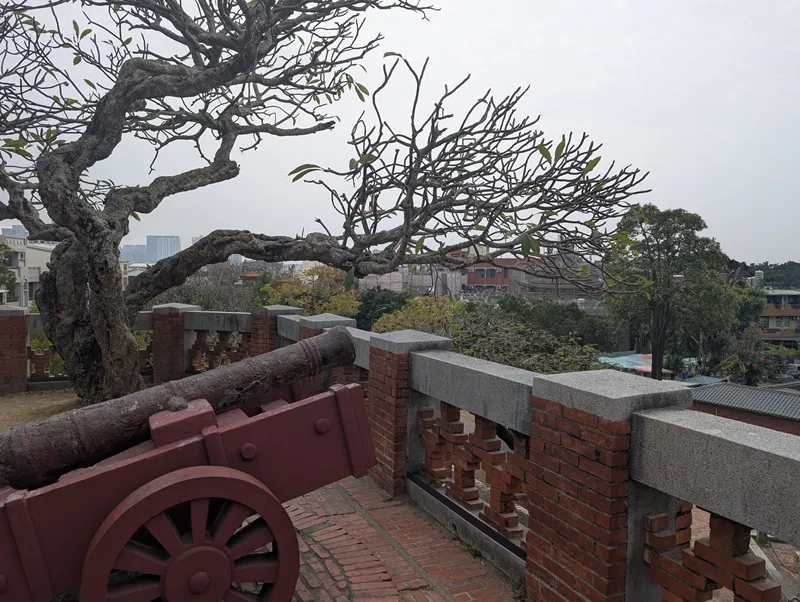
▲Fort Zeelandia (pictured) was built by the Dutch hundreds of years before the current government arrived in Taiwan
Today, Tainan is often affectionately called the “slow city” of Taiwan. While Taipei races toward the future with skyscrapers and high-speed efficiency, Tainan seems to exist in a different temporal zone. The streets are narrower, the scooters (might) move a little slower, and the midday heat often encourages a pace that feels more Mediterranean than East Asian. It is a city that invites you to linger, making it a favorite retreat for students and travelers looking to escape the “Taipei bubble”.
Nothing exemplifies Tainan’s unique spirit better than its culinary scene, which I explored during my recent journey when I tried Tainan’s iconic beef soup (牛肉湯). Unlike the heavy, braised beef noodles found in the north, this southern dish consists of thin slices of locally raised beef doused in a boiling, fragrant broth. Curiously, I discovered that beef soup is also considered a breakfast food in the south! For a student visiting from the north, imagining myself sitting on a plastic stool at 6:00 AM, watching steam rise from the bowl as the city slowly wakes up, I realized that Tainan’s modern identity is built on these small, preserved rituals that make it distinctive from the north.
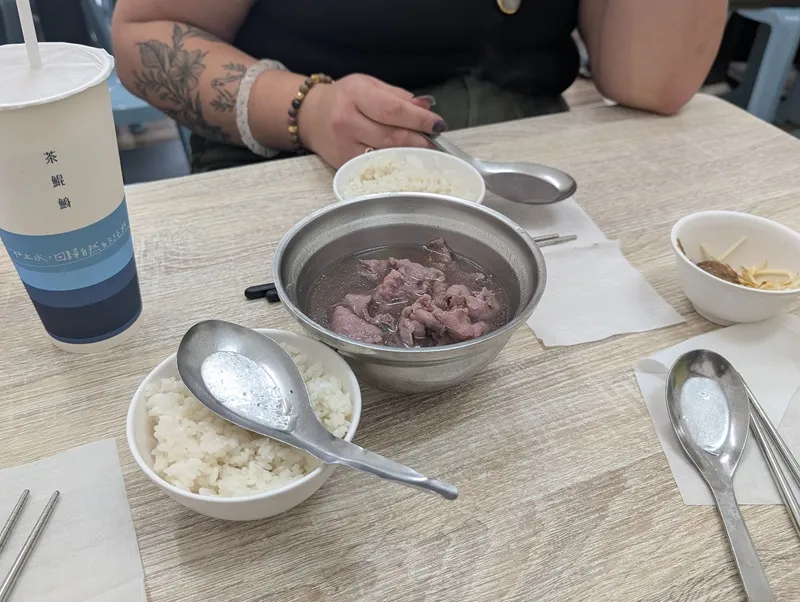
▲Tainan's famous beef soup (牛肉湯)
Tainan’s “pre-ROC” history doesn’t just exist in stone and soup, but further serves as the center of its modern political identity. For graduate students like myself, local politics can feel like a debate over policy and cross-Strait stability. In Tainan, however, politics is often seen as a defense of a specific Taiwanese legacy. It is no coincidence that the city is the undisputed stronghold of the Democratic Progressive Party (DPP). To the people here, the ‘Green’ political identity is representative of a cultural heritage that predates the 1949 arrival of the KMT.
When you look at the voting patterns in the city where the current President and former Tainan Mayor Lai Ching-te continues to see massive support, you see a rejection of the “Year Zero” mentality mentioned earlier. While the KMT historically centered its narrative on the Republic of China’s arrival from the mainland, Tainan’s political culture insists that Taiwan’s legitimacy is found in the centuries of development that happened before that. This creates a sharp north-south divide: if Taipei is the administrative head of the ROC, Tainan is the emotional heart of an older Taiwanese culture.
This link to history is visible in every local election. Tainan’s status as a ‘Green’ bastion is a collective act of sovereignty. By voting for candidates who emphasize Taiwanese self-determination and local identity, Tainan residents are effectively trying to protect their history, one going back to the Dutch arrival, Koxinga, and the Qing. They seek to protect against any narrative that tries to simplify Taiwan into a mere Cold War footnote. For a student of cross-Strait relations, Tainan serves as a vital reminder to me: the quest for peace in the Taiwan Strait is not only a modern diplomatic puzzle; it is also an endeavor to reconcile Taiwan’s deeply layered identities with each other.
As I returned to the familiar, rain-streaked gray clouds of Taipei, I looked back at the city that had been my home for a short time over winter break. Tainan is often treated as a living museum, a place where you can see old temples, eat famous snacks, and then leave. But my time there taught me that Tainan is far more than a collection of relics. Instead, it is a living, breathing challenge to any simplified narrative of what Taiwan is or where it began.
For the international community at NCCU, a visit to Tainan can offer a vital perspective. It reminds us that while the contemporary cross-Strait dilemma often dominates the headlines, the heart of this island and its people originates in a much older history. Whether it’s the resilient red bricks of Fort Zeelandia or a 6:00 AM bowl of beef soup, Tainan’s identity is not a ghost of the past; it is the foundation of the present for many on this island. To truly understand Taiwan and advocate for its peaceful future, one must first look south. In the winding alleys of the old capital, amongst the history and local delicacies, you will also find the enduring soul of a people who have been defining themselves for four centuries.