How do we maintain roots as we uproot our lives? For international students, this question gets at the heart of the whole moving experience. It is the main quest beneath all else — to build a temporary sense of home in an unfamiliar land. It hinges on the delicate balancing act of assimilating while clinging to our unique personhood. How do we balance these shaky scales?
One way we smooth out the knots of moving is seeking comfort through physical pieces of home — in the sentimental objects we transport over oceans. But selecting and packing the ingredients of your life into one or two suitcases is no easy task. What do we bring? And what do we leave behind?
These objects symbolise and then become a way back into ourselves. They are a kind of portal, delightful wormholes connecting past to present. And each person’s sentimental object has a unique story to tell.
In this article, we’ll unpack the special significance of sentimental objects in building a sense of home, and then hear the stories behind the treasures transported to Taiwan by NCCU international students.
Seeking home in object and memory
The quest to “feel at home” is one of the most core human needs, expressed across civilisations and time. As French philosopher Simone Weil wrote in 1942, being rooted “is perhaps the most important and least recognised need of the human soul”.
When we think of rootedness and home, a physical location likely springs to mind. Our home might be the house we grew up in, the city we attended school in, the country on our passports, or simply the place we spent the majority of time in.
But home is so much more complex than this. As philosopher Gaston Bachelard writes in The Poetics of Space, we also experience a sense of home “by means of thought and dreams”. Home, in a major way, lives in our memories and imagination — that transport us to the feeling of calm, connection, and comfort that ‘home’ really just stands in for.
Untethered from place, rootedness can be pursued and found in all manner of things — including our material belongings.
The psychology behind sentimental objects
Sentimental objects come in a couple of key forms. The most famous of which is a ‘transitional object’, coined by Winnicott in 1953.
These kinds of objects instill a sense of comfort mimicking that of a care-giver — giving us security in the absence of a parent or carer. The most common transitional objects are teddy bears and blankets, with the attachment often beginning in childhood.
But sentimental objects are not just for children. While transitional objects like a beloved tattered teddy are more common for kids, attachment objects are for everyone.
Attachment objects are a broad class of objects which provoke positive social feelings — being supported and cared for. These objects are often gifts — physical reminders of loving and being loved, rich with happy, transportive memories.
Attachment objects do wonderful things for us. They can inspire a sense of belonging, promoting shared meanings and group identities. Sports merchandise, national flags, or markers of ethnic identity are good examples here. ‘Huggable objects’, or objects which are sensory in some way can make us feel more trusting of others. Attachment objects can also make us more nurturing, nudging us not only to seek care from the object but care for it.
Uniqueness of human relationships to objects
The cool thing about humans is that where other animals can only find this attachment in care-givers who are physically present, we can attach to ‘proxy’ non-human attachment figures too.
This means in insecure environments, we can find deep emotional security in things like pets, inanimate objects, places, and even abstract ideas like freedom, love, and justice.
And amazingly, they aren’t just hollow proxies for real humans. Over time, these attachment objects become important subjects in their own right. The initial memories they provoked morph into a new feeling — where the object alone can inspire calm and happiness.
Why do we grow attached?
We grow attached to these objects as a hormonal response due to our mammalian attachment system. In non-science terms, humans need to feel both safe and cared for so we can then explore our environment and try new things. And we will seek this out wherever possible.
When we feel securely attached, we then become more social — trusting others and showing more empathy. It also gives us confidence to leave our comfort zones, problem-solve, and explore the world.
Treasured objects in Taiwan
In Taiwan, these sentimental attachment objects give us the feeling of rootedness in our home away from home.
They may seem small and insignificant, but they help us in unimaginable ways. And better yet, they make for good stories! Now we’ll turn to the tales of treasures that stowed away in the suitcases of NCCU international students…
Phongkorn (PK) – Thailand
I think the thing that makes me feel warm and safe, and that I can carry everywhere, is a capybara doll keychain. It’s a little bigger than my palm, so it’s easy to take with me.
I got it from a claw machine. It’s a small gift from my boyfriend, and I’ve had it for about two or three years now. This capybara has travelled to Penang, Ho Chi Minh City, and Taiwan, and also to Kinmen and Matsu, without needing a passport or visa at all (lol). It’s usually hanging on my travel bag when I move or travel, and it’s also like a little friend that stays next to my pillow all the time.
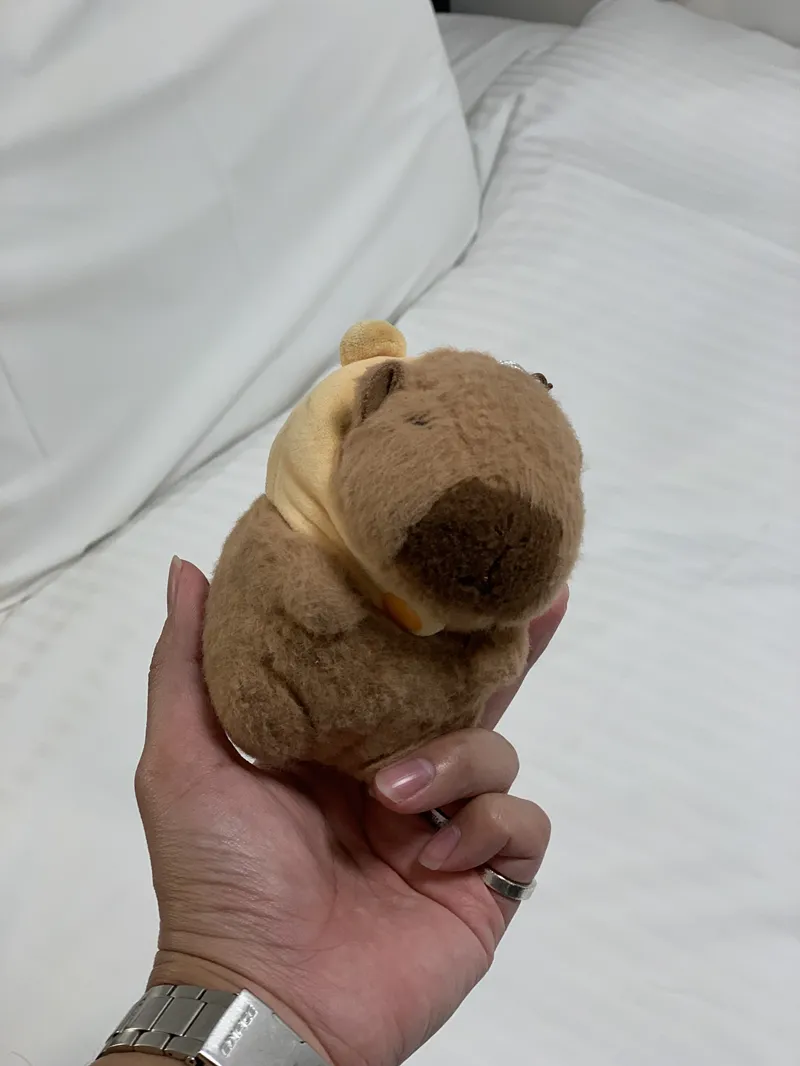
▲PK_s adorable capybara that connects him to his loved ones
Since I’m in a long-distance relationship, it feels like a symbol of those good feelings. Even though it’s just a doll, it tells the story of travelling within our relationship really well. It makes me feel like it shares memories with me all the time. It might sound a bit “anthropology,” but it really has some kind of power that connects with me. And beyond my relationship with my boyfriend, it also connects to my family, because in almost every trip and every story, this little thing somehow travels with me too.
I feel like it gives me real emotional comfort. Sometimes when I have a bad day or things feel tough, I feel some kind of warmth when I pick it up. When I think back to those stories, I feel like, okay, I’ve recharged my battery. After I put it down, I can go back to doing other things better, like writing my thesis.
Who would know that a doll, something that looks “lifeless” to other people, could mean so much to me in a way I can’t really put into words? It makes me pay more attention to small things around me. Sometimes when I see a lost doll or keychain at my university, I usually pick it up and leave it with the security guard at the gate, because sometimes it could be really valuable to the person who owns it.
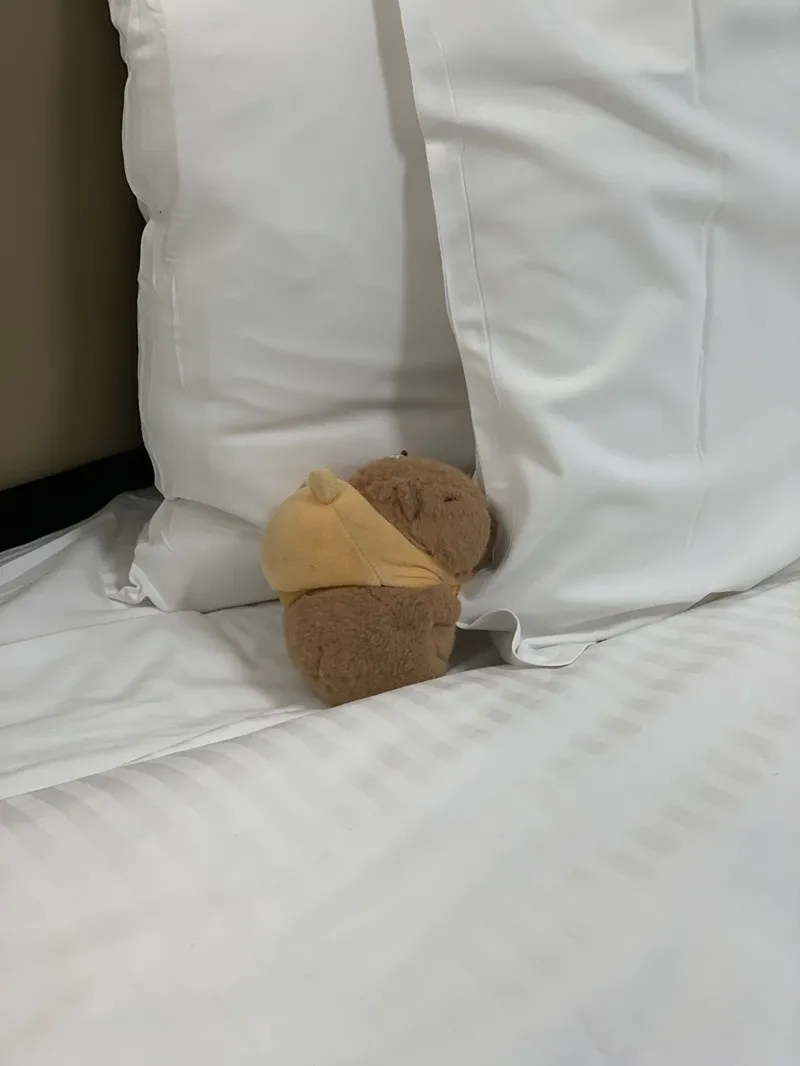
▲PK_s capybara he brings all around the world
Danny – Indonesia
I brought my stamps and the album. I have collected them since I was 6 years old. At first, my mom introduced me to the philatelic hobby because she also used to collect stamps. So since then, I've been collecting stamps from around the world.
For me, collecting stamps helps me learn more about the world, people, cultures, and places outside my own country. It became like a “treasure” to me and always reminded me of my dreams and goals. So, I've always brought at least one of the albums when I moved here (I have around 5 in total). In Taiwan, I bought a new album and moved most of my stamps here.
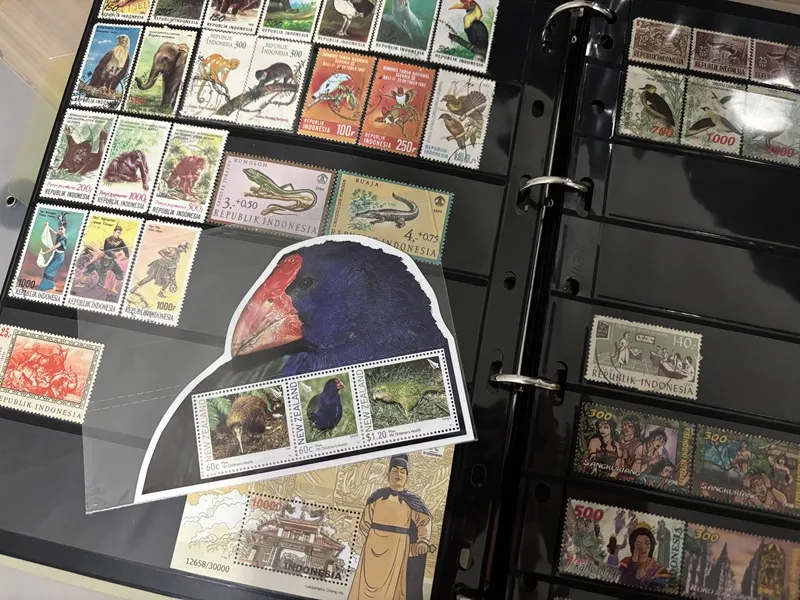
▲Danny_s stamp collection
Lupita – Mexico
When I moved to Taiwan, one of the most meaningful and comforting objects I brought with me was a small travel pillow. My parents gave it to me in 2015, when I took my very first trip alone. That moment marked an important turning point in my life — it was the first time I stepped into the world independently, carrying both excitement and fear. Giving me that pillow was my parents’ way of taking care of me, even when they couldn’t be physically there.
Since that first trip, the pillow has never left my side. It has accompanied me on every journey I’ve taken since then, becoming a quiet witness to my growth over the years. It has been with me in airports at dawn, on long flights where I felt both anxious and hopeful, and during moments of exhaustion when all I wanted was something familiar to hold onto.
This pillow carries many memories. It reminds me of the person I was in 2015: younger, more uncertain, but brave enough to take that first step alone. It also reminds me of my parents’ love and support, and of the invisible bond that connects us no matter how far apart we are. Every time I use it, I feel a sense of warmth and reassurance, as if a small part of home is still traveling with me.
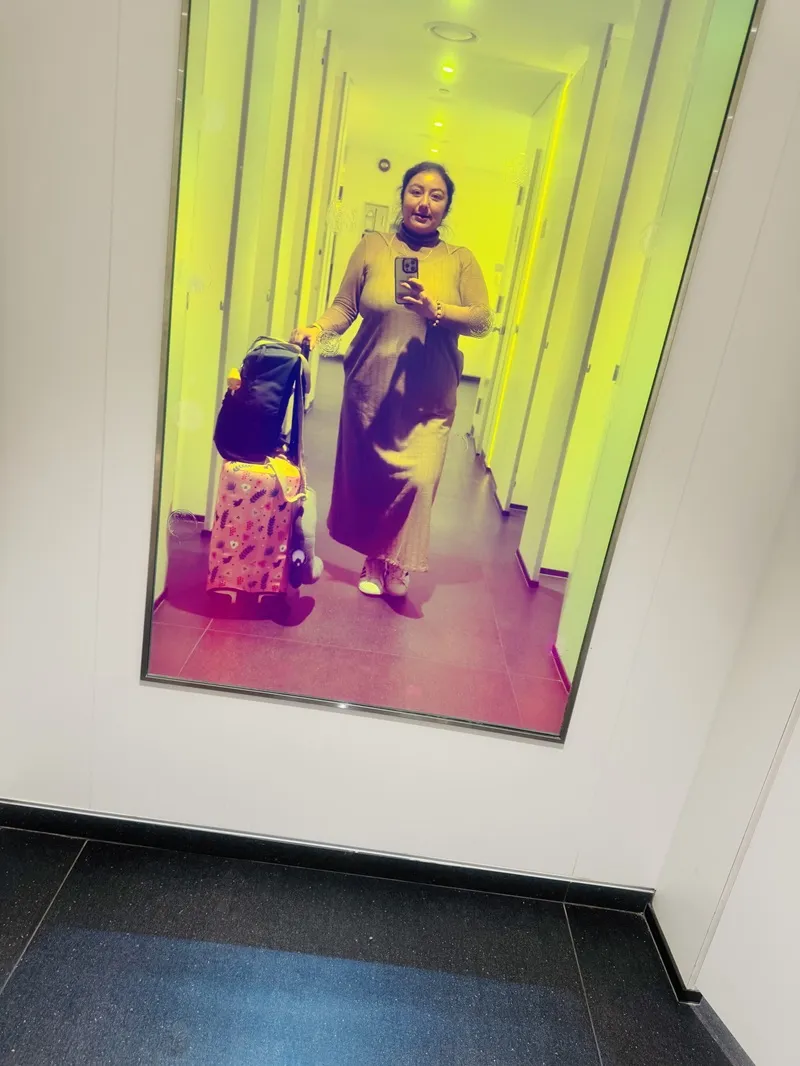
▲Lupita and her travel pillow
Living abroad has also changed the way I think about the things I keep close. I’ve learned that comfort doesn’t always come from big or expensive objects, but from small items filled with memories and emotional significance. This travel pillow has taught me that home is not just a place, but a feeling — one that can be carried across borders, time zones, and stages of life. In many ways, it represents my journey, my independence, and the love that continues to support me wherever I go.
Mikolaj – Poland
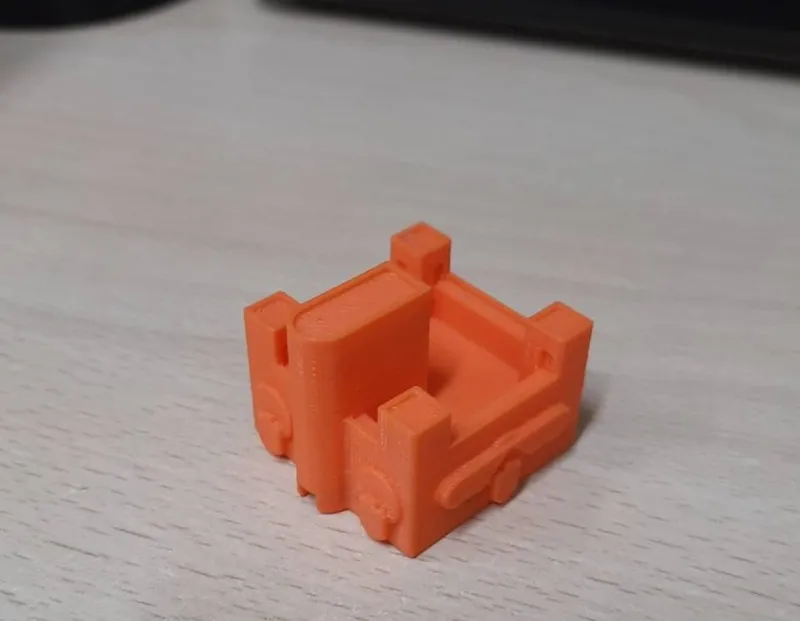
▲Mikolaj_s 3D printed castle
The first thing that comes to mind is a 3D-printed model of a small castle. I designed it myself and printed it back in Poland a few years ago. I'm not entirely sure why it is so comforting but I feel a bit more at peace, grounded if you will, when I think about it or look at it sitting on my desk. Maybe it's like a link with my previous stage of life, something I created back then and carried with me all the way here, both in space and in time. Or maybe it's the form it has? A castle, after all, is something firm, immovable. Whatever the source, the comfort it brings me is real, if subtle.
I definitely started relying more on my e-reader when I moved abroad. Back home I would have a lot of books in my room but obviously, I couldn't bring them all here with me so now I'm mostly reading ebooks. It is kind of similar with other objects as well – I started caring more about portability and so now I'm mostly surrounded by easily transportable, often small objects. It sort of feels like being a nomad, if you know what I mean.
Jasenghkwan Saga – Myanmar
I brought a Kachin flag with me from my home country. For many people, bringing a flag from home might seem ordinary or not especially meaningful. But for me, the Kachin flag carries a very deep and complicated significance.
Myanmar has been facing one of the longest civil wars in the world, with ongoing ethnic conflicts for decades. In this context, ethnic identity is highly politicized and dangerous. In Myanmar, simply holding or displaying the Kachin flag can lead to arrest, interrogation, or even worse under the military junta. It is seen as a symbol of resistance and suspicion.
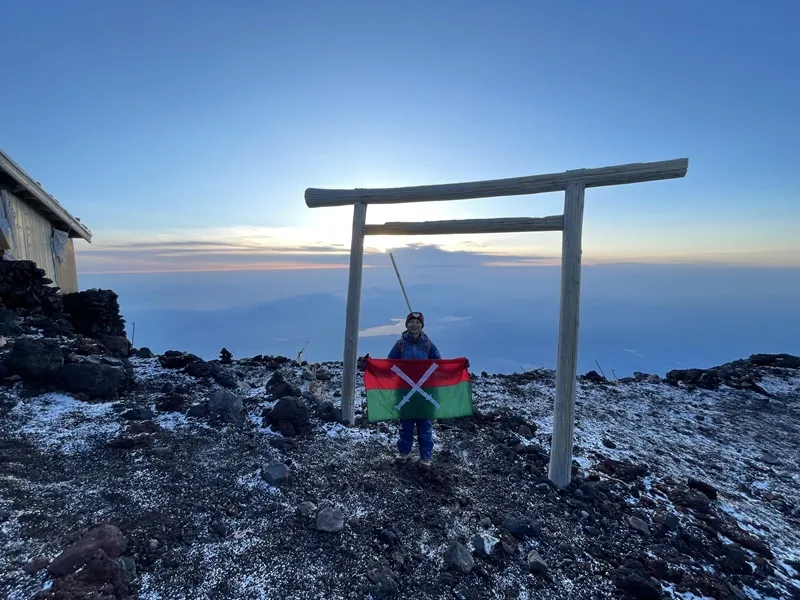
▲Saga with her Kachin flag
When my friends and I were teenagers, we really wanted to wear Kachin flag T-shirts or other accessories. But we were constantly told not to — by adults, by teachers, and by fear itself. Loving our identity had to be done quietly and carefully. Because of this, we grew up with very complicated feelings about flags and national symbols. For us, the Kachin flag is not just a piece of cloth; it represents our people, our history, and our struggle to exist.
When I moved abroad, I made a conscious decision to bring the Kachin flag with me. It felt like carrying a part of myself that I was never fully allowed to express back home.
Living abroad has given me something I never had before: freedom. Now, I can hold my flag openly. No one will arrest me for it. No one will question my loyalty or threaten my safety. I now live in a safe country. I have a stable place to stay. I don’t have to worry about bombs, airstrikes, or sudden violence. I can study in peace. These things are normal here — but for my people back home, they are still dreams.
The Kachin flag is no longer just something I own—it is something that holds me together. In a temporary place, it helps me build a sense of home and reminds me that there is a place I belong to and hope to return to one day.
Catherine – United States
I have a small collection of postcards which were sent to me by friends from the US before I came to Taiwan. I used to display them in my room at home, and now I have them taped to my wall here.
After graduating from college and spending time at home before coming to NCCU, several of my friends sent me postcards from their home states. Each of them had a different design, some were even hand-drawn. When I was thinking about what to take with me, I chose these postcards because they are small, lightweight, and easy to display.
Having these letters from home with me in Taiwan helps me feel less isolated. When I read their words of encouragement, I feel motivated to take on new challenges.
Living abroad has definitely changed how I think about the things I value. Moving solo made me reconsider what items I prioritize. I especially treasure items that are small and sentimental or functional, that way I am always able to take them with me and use them.
Tom – The Netherlands
I brought a mug that I received from my colleagues at the garden centre I worked at for 6 months, "De Oude Tol" in Wageningen.
It became an inside joke for my and my colleagues that when I left for Taiwan they would give me a mug with their faces on it so I didn't forget them, and I in return would give them all a mug with my face on it. On my last day they surprised me with an actual mug, and hence I brought it to Taiwan with me to serve as my one and only mug. But unfortunately, the mug-ear broke so now it's just a sentimental mantle piece.
The mug has a photograph of me and my colleagues during a dinner we organised between the 5 of us, it was especially memorable because it was just us, the employees from the "inside-outside plants" and this dinner was organised without the company, just by us, for us.
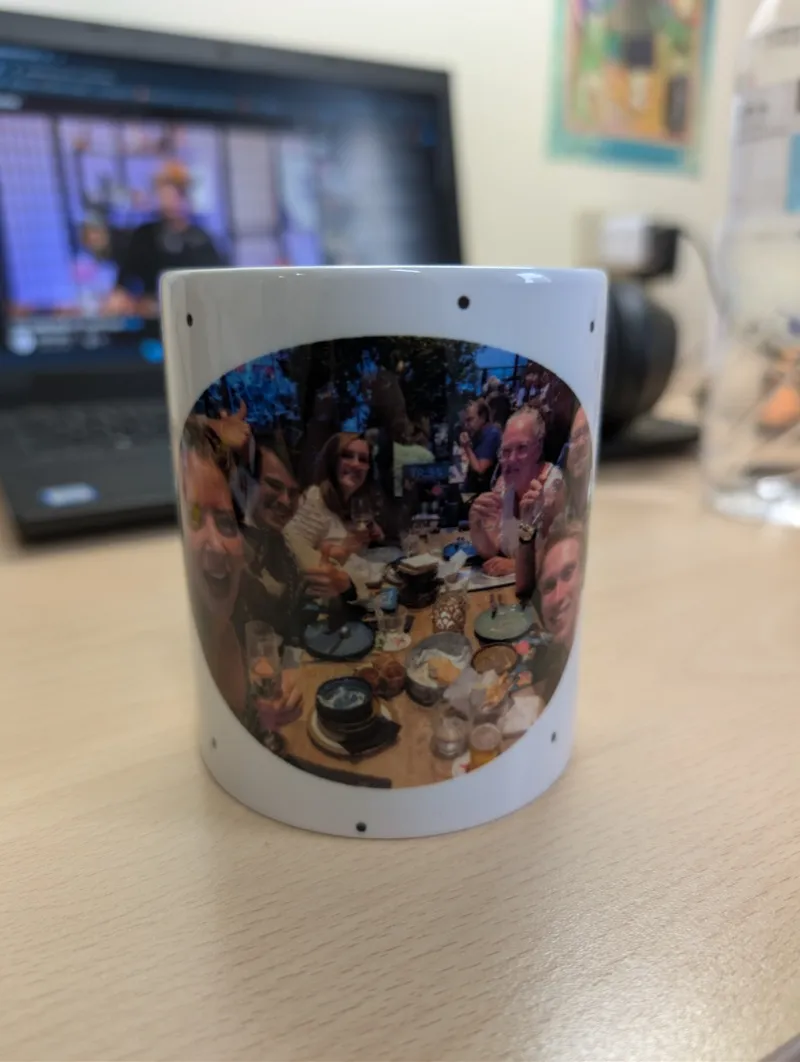
▲Tom_s sentimental mug from his ex-colleagues
Now I intentionally buy stuff in the different places I've been, even if they don't serve a purpose; much like my mug currently,
Ruby – New Zealand
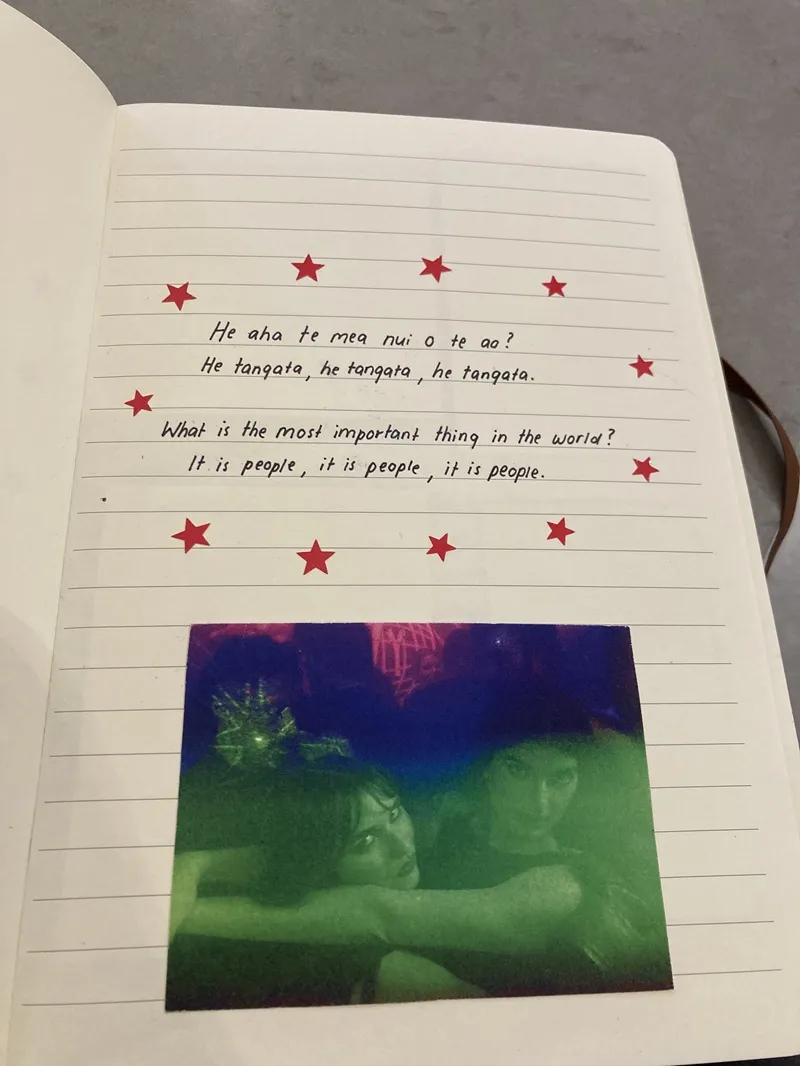
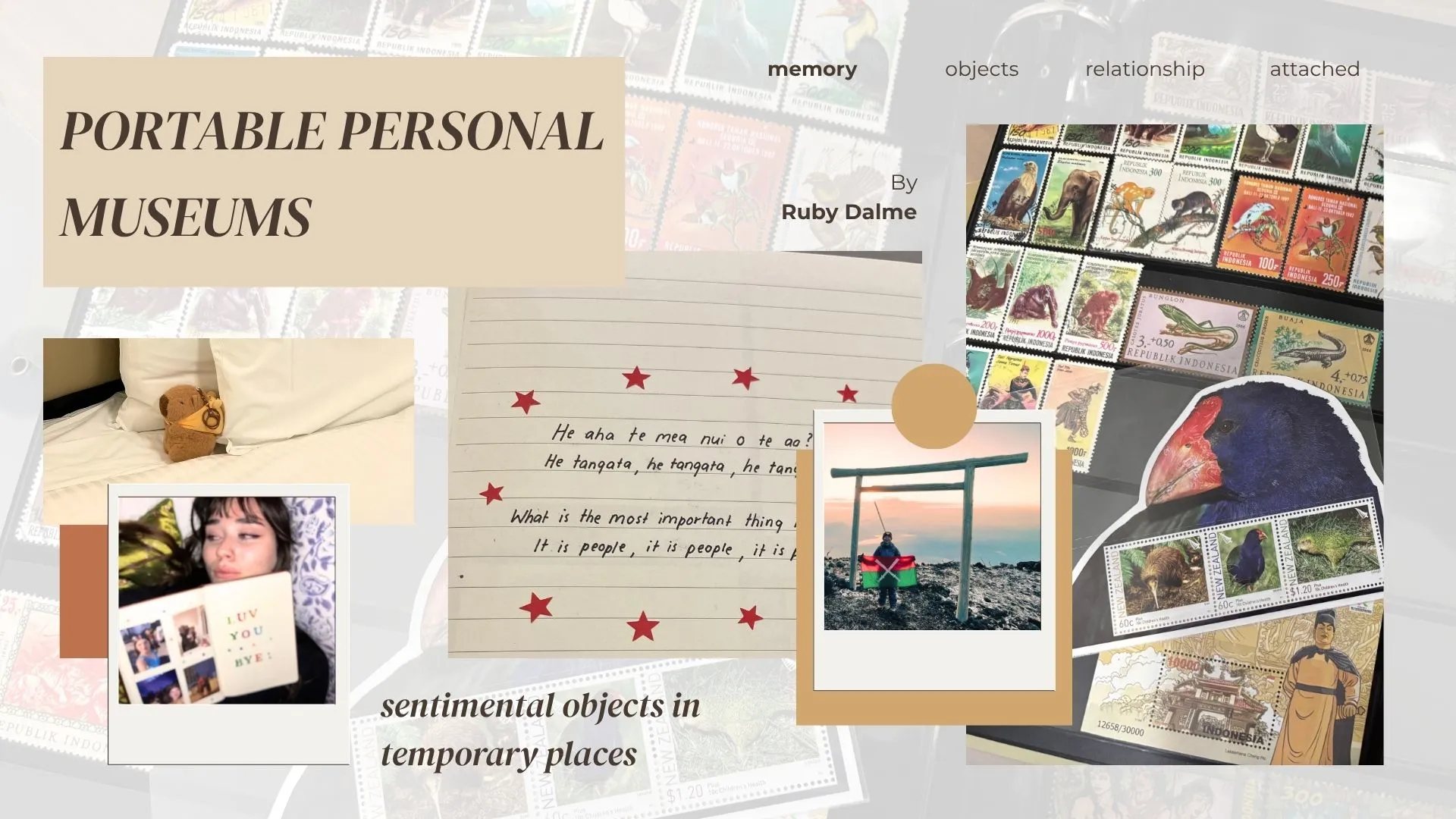
▲A page from my sentimental notebook - it includes a Te Reo Māori whakat shows a Māori whakatauki (proverb) about the importance of community
I’ll finish this piece with my own story. My sentimental object is a brown suede notebook. This notebook is a very special scrapbook made by my close friends in New Zealand as a goodbye present. Before I left for Taiwan, my best friend asked my friends to write letters for me and send in photos of us over the years.
Each page is filled with the most ridiculous stories and the most lovely words. A couple of them even dared to write poems. Special mention to Finn who created an absurdist piece of prose involving several Rupaul hit songs woven seamlessly into the story…
My best friend hand wrote everyone’s contributions and printed out, cut, and glued in all the photos. It would have taken lots of effort on everyone’s part.
Reading the notebook makes me laugh and usually cry. It connects me to their care and eases the weird wobbles of homesickness. It hurts to miss them but also soothes the mind knowing there’s this army of cool people in my corner.

▲Me with my sentimental notebook the day before I moved to Taiwan