Leaving Taipei at the end of the semester, I felt a bittersweet mixture of emotions. As I zipped up my suitcase in my apartment near NCCU, I was excited by a few very specific longings: the craving for wall-to-wall carpet, a mattress that didn’t feel like a yoga mat on a sidewalk, and the glorious, dry hum (and smell!) of central heating. I wanted to trade Taipei’s damp, bone-chilling winter for the suburban comforts of my home in Georgia. Yet, as I navigated the familiar halls of Taiwan Taoyuan Airport, a heavier thought settled in my gut. This flight was for a holiday break, but the next time I made this journey, it might be ‘for good’. Even my “Thank you!” to the gate agent felt like a rehearsal for a final goodbye I’m quite ready to say.
I arrived in Georgia to the comforts I had dreamed of, but I soon realized that while I had brought my luggage home, I hadn’t quite managed to leave Taiwan behind. It started with the ‘phantom’ habits. I found myself instinctively nodding and bowing to a perplexed cashier at a local grocery store. I felt a surge of genuine guilt leaving a restaurant table without sorting my own trash or carrying my tray to a designated station. Even the American tipping culture felt like a sudden, frustrating cultural exam I hadn’t studied for. I was physically in the South, but my social operating system was still running on Taipei time.
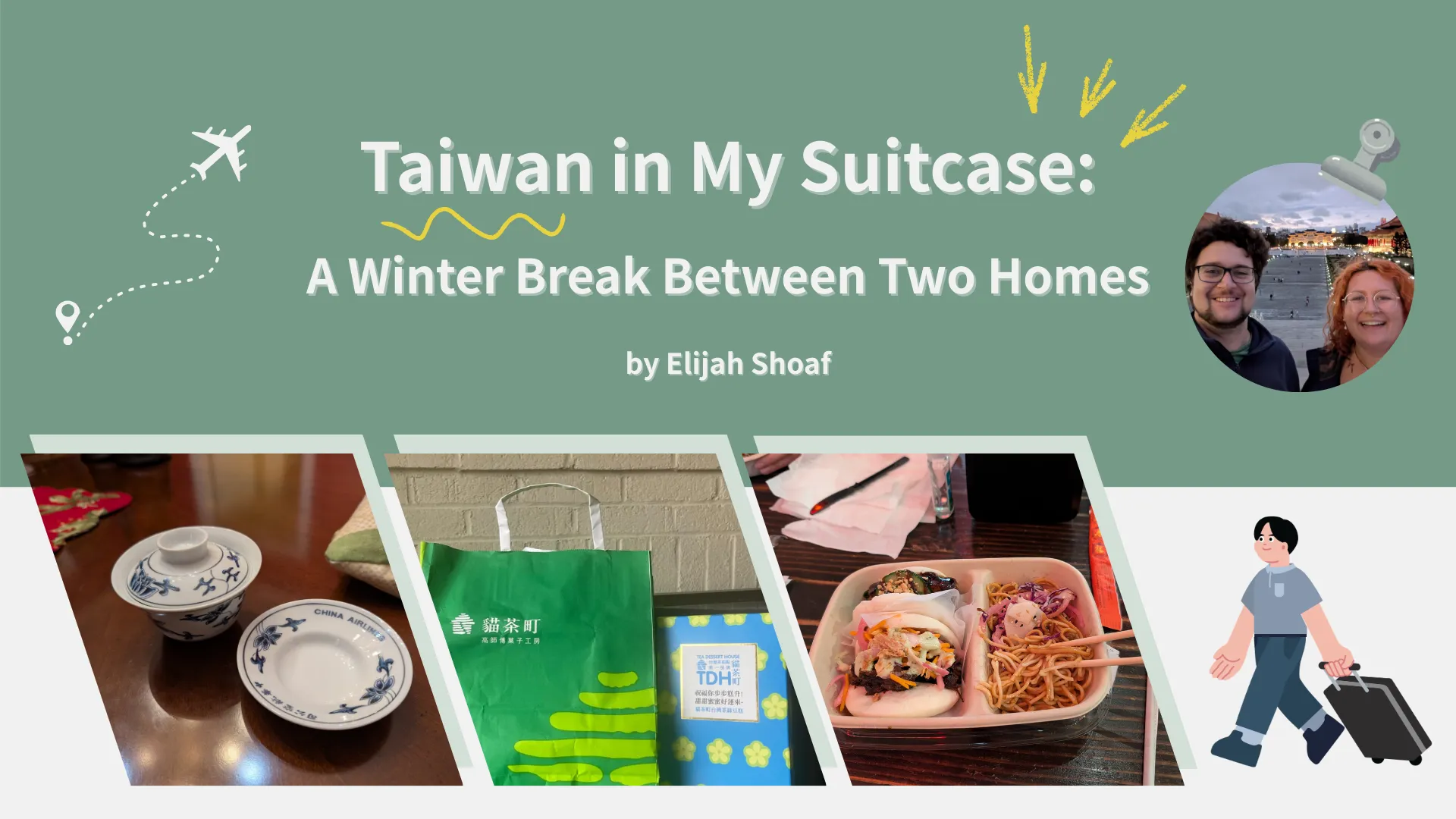
The most poignant reminder of this shift arrived on Christmas Eve. Among the gifts I received from my grandmother was a set of vintage China Airlines business class teacups—relics from an era of aviation long past. As an aviation enthusiast, I marveled at the design, but as a grad student living in Taipei, I saw something more. A year ago, these would have been “cool collectibles” to me. Now, they were a bridge. I realized that without my time at NCCU, I wouldn’t have the context to appreciate the weight of the porcelain or the history of the carrier they represented.
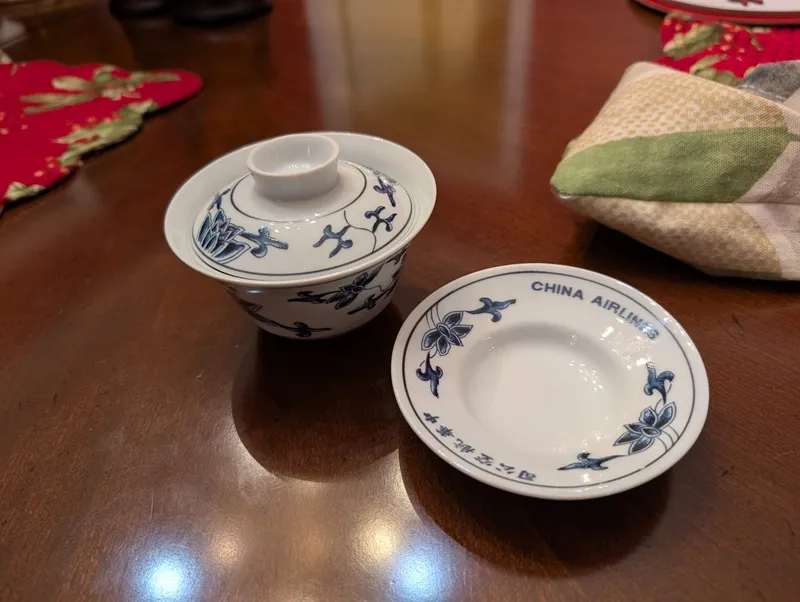
▲I collected some more Taiwan memorabilia over break, including this vintage China Airlines teacup.
Taiwan wasn’t just a place I was studying anymore; it had become a lens through which I viewed my own home. I had gone back to Georgia to find my old life, only to discover that my suitcase was packed with more than just clothes—it was full of a new identity that was beginning to redefine what “home” actually meant.
If my first few days in Georgia were defined by the “phantom” habits of social etiquette, the second week was defined by a literal hunger for the familiar. In Taipei, food is a public affair—a chorus of sizzling woks at the NCCU side gate and the rhythmic thud of cleavers. In suburban Georgia, food is a private, curated project. To test out a new wok, I set out to recreate a simple beef and broccoli stir-fry, a dish that served as my culinary “hello again” to the U.S. As a result, I found myself at Nam Dae Mun, a sprawling ethnic grocery store that served as a reminder of the diversity I had grown up with. Navigating aisles where Korean, Hispanic, and Southeast Asian ingredients live side by side felt like a homecoming of its own. It was a stark contrast to the convenience-store consistency of Taiwan. Here, the ingredients were a map of the world, and I was grateful to find that my suburban community was more than capable of stocking ingredients for my new Taiwanese-influenced cravings.
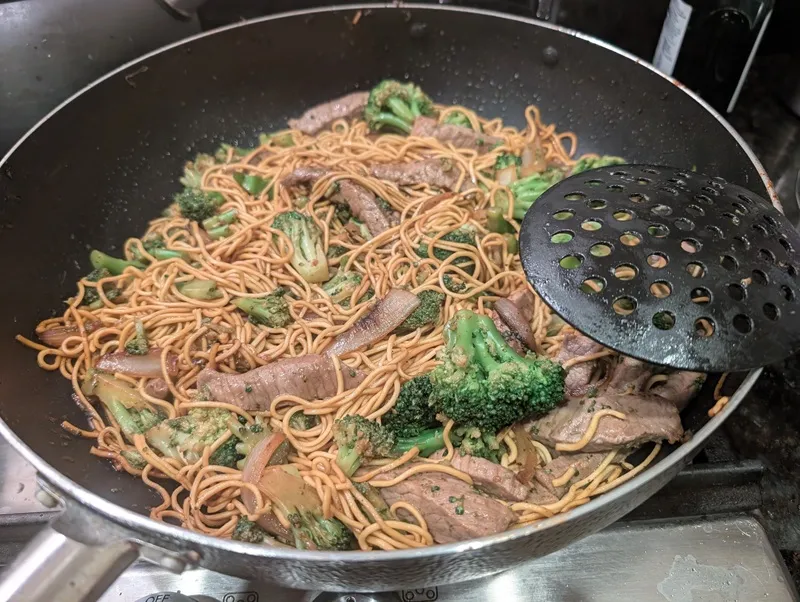
▲I tried my hand at some of the culinary skills I see on display every day in Taiwan.
However, the Taiwanese influence wasn’t just in my kitchen; it was creeping into the local landscape. At the same strip mall where I spent my childhood going to the movies, a brand-new bubble tea shop had opened its doors. It sat in the shadow of the town’s oldest Chinese restaurant, a literal representation of the old guard meeting the new wave. Yet, the cultural translation wasn’t perfect. When I walked up and placed my standard Taipei order—a simple, unsweetened oolong tea—I was met with a look of genuine confusion. In the US, bubble tea is often treated as a decadent dessert, a sugar-laden treat; in Taiwan, tea is instead a daily companion, a craft defined by the quality of the leaf rather than the level of the syrup.
Still, even with a tea shop nearby, some cravings remained unfixable. I found myself waking up in Georgia, pining for a Taiwanese hanbao for breakfast. There is something about that specific combination of a soft bun, pork, cheese, egg, and that signature sweet-and-savory sauce that defies American replication. It isn’t just the recipe; it’s the infrastructure. The lack of a local small breakfast shop—those neighborhood pillars that open at dawn and know your order by heart—leaves a void that no American diner can quite fill.
I found a temporary cure for this nostalgia during a quick trip to New York City to visit some friends. In a local food hall, I tucked into a Gua Bao—the iconic sandwich. It wasn’t a carbon copy of what I’d find at a night market in Taiwan; it was something else. It was immigrant cuisine in its most vibrant form: fused with local influences and American techniques to create something new and wonderful. It was a reminder that while the flavors of Taiwan are deeply rooted on the island, they are also incredibly resilient, capable of thriving and evolving wherever they land.
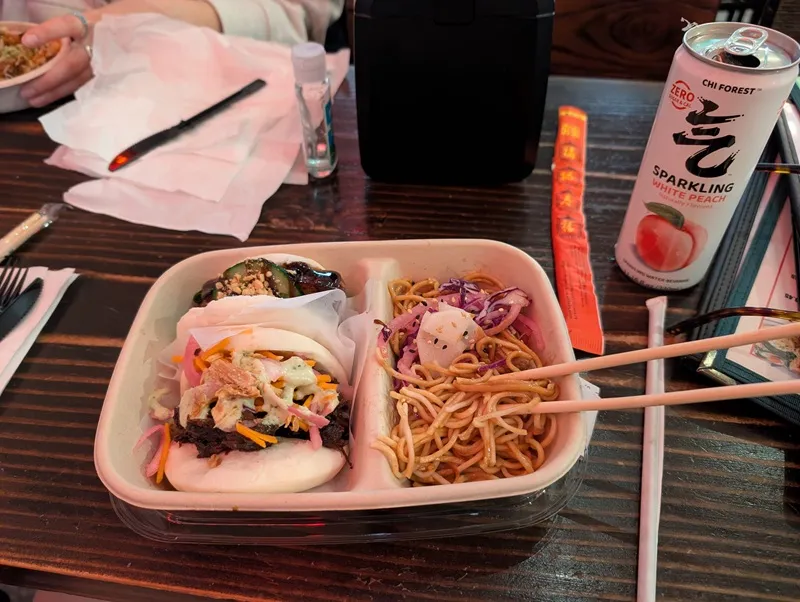
▲A local New York City shop's take on a bao sandwich.
Carrying Taiwan back to the US wasn’t just about my own habits; it was about the physical weight of my luggage as well. I spent a good portion of my break playing the role of a culinary ambassador, delivering carefully packed boxes of pineapple cakes, tea-flavored nougats, and mung bean cakes to friends who had hosted me during break.
There is a specific joy in watching an American friend try a mung bean cake for the first time. You have to warn them: it isn’t ‘cake’ in the Betty Crocker sense. It’s dense, earthy, and sophisticated. As they navigated the crumbly texture, I realized these small exchanges were more than just thank-you gifts. They were a continuation of a thread that had started much earlier in my life.
Growing up in Georgia, I had a Taiwanese friend just down the street. We eventually lost touch as the years passed, but reflecting on that friendship now, from my desk in Taipei, I see it as a silent catalyst. The smells of their kitchen and the glimpses into their household were far from just a childhood backdrop for me. Instead, I now believe they were the first seeds of an affinity for this island. That friendship likely pushed me to look beyond my own borders long before I ever considered a graduate degree across the Pacific.
However, the sometimes humorous reality of cultural exchange truly hit home when I brought a friend back to Taiwan with me for the second half of the break. Seeing the island through her eyes was like watching a movie I knew by heart, but through a brand-new lens. Suddenly, things I had begun to take for granted became obstacles or wonders. I watched her wage a heroic, albeit messy, war with chopsticks at every meal. I found myself explaining “strange” ingredients that I now consider staples, and providing a tactical briefing on the “Taiwanese bathroom situation”—the specific etiquette of what goes in the bin versus the bowl that every traveler here eventually has to master.
The payoff, however, came in Tainan. We found ourselves in a small, unassuming beef soup shop, the kind of place where the steam from the broth fills the room, and the chairs are strictly plastic. She eased into a bowl of stir-fried beef noodles, and the struggle with the chopsticks finally ceased. “This,” she said, “is the best thing I’ve eaten.” In that moment, the distance between Georgia and Taiwan collapsed. The culture shock was real, but the universal language of a perfectly executed Tainan beef noodle proved to be the ultimate bridge.
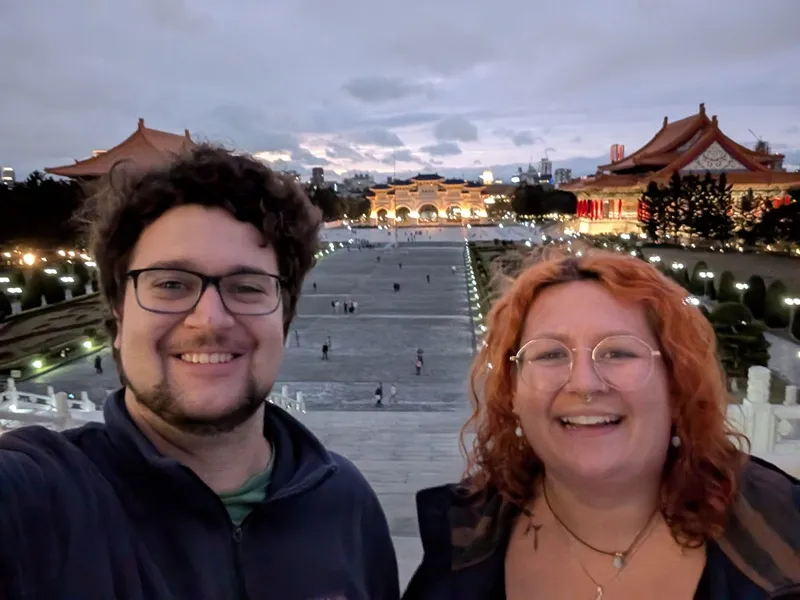
▲At the end of January, my friend followed me back to Taiwan; she had a great time exploring the island!
Landing back at Taiwan Taoyuan International Airport felt different from how it had just a few weeks prior. The “final goodbye” I had rehearsed in December was replaced by a quiet sense of relief as I boarded the bus back toward my apartment in Wenshan District. Stepping into my apartment, I felt an immense sense of relaxation. The mattress might still be firm and the air a bit damp, but after weeks of traveling and acting as a guide for my friend, the familiar hum of my Taipei neighborhood was a comfort. Now, in the quiet lull before the Lunar New Year celebrations reach their peak and the new semester begins, I find myself in a period of intentional preparation. This is a time for mindfulness and a chance to recalibrate before diving back into the complexities of my graduate thesis. Yet, even in this academic headspace, the parallels between my two homes continue to surface.
Just before the semester starts, I will attend the Chinese National Orchestra’s New Year Concert, an experience that will serve as the perfect bookend to my Christmas in Georgia. Watching the people prepare, the vibrant red decorations, and the palpable sense of family and renewal, I am struck by how much the spirit of the Lunar New Year mirrors the Christmas traditions of the West. Both are defined by a return to roots, a gathering of loved ones, and a shared hope for what lies ahead. Though the cultures are different, the emotional root is the same.
As I sit in my Taipei apartment, preparing for the academic rigors of the coming months, I realize that the balance I sought at the beginning of the winter may never be perfect. These two cultures: the sprawling, diverse suburbs of Georgia and the dense, traditional, yet modern energy of Taiwan, will always be in a bit of a tug-of-war. They pull at my habits, my palate, and my perspective in ways that can be exhausting, yet deeply enriching. I’ve learned that I don’t have to ‘unpack’ Taiwan once I land in the US, nor do I have to leave Georgia behind when I return to NCCU. Instead, I carry both in the same suitcase. Taiwan has left an indelible mark on my life, from the way I instinctively nod to a stranger to my newfound appreciation for the history behind a vintage porcelain teacup.
Over my winter break, I realized that “home” is no longer a single point on a map. For me, it is a collection of moments, flavors, and people scattered across the Pacific. As the semester begins and Taipei gears up for the Year of the Horse, I find myself grateful for the friction between my two worlds. It is in that tug-of-war that I’ve found my most authentic self: a student, a traveler, and a permanent resident of the space between two homes.
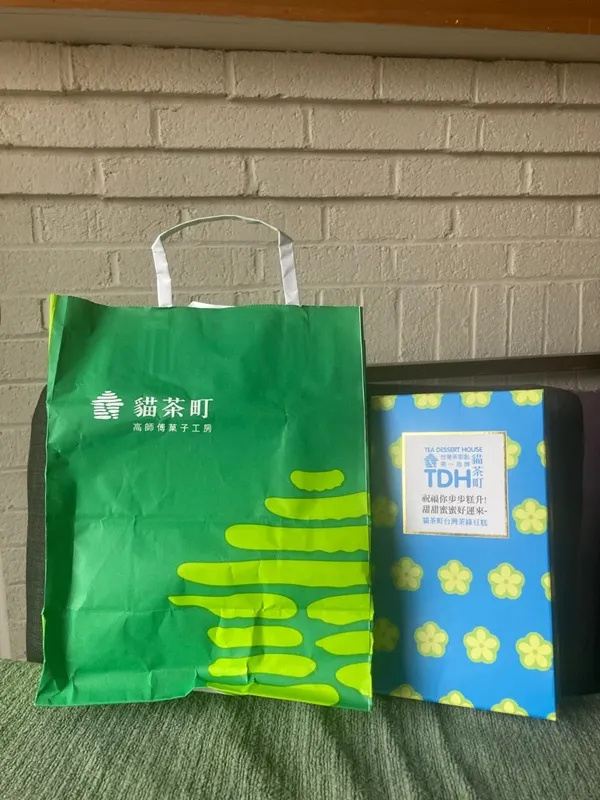
▲I brought back plenty of gifts from Taiwan, including this box of mung bean cakes.