

Introduction
On February 8, 2026, the Taipei World Trade Center became an unexpected extension of the Thai political landscape. As the first ballots were being counted in the Thai General Election, hundreds of supporters gathered for the launch of Pita Limjaroenrat’s memoir, The Almost Prime Minister 《未竟之路》. Among those in the winding queue were Thai residents of Taiwan, supporters who had flown to Taipei just for the occasion, and many other readers, including the National Chengchi University (NCCU) students who share their experiences in this article.
Pita’s appearance in Taipei was a masterclass in political perseverance. Promoting the first overseas translation of his memoir, he spoke of a movement that refuses to be erased. As he addressed the crowd, the vote back in Thailand coincided with his visit, a movement contesting its third election under its third incarnation: the People’s Party.
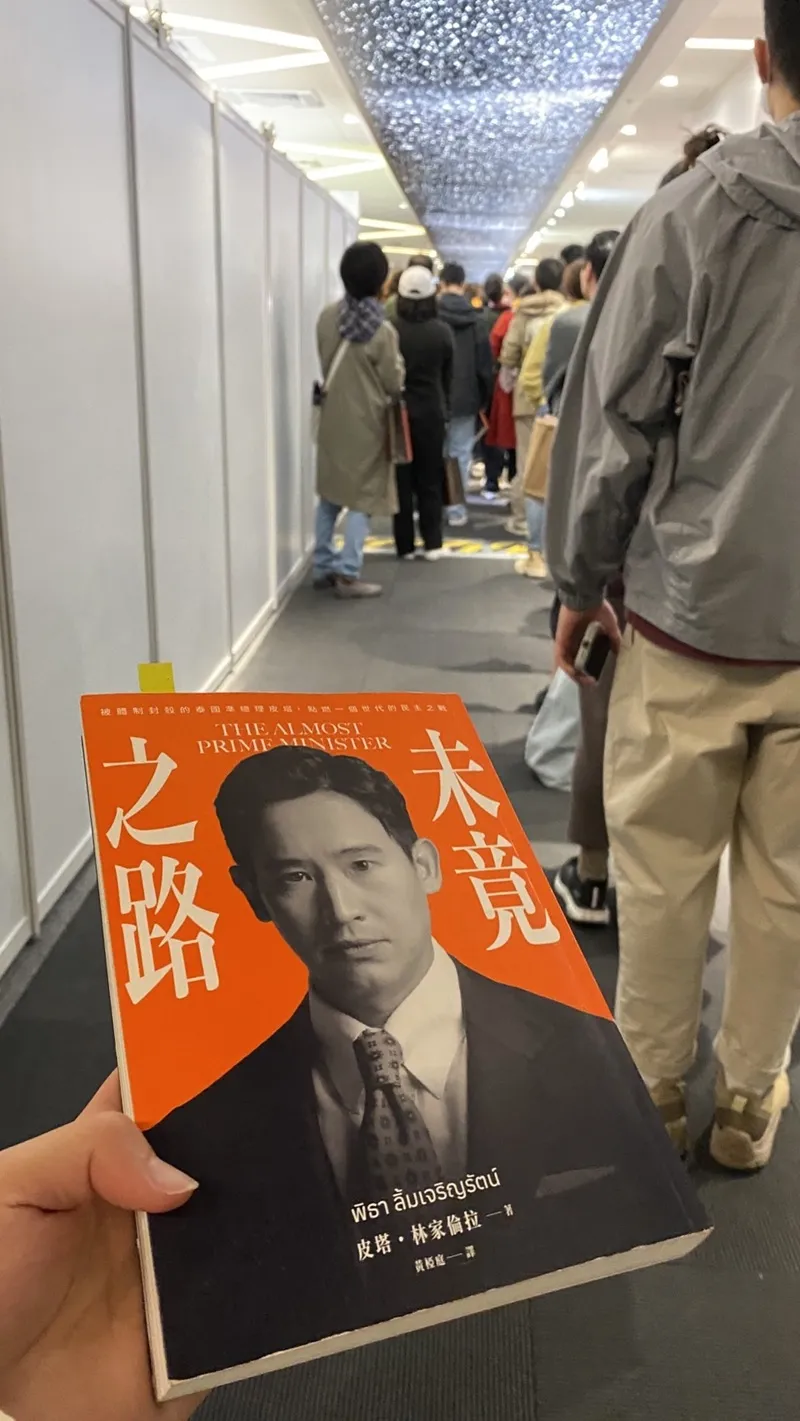
▲NCCU students queued for Former Move Forward Party leader and Thai lawmaker Pita Limjaroenrat’s book signing in Taipei.
A History of Resilience
To understand the gravity of the event, one must understand the "Orange" movement’s tumultuous history. Pita entered politics in 2019 with the Future Forward Party, which was dissolved in 2020. Describing himself as the movement’s "designated survivor," Pita led the successor Move Forward Party to a stunning victory in the 2023 general election.
Despite winning the most seats, he was blocked from the premiership by Thailand's unelected Senate. The suppression continued in August 2024, when the Constitutional Court dissolved the Move Forward Party, ruling that its proposal to reform the lèse-majesté law was an attempt to undermine the monarchy. The court barred Pita from politics for 10 years, a move that drew "disappointment" from the United Nations. Yet, as Pita told the Taipei crowd, "They can dissolve parties, but they cannot dissolve hope."
Voices from the Front Row: Moji and Gayagay
For Sasivimol Saelao (Moji), a second-year Economics major at NCCU from Chaiyabhum, Thailand, meeting Pita was a transformative experience. Having followed him since the Move Forward era, Moji saw him as more than just a politician but a symbol of a Thailand that could be.
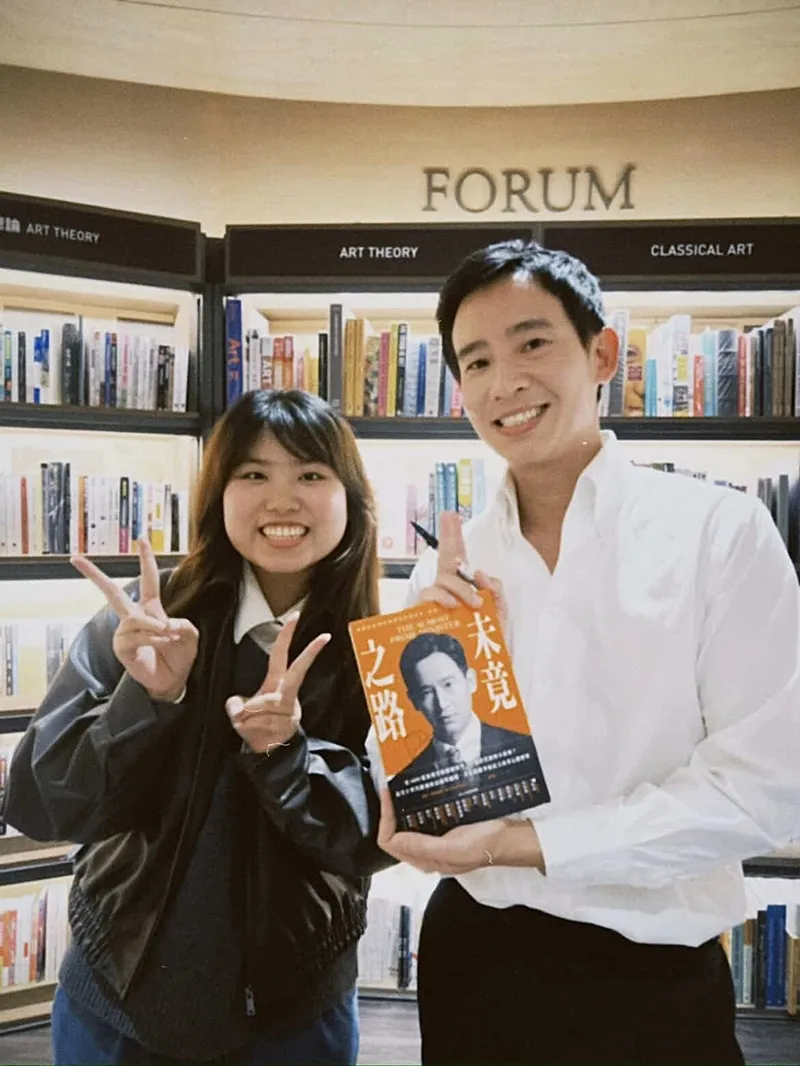
▲Moji (left) posing excitedly with Pita Limjaroenrat (right)
"It felt like meeting a celebrity," Moji recalls, her eyes lighting up. "After the previous election, we didn’t get to see him speak about politics very often since life has to move on. But seeing him in person, I felt my eyes light up. I believe that if he had become Prime Minister, the country would have gradually changed."
Moji was joined by her friend 邸薇 Gayagay Valjius, a 2025 NCCU graduate of the Department of Ethnology who minored in Thai. For Gayagay, her Thai language studies served as a "vital entry ticket" into this political world.

▲Gayagay (right) was excited to get her book signed by the author.
Gayagay’s participation also highlights how NCCU’s curriculum, ranging from culture to political terminology, enables local students to empathize deeply with their international peers.
The 2026 Election: A Conservative Surge Under a Cloud of Corruption
The excitement of the book signing stood in stark contrast to the unfolding results of the election, which proved that Thai politics remains a theater of the unpredictable. Defying opinion polls that had placed the reformist People’s Party ahead, the conservative Bhumjaithai Party ("Thai Pride"), led by Prime Minister Anutin Charnavirakul, claimed a resounding victory.
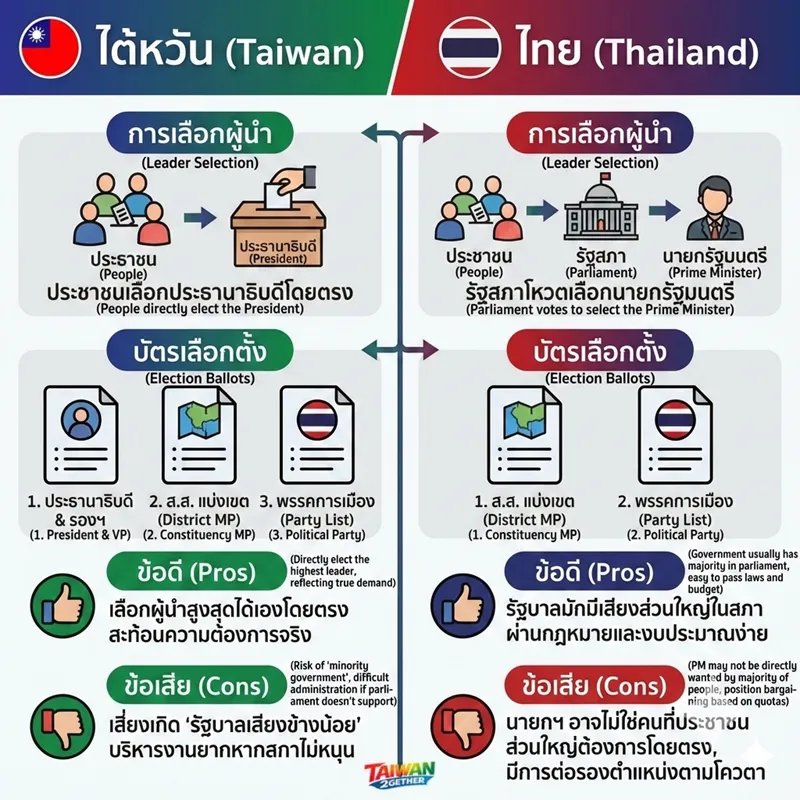
▲A comparison of the election processes of Taiwan and Thailand, revealing why Thailand’s system often produces a Prime Minister who lacks a popular mandate, a phenomenon clearly illustrated by Pita Limjaroenrat’s experience in 2023. Source: Taiwan 2gether
With 94% of the votes counted, Anutin's Bhumjaithai party is projected to win 193 (previous election only 71) seats in parliament, with the People’s Party in second place on 118 (previous election up to 151). Anutin claimed the success belonged to "all Thais," yet the victory was heavily overshadowed by allegations of systemic fraud leading to a seat change of 122 seats. Thailand’s latest election is now being labeled by critics as the most corrupt in the country’s history.
Mounting evidence of vote-buying has surfaced across the country, with payouts ranging from 200 baht ($6 USD) to as high as 5,000 baht ($160 USD). Despite a massive 7-billion-baht (approx. $200 million USD) budget, the Election Commission has faced non-stop reports of malpractice, including inconsistent counts and the invalidation of millions of votes that appeared valid. This "electoral disaster" has led to nationwide calls for a recount, casting a shadow of illegitimacy over the projected winner.
"I felt secretly sad and disappointed," Moji admits. "I used to wonder why people would compromise their values for vote-buying, but I’ve realized that financial desperation leaves many with little choice. It’s heartbreaking to see a party focused on national development lose to the lure of quick cash. It shows how easily poverty can overshadow even the best policies.”
Preme (Booyanan Chongsereechit), a third-year student at the International College of Innovation (ICI) from Sisaket, shares this frustration. Having first voted in 2023 at the age of 18, Preme remembers the high hopes of that era being crushed by court-ordered dissolutions. "It made me seriously question the fairness of the system," Preme says. "As a first-time voter, I felt disheartened because the hopes of many were suddenly made uncertain."

▲Preme, a third-year student at NCCU from ICI
The Economic Shadow: A Decade of Stagnation
This pervasive culture of corruption does not merely distort the ballot box. It casts a long shadow over Thailand’s economic landscape, creating a climate of uncertainty for the nation’s brightest minds. The political crisis is inextricably linked to a decade of stagnation under coup-installed leadership, resulting in one of the slowest economic growth rates in Southeast Asia, forecasted at a meager 1.8% for 2026. This sluggishness is compounded by a 90% household debt-to-GDP ratio, a "structural trap" that prevents young graduates from achieving financial independence (learn more).
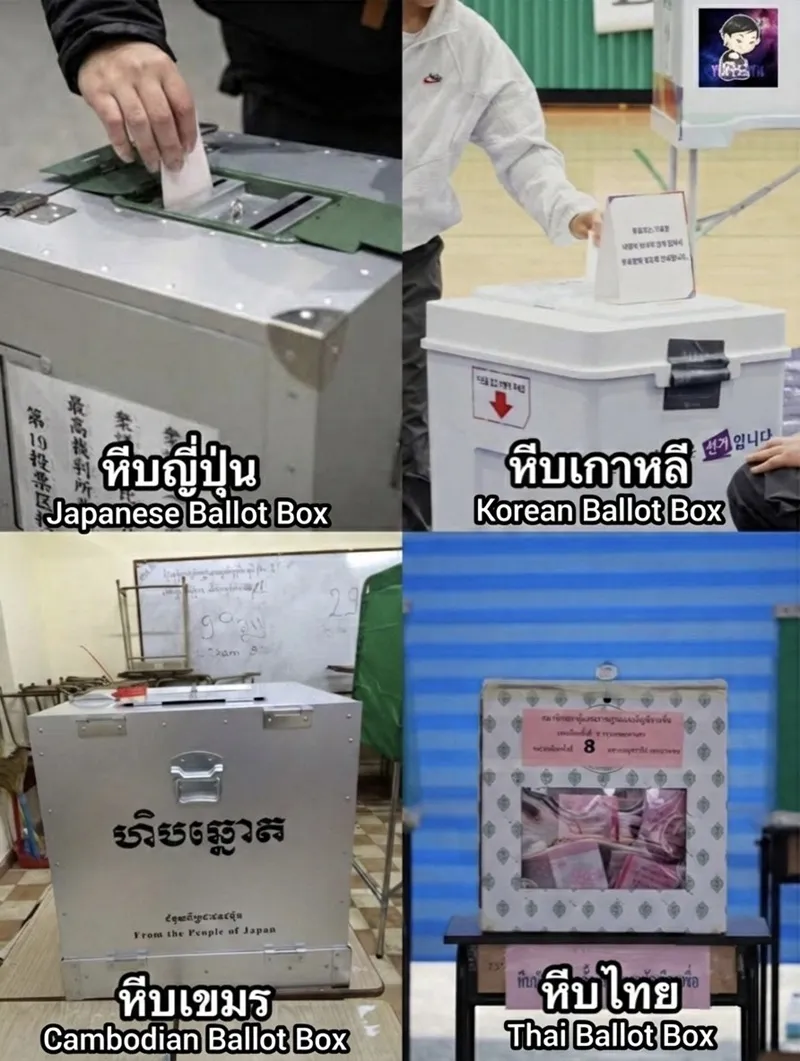
▲A netizen sarcastically joked about the ballot boxes used in Thailand compared to other countries, stating, “My country is so 'economical' and 'eco-friendly', not wanting to cause global warming, that they use cardboard boxes.” Source: Yayeeatk (Facebook)
Furthermore, deep-seated corruption has allegedly linked high-level officials and politicians to sophisticated scam networks and money laundering operations. Leaked photographs and financial trails have suggested ties between well-known syndicate leaders and elite figures, yet no credible explanations have been offered to the public. For students like Preme, standing on the cusp of graduation, these systemic failures are actively reshaping her personal roadmap and the choices she has to make.
"As I approach graduation, I have started thinking seriously about my future in other countries or going back to Thailand," Preme reflects. "Ideally, I would like to return and contribute to the development of my hometown, and I hope to see meaningful and positive changes there. If Thailand continues to develop and offers meaningful opportunities, I would be very willing to come back and be part of that progress. However, I also recognize that creating change from within can sometimes be challenging due to structural limitations. Therefore, I may consider pursuing further education or seeking professional opportunities abroad first. In the long term, my goal is still to contribute to the development of my hometown, whether directly or indirectly."
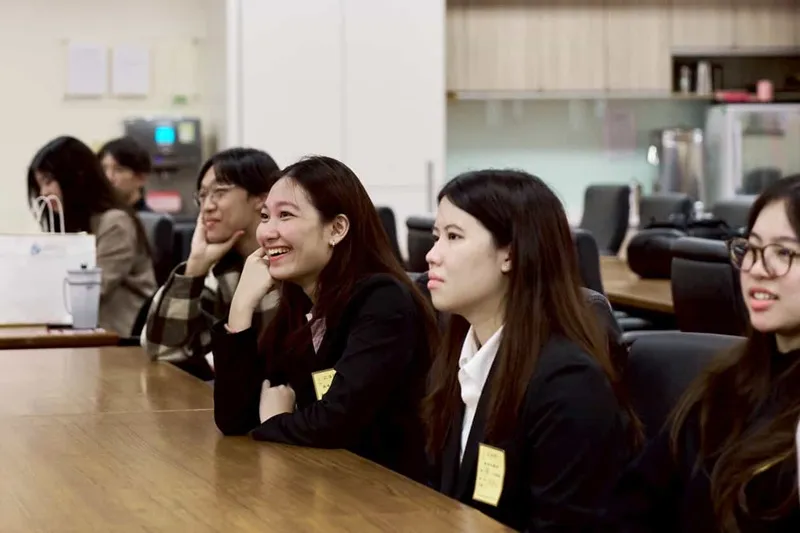
▲Preme’s dilemma encapsulates the "brain drain" threat facing the nation: a generation that deeply loves their home but feels pushed away by an economy weighed down by oligarchs and a political system that prioritizes elite networks over meritocracy.
The Generational Gap: Stability vs. Radical Change
A core theme emerging from the Thai community at NCCU is the profound divide between Gen Z and older generations. Moji notes that many older people view Gen Z as "too extreme" because they generally do not want change as much. "I rarely discuss politics with my family because I don’t want to argue and create a bad atmosphere," Moji explains. However, she admits she still tries to "indirectly" share the positive points of her preferred parties.
Preme echoes this, noting that older generations often view change as "risky or unstable." However, for Gen Z, politics is a direct indicator of their future career prospects. "Four years is a long time," Preme points out. "If the government is not effective, it may be challenging for Thailand to keep up with other countries in Asia."
The "Taiwan Perspective"
Studying at NCCU has provided these students with a comparative lens. Preme highlights that her conversations with Taiwanese friends have normalized the idea that citizens can openly question the government.
"I noticed that public protests, both small and large scale, are seen as a normal part of civic participation here," Preme observes. Her visit to the Legislative Yuan was particularly eye-opening, noting the representation of women and Indigenous groups. "It made me reflect on how different systems can encourage diversity and engagement."
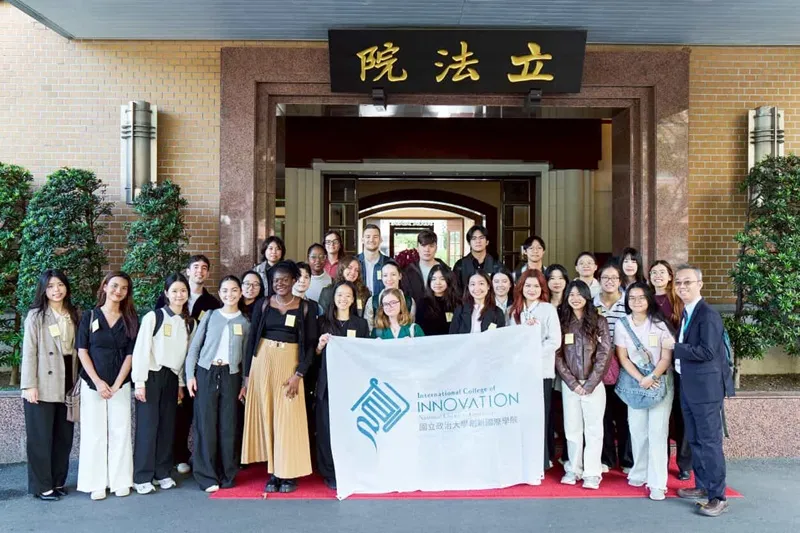
▲Preme and her classmates from ICI during their visit to the Legislative Yuan.
Photo: Preme
"Disappointed, but Not Despair"
The emotional peak of the month was the second signing event on February 9, which Mochi and Gayagay also attended. With the conservative victory confirmed, Pita spoke to the crowd of Thai students and Taiwanese supporters.
Gayagay vividly remembers the words that resonated with everyone in the room: “We can be disappointed, but do not despair.” For the students, this was more than a political slogan. It was a directive to persevere. Mochi’s commitment to this vision remains unshakable. “Even if he does not become Prime Minister, I will continue to support the People’s Party,” she asserts. “Whether it takes four years or eight, I’m staying with them.”