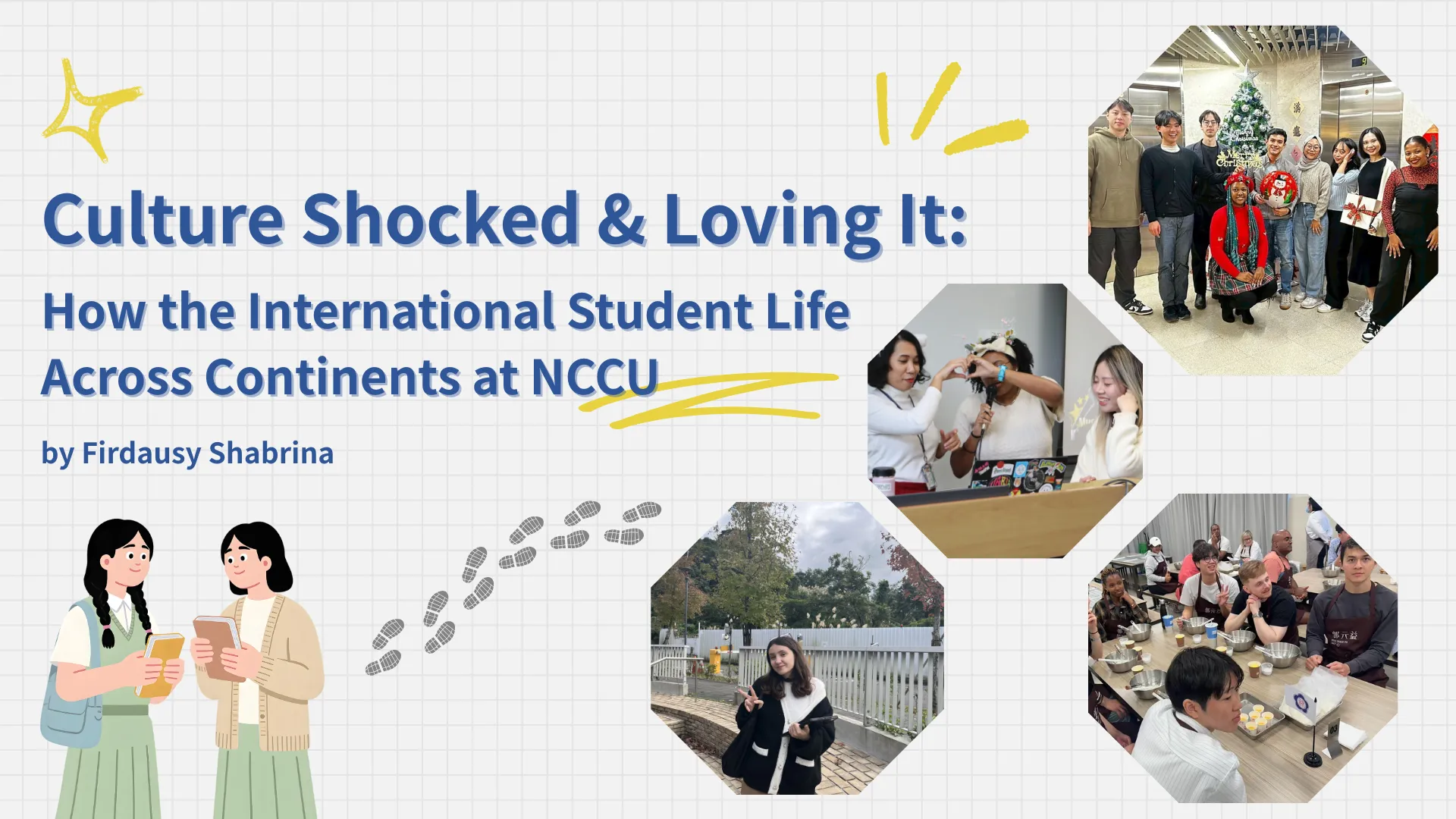
A personal look into cultural differences, adaptation, and exchange from four global perspectives.
“I never thought riding a bicycle again would be part of my grad school journey,” says Edgar, a student from Guatemala, chuckling. “Back home, I hadn’t touched a bike in maybe ten years.” But after arriving in Taiwan and seeing U-Bikes lining the streets, curiosity turned into habit. He now bikes at least once a week through riverside paths, quiet corners of campus, and even busy streets. What began as a small surprise became a meaningful lifestyle shift.
Every year, National Chengchi University (NCCU) welcomes students from across the globe each carrying unique cultures, expectations, and dreams into a shared academic and social environment. This article explores the culture shock experiences of five students representing four continents: Nathiah from Eswatini and Leila from Burundi (Africa), Edgar from Guatemala (Latin America), Sofia from Spain (Europe), and Regina from Indonesia (Asia).
All are current Master’s or first-year graduate students. From classroom norms to friendship and identity, their stories reveal how culture shock can lead to connection, transformation, and growth mirroring the core mission of NCCU’s Office of International Cooperation (OIC).
Note: All reflections are personal and do not represent entire regions or countries.
Academic Culture
What do international students think when they first begin their academic journey in Taiwan? For many, it starts with culture shock. Taiwan’s academic environment, especially at one of the top local universities like NCCU, is competitive and demanding. Local students work hard, and international students quickly feel that energy.
But instead of resisting it, they grow with it. Studying together, speaking up in diverse classrooms, being guided by friendly professors, and using public resources like the 24-hour library all become part of their new routine. Slowly, this environment shapes their mindset and becomes a powerful, positive part of their academic journey at NCCU.
Different, Demanding, and Surprisingly Warm
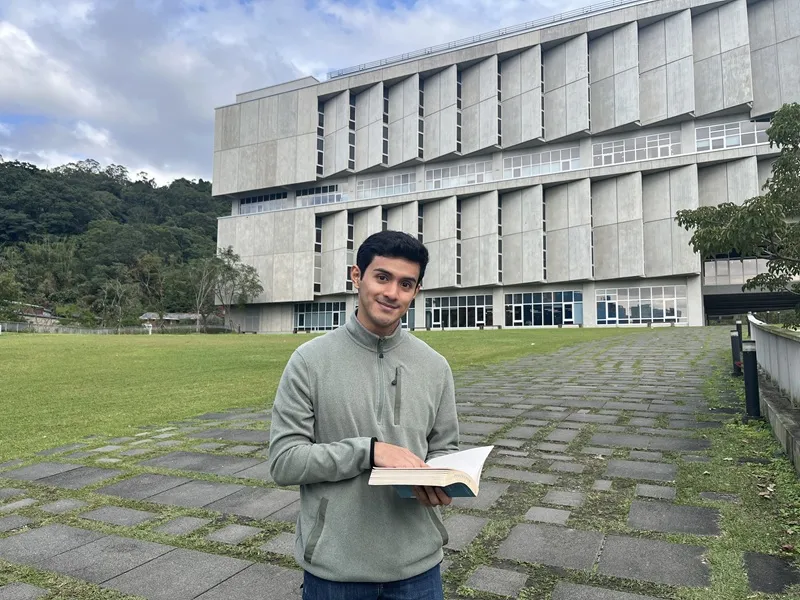
▲Caption: Edgar, IMES Student in front of Dah-Hsian Library, NCCU
For Edgar, Taiwan’s academic culture offered a completely different atmosphere than what he was used to back home. One of the biggest surprises? How approachable professors were.
“In Taiwan, teachers are incredibly open. You feel like you can ask them anything, even after class,” he shared. “Back home, it's very formal, there's a wall between students and professors.”
At NCCU, that wall was gone. Edgar quickly found himself in conversations with professors who not only encouraged curiosity but also created space for students to feel comfortable making mistakes. The classroom felt less like a one-way lecture and more like a collaborative space. He described it as learning together “not just being taught.”
The difference wasn’t just structural, it was emotional. He no longer felt alone in the learning process. Whether it was class discussions, consultations, or even after-class chats, Edgar felt supported and respected. This relational learning environment shifted his mindset from simply “doing school” to actually enjoying the process of knowledge-building with others.
For him, Taiwan’s academic culture didn’t just feel more open, it felt more human.
Focused Energy, Unexpected Motivation
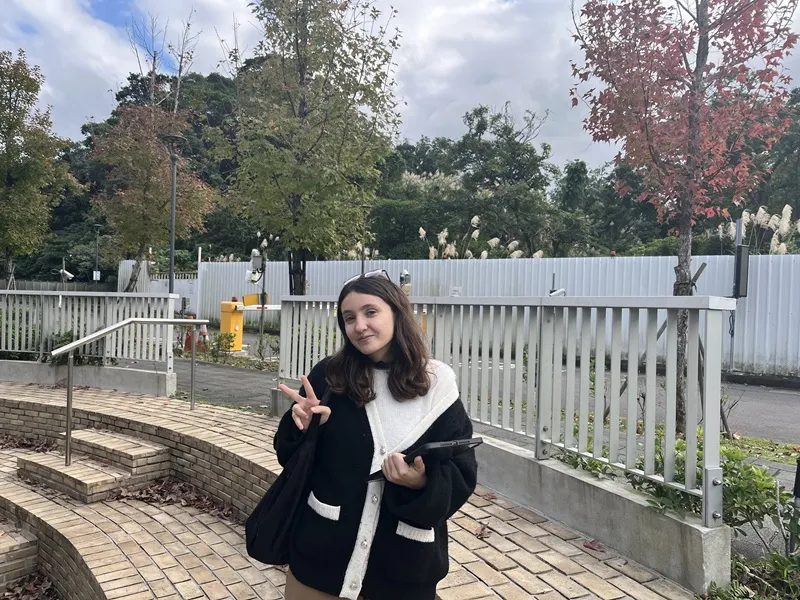
▲Sofia, IMES Student, after studying at Dah-Hsian Library
Sofia came to NCCU expecting academic rigor, but what she encountered still surprised her: a deeply focused and disciplined student culture unlike anything she had seen back in Spain.
“I was surprised how full the library is, even on weekends,” she said. “People here are really disciplined. It motivated me to take my studies more seriously.”
According to her, in Spain, she explained, students are generally more relaxed. Study environments are social, and libraries aren’t always the center of academic life. But at NCCU, Sofia was drawn into a different rhythm, one where students immersed themselves in their goals with purpose and quiet intensity.
Instead of feeling overwhelmed, she felt inspired. The energy around her encouraged self-improvement and pushed her to rethink her own work habits. Taiwan’s study culture, though intense, offered her space to refocus and grow.
For Sofia, adapting to NCCU’s academic life wasn’t about conforming it was about learning how discipline and ambition can also be supportive, especially when everyone around you is striving, too.
Finding Her Voice in a Supportive Space
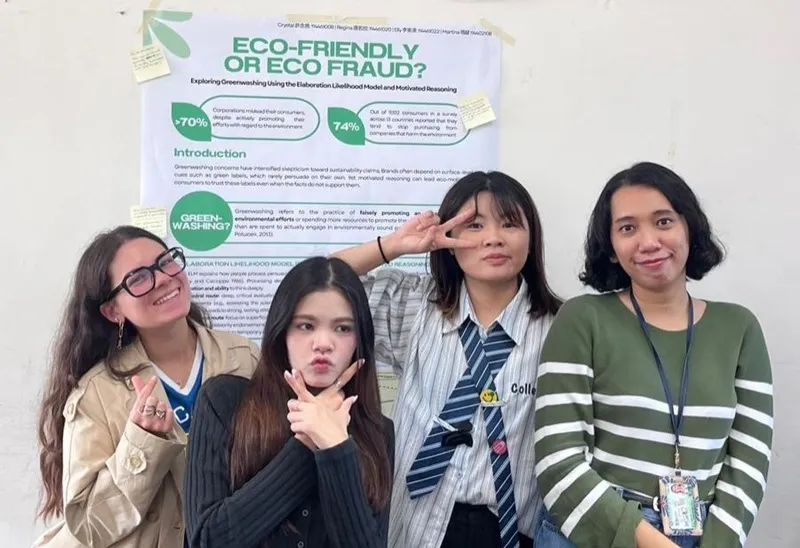
▲Regina, IMICS Student with her classmate after present her group project
In Regina’s home country of Indonesia, classroom culture often places value on silence, listening, and avoiding mistakes. Expressing opinions openly, especially in front of professors or peers, isn’t always the norm. But arriving at NCCU, she encountered a completely different rhythm of learning.
“Back home, I didn’t feel confident speaking in class,” she explained. “But here, the environment is so open and accepting that I started to go with the flow, and I’ve become braver about sharing my ideas.”
At NCCU, classrooms encourage participation. Professors don’t just tolerate mistakes, they see them as part of the process. For Regina, that shifted everything. Over time, she stopped worrying about saying the “right” thing and began focusing on expressing her thoughts freely.
Now, she finds joy in speaking up in lectures, group discussions, and beyond.
What once felt out of reach is now part of who she is: a more expressive, confident version of herself.
Taiwan didn’t just change how Regina learned, it changed how she saw her own voice.
Working Hard, Growing Strong
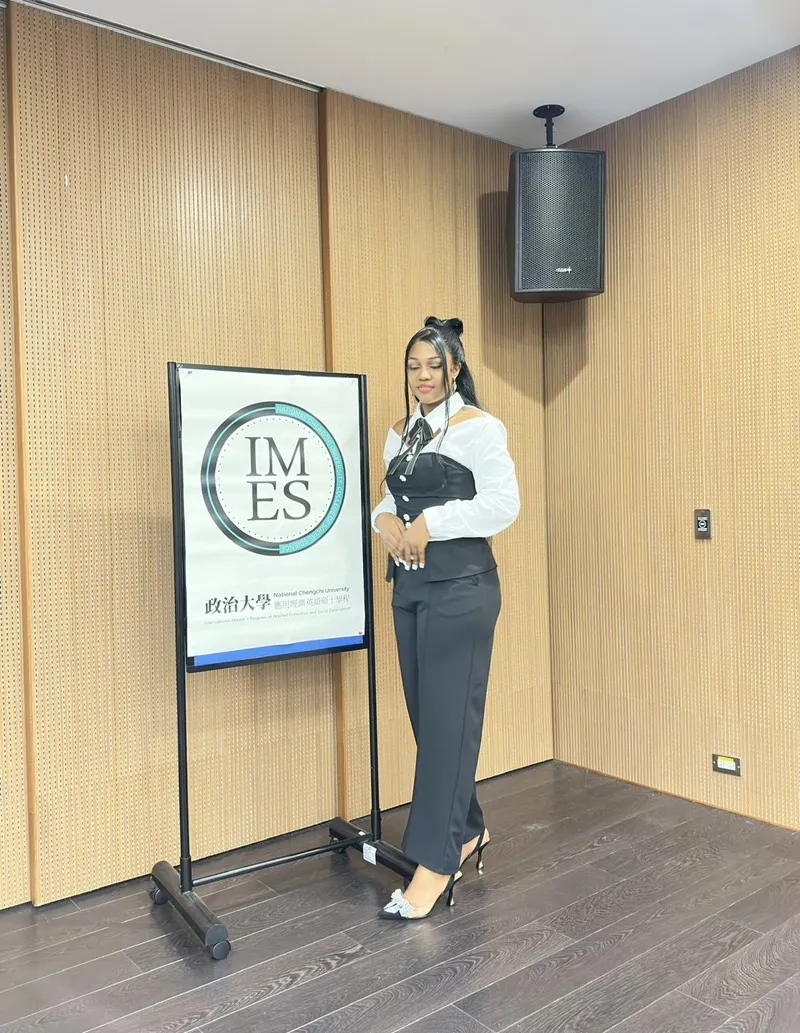
▲Natiah, IMES Student who can manage well her time to work and study at NCCU
For Nathiah, studying at NCCU means more than academic success; it's about managing life as a whole. Balancing coursework with a Monday-to-Friday job leaves little time for socializing. “It is difficult to maintain friendships because I have work from Monday to Friday, and any free time I get I need to write assignments and study,” she shared. Compared to back home, building friendships here feels slower and more challenging. Still, she takes pride in how far she’s come growing into someone who manages her time, responsibilities, and connections with care.
“When I came to Taiwan, I didn’t know anyone and I wasn’t even well prepared,” she reflects, “but I survived, I thrived, and I’m proud of that.” Despite her busy schedule, she still builds friendships especially with people she meets through work. Her story shows that being a student abroad isn’t just about learning from books it’s about learning to grow, balance, and believe in yourself.
Friendship & Social Bonds Beyond Hello
At NCCU, cultural adjustment goes beyond academics friendship and social bonds play an equally powerful role in helping international students grow. From spontaneous conversations at night markets to structured experiences like the OIC Host Family Program, students slowly learn how to connect across cultures.
Some friendships begin with group projects, others over shared meals or long walks. These moments, while often small, create space for belonging. Adapting to Taiwan’s social culture means learning new ways to trust, share, and be seen and through that, many students discover not just new friends, but new versions of themselves.
The Night Market & Campus Gathering That Built Friendships
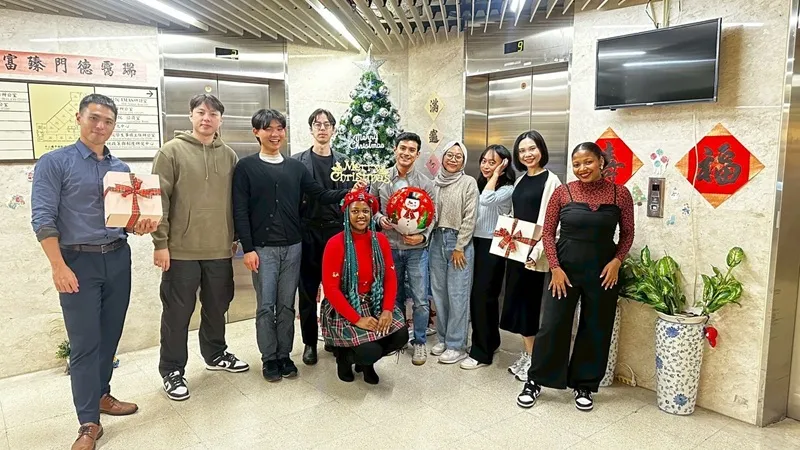
▲Edgar with his department peers
For Edgar, the warmth of Taiwanese culture revealed itself in the simplest places like a crowded night market.
“The night market was where I met most of my friends. We'd try food, talk, and sometimes just hang out for hours,” he said. “I even celebrated Christmas here with friends and they weren’t from my culture, but they showed up anyway.”
Friendship in Taiwan wasn’t about big gestures it was about small, shared rituals. Whether bonding over bubble tea, spontaneous outings, or cultural festivals, Edgar found community in the openness of people willing to connect across language and background.
Despite coming from a different continent and culture, he never felt excluded. What surprised him most was how casually closeness formed and how these social spaces, like food stalls and group chats, became the foundation of lasting relationships.
Blending Cultures Over Tea and Hiking
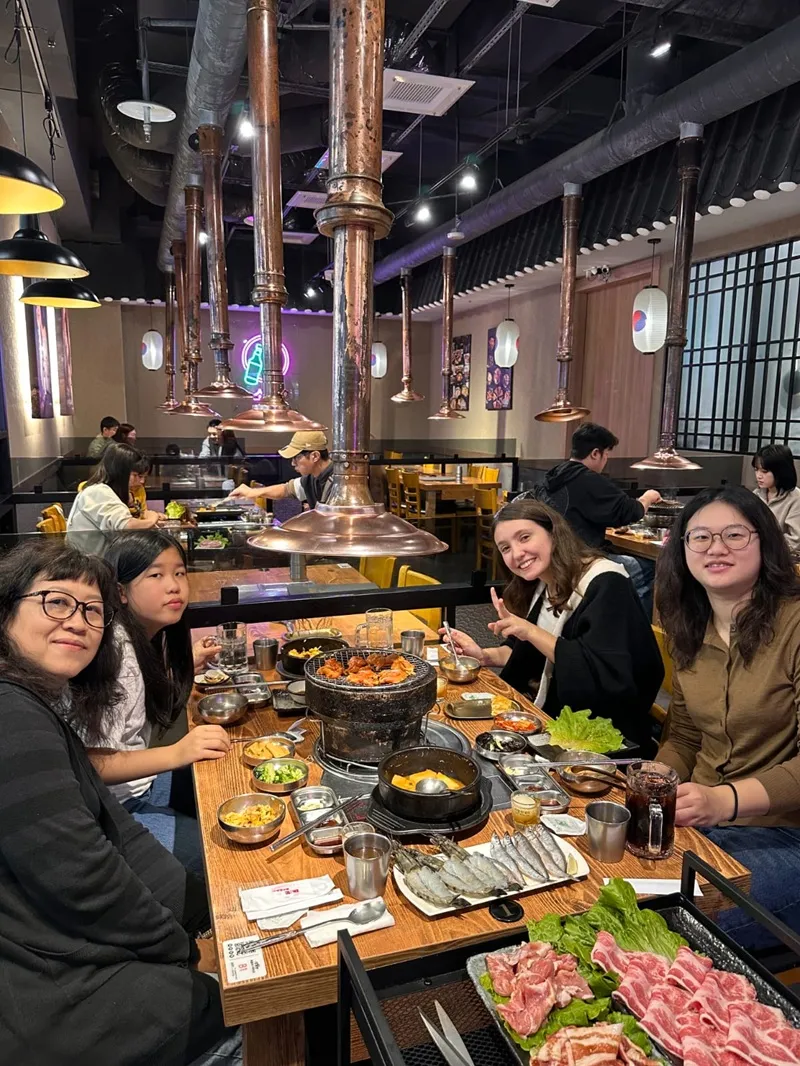
▲Sofia and her host family enjoy having dinner together
At NCCU, Sofia quickly noticed that friendships in Taiwan didn’t unfold the same way as in Spain. Back home, bonds formed quickly through casual conversation. But here, connection grew slowly through shared experiences and gentle warmth.
Her first meaningful moment came at a tea house gathering organized by her program with Taiwanese students.
“They prepared tea and invited us to talk. They really wanted to share their culture. That felt so special to me,” she shared.
Besides that, Sofia also joined the NCCU Host Family Program, which pairs international students with local staff or faculty to support cultural exchange and create a sense of belonging. Then, her host family an NCCU staff member invited her on a hiking trip, another popular Taiwanese custom that gave her a deeper glimpse into everyday life and connection in Taiwan.
“It surprised me that people here really enjoy hiking! But it became a way to feel included,” she said.
Beyond that, Sofia began exploring more campus activities, joining student events and intercultural gatherings. It helped her connect with both local and international students.
Sharing as a Social Language
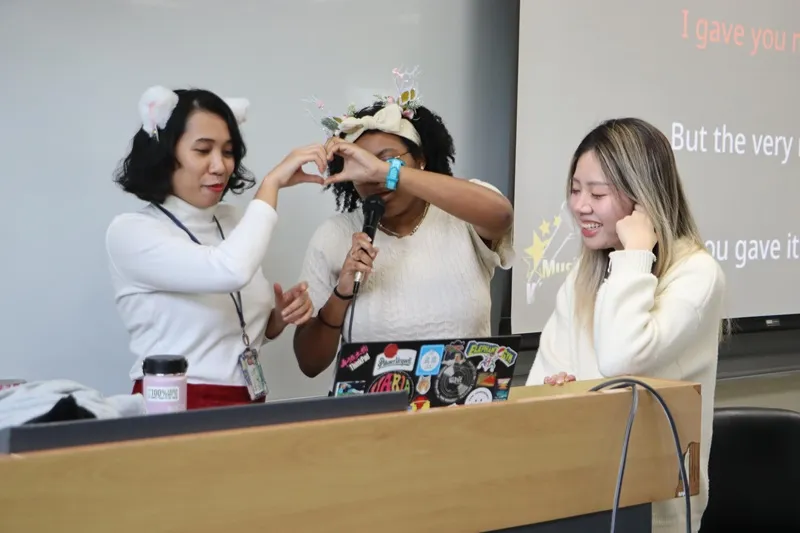
At NCCU, adapting to a new culture didn’t just happen in classrooms it unfolded in moments of warmth and generosity. The university regularly hosts social events that help students connect across cultures. One of them was a Christmas party organized by Regina’s department (IMICS), a cheerful end-of-semester celebration that brings classmates and professors together before the winter break.
For Regina, it was more than just a festive gathering it was a chance to bring her own cultural values into this new environment.
In Indonesia, sharing food is a common way to express care and build connection. So for the party, Regina thoughtfully prepared small snack packs and handwritten notes for everyone in her class, not just her closest friends.
“One of my classmates from Europe said, ‘Regina, you’re so sweet did you really prepare these snacks for everyone in class?!’”
Regina smiled and responded, “In my culture, it’s normal to share with everyone, not just the people you’re close to.”
She had done something similar earlier, too on her birthday, she surprised her dorm friends by buying them boba milk tea.
“One of my American friends was confused and said, ‘Wait, aren’t people supposed to treat you on your birthday?’ Then I replied that in Indonesia, we treat others. It’s how we share our blessings.”
These small acts, rooted in her home culture, helped Regina bridge cultural gaps and build meaningful friendships. It wasn’t about how close people were it was about creating kindness through thoughtful gestures. In doing so, she blended her values with her new environment, showing that sometimes, sharing is the strongest language of all.
Slow Start, Strong Bonds
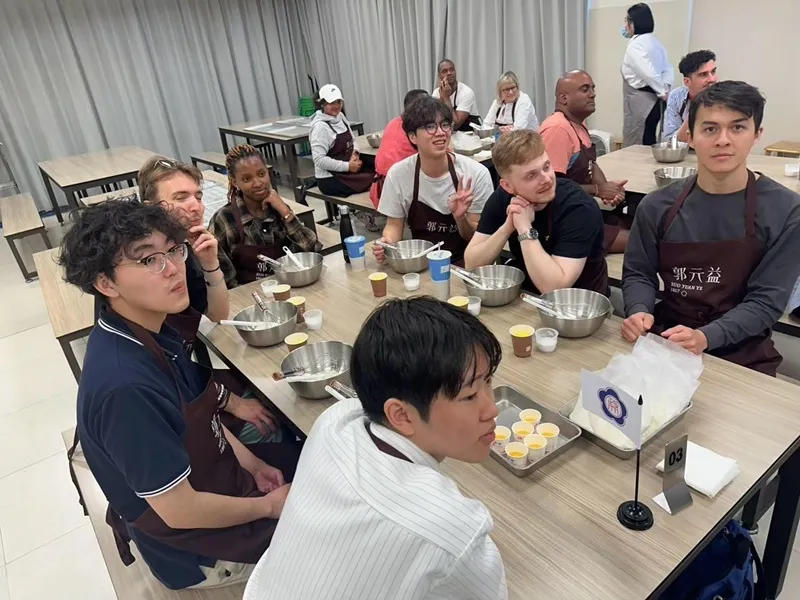
▲Leila, Master's Degree Student joining CLC NCCU’s event
For Leila, the social experience in Taiwan felt unfamiliar at first. In Burundi, friendships often form quickly and feel warm right awaypeople invite you out easily, and closeness happens fast. In contrast, she found that in Taiwan, people are kind and polite but tend to be more reserved at the beginning.
“It took time to move from classmates to friends,” she shared. “Friendships here feel more planned you meet after scheduling, and staying in touch is more structured.”
Despite the slow start, things shifted once she joined more activities and spent time in smaller groups. Invitations to cultural events like Chinese New Year gatherings or casual outings made her feel genuinely included.
“It made me feel like I wasn’t just an international student but part of the group,” she said.
Through open conversations, she and her friends even discussed cultural differences in friendship styles.
Conclusion
In the end, culture shock wasn’t just a challenge it was a doorway. Through new friendships, quiet classrooms, and shared traditions, these students discovered not only Taiwan, but also new sides of themselves. At NCCU, they didn’t just study across cultures they grew because of them.