Setting the scene
Last weekend, I witnessed a scene that will stay with me forever. Picture this: I’m having a picnic with a friend in Da’an Park when a mass of white fur emerges in my periphery. This furry superstructure turned out to be composed of not one, not two, but 10 identical looking Bichon Frisé tiny dogs. Carted around like toy babies in identical matching strollers, these glamorous dogs looked at me with the quiet confidence that my quality of life could never match theirs.
Where I walk on the grass, they get pushed. Where my hair could do with some salon attention, they all have fresh blowouts. On fashion alone, the 10 dogs each had unique party dresses, neck ties, and shoes which immediately put my now pedestrian-feeling picnic outfit to shame.
As we approached for a closer look, the dogs were organised with military precision into a rank and file formation — for a group photo, of course. As the style moguls pouted and posed with machine obedience no baby could muster, I felt compelled to write this story.
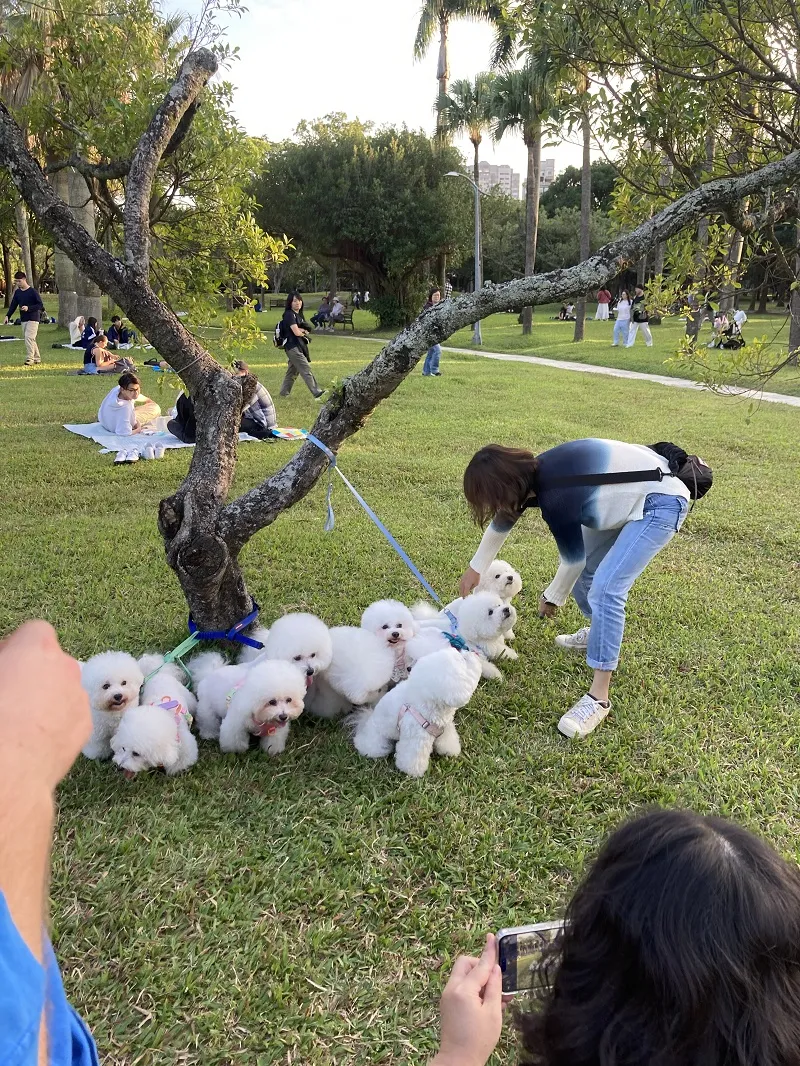
▲The posse of Bichon Frisé dogs posing for a photo
Though the magnetism of this Bichon tour-de-force was uniquely fabulous, glamorous dogs in Taiwan are no anomaly. And it’s not just the dogs. Every time I see a pram expecting to see a human baby, instead I see an unbelievably shocking buffet of pampered exotic animals. Meerkat in a dress. Toucan on a shoulder. Parrot in a backpack. Duck on a leash. Dog in sunglasses. This city has it all.
But what are the stories behind this unique pet culture? In this article, I’ll uncover the secrets of these glamorous animals — looking into how this pet mania came to be, why it prevails, and what it can tell us about Taiwan. And it isn’t just about the pets, for a meerkat in a dress doesn’t exist in a vacuum.
As Taiwan faces some of the lowest birth rates in the world, this explosion of pampered pets is not just a lifestyle trend but a cultural response — one in which cuteness becomes a way of coping with, softening, and reimagining social reproduction itself. Cuteness counts in Taiwan, and it’s time we started taking that seriously.
An island of pets
In 2024, the number of pets in Taiwan likely surpassed the number of children. The pet-to-children ratio is stark — with the Animal Precision Nutrition Forum revealing that you are now much more likely to see a pet than a child under 15. The total number of furry residents on this pet-loving island now sits at between 2 and 3 million — with ownership rates of cats and dogs since 2021 increasing by a whopping 19 and 50 percent respectively.
Correlation or causation? Demographic factors at play
Taiwan’s massive pet boom is taking place as the island experiences some of the lowest fertility rates in the world. In 2022, Taiwan’s birth rate sat at a record low of 0.87, far below the 2.1 replacement rate required to keep a country’s birth-to-death rates stable. In 2025, people 65 years or above now make up 20 percent of Taiwan’s population — officially becoming a “super-aged society”.
So younger Taiwanese are not having many babies. But why?
Many accounts cite fierce economic competition for low rewards as a major factor. Since the 1990s, Taiwanese have seen soaring house prices meet stagnant wages — creating an unfriendly context for raising a family. Pressure to work long hours, and competition for good schools, and heavy childcare costs all compound the strain.
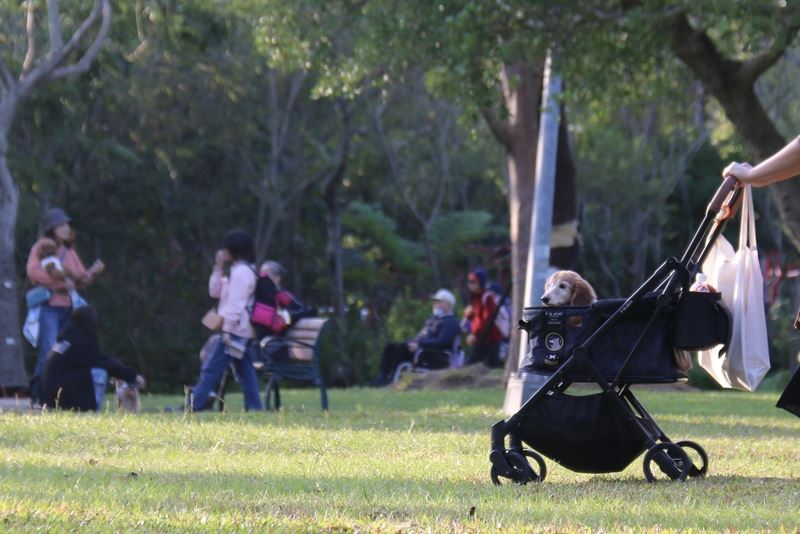
▲Classic Taipei image of dog in a pram. Blurred in the background is another dog owner carrying the dog like a baby, wearing a dress
Gender also plays a role. Women in Taiwan still face unequal gendered responsibilities attached to marriage and kids. In this super-aged society, heterosexual women often face pressure to care for their husband’s aging family members too. As a result, 38.6% of Taiwanese women were reportedly uninterested in marriage, a 2019 survey revealed — an increase of 26.6% since 2011.
And regardless of gender, as Taiwan’s Trensight Research and Consulting reports, more than 40% of Taiwanese aged 30 and above — about six million people — are single. In general, younger Taiwanese are waiting longer or choosing to not have families at all.
Global echos — low fertility = lots of pets
And Taiwan is not alone. This trend is consistent throughout East Asia — with South Korea, China, and Japan all facing low fertility rates. Interestingly, like Taiwan, these countries are also experiencing coinciding booms in pet ownership. Japan is now home to over 17 million pets — outnumbering children under 15. In South Korea too, pet ownership has risen from 17.4% in 2010, to almost 30% in 2023.
Are pets the new children?
These demographic shifts have contributed to an almost unbelievable culture of pet worship in Taiwan. Pets are often seen as literal ‘fur babies’ — or fully fledged members of the family. Taiwan’s pet economy now sits at a booming USD $1.96 billion. They may come with a bit more hair and a bit less noise, but fur babies appear to receive similar care to their real human equivalents. This island embraces pets in a way I have never seen before.
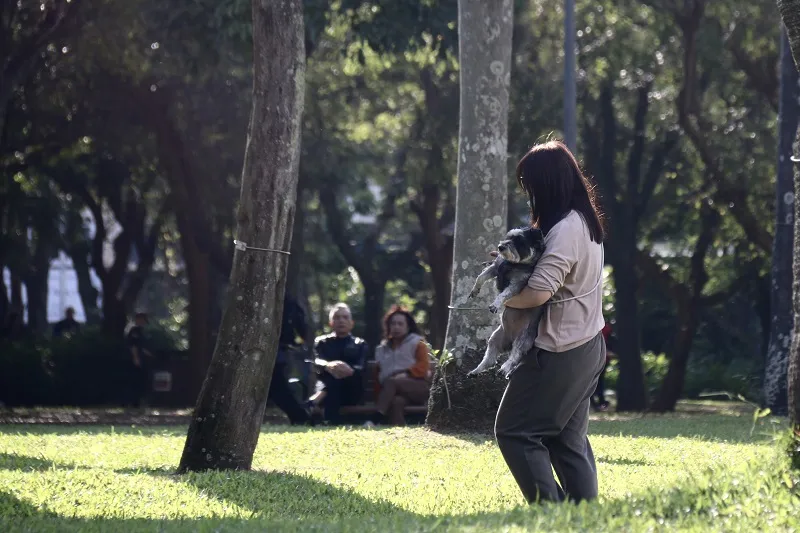
▲Dog getting carried, not walking
Pets are allowed to ride the MRT and High Speed Rail — so long as they are kept in their cushy pram carriers. Pet-friendly bus routes and “pet buses” are on the rise. Increasing numbers of dog parks are being opened, and the government has even trialled canine-friendly mountain trails — so dogs can go hiking too.
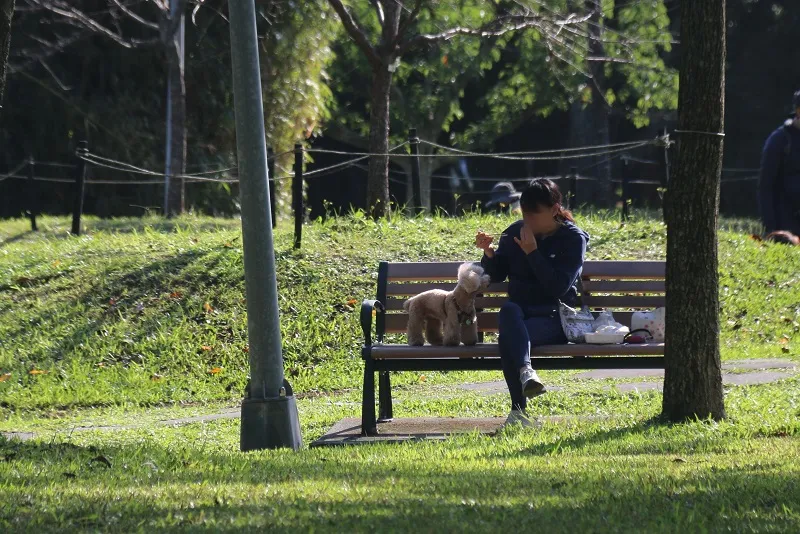
▲Cute dog and owner in Da'an Park
Maintaining health and beauty routines are also very important for Taiwan’s glamorous pets. Pet beauty salons are dotted around major cities and pet food supplements have become an NT$5.1 billion industry. Boutique groomers and elaborate pet clothing stores are also growing in popularity. Even at night markets, you can expect to see an array of colourful pet clothing options alongside the food stalls.
The tech industry has also produced innovative ways to make life better for pets and their parents. There are now apps for pet fitness monitors, pet-friendly air Bnb finders, dog walking locators, and AI food feeders.
Spiritual enlightenment, for dogs
But everyone knows holistic wellbeing is about more than just health and beauty. In Taiwan, owners even make efforts to care for the spiritual health of their animals.
Taipei was home to the now-closed “pet restaurant” — Gustav Puppy Cafe, where elaborate meals were created for pets and their people. The cafe was home to Taiwan’s first fortune telling service for dogs — a trend that has carried on today.
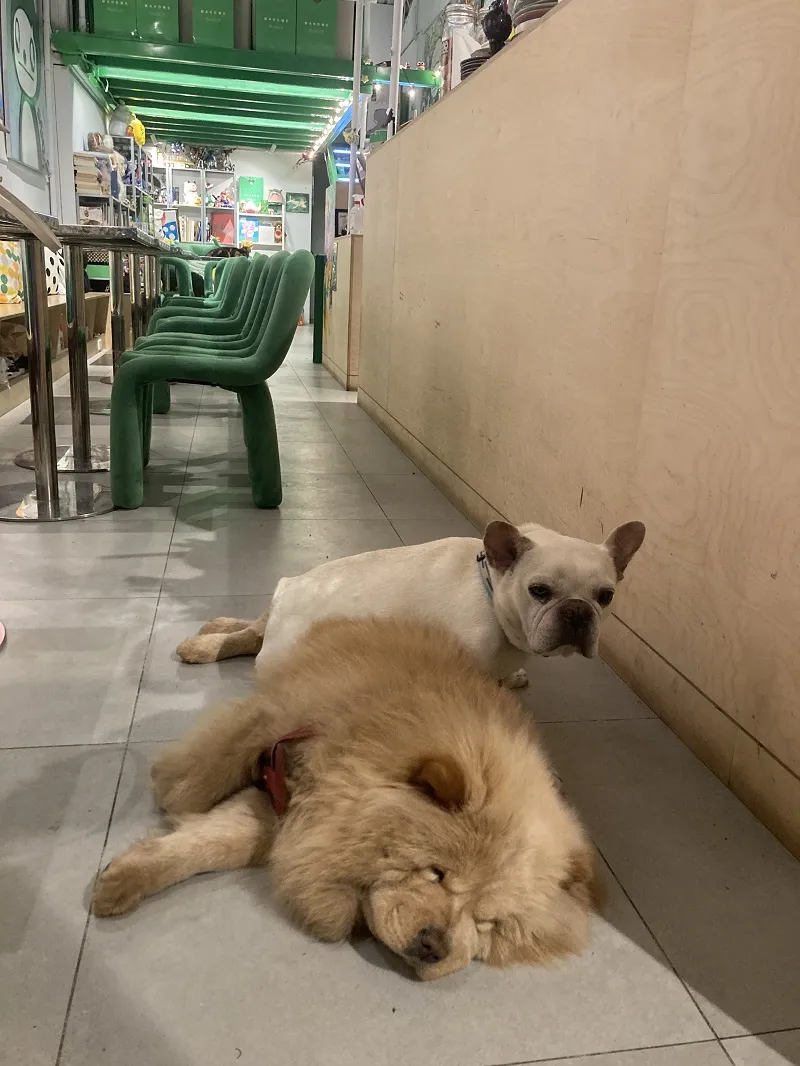
▲Dog duo residents of cute cafe in Taipei
Nowadays, pet psychics: “whisperers” market themselves as a bridge between animal thought and human understanding — a translator from pet to owner.
Outside of crystal ball gazing, a number of Taiwanese dog owners also convert their pets to Buddhism. In 2004, a temple in Nantou issued special “certificates of conversion”, including each dog’s specially chosen Buddhist name. The dogs studied under Buddhist masters towards the goal of adhisthana — assistance in spiritual progress.
Animals as political heavyweights
So the glamorous, pampered pets of Taiwan have extraordinary lives where every need is catered for. But that’s not the end of the story. On this island of pets, cute animals have real political impact.
In Taipei, publicly befriending animals translates into political capital. Candidates across the political spectrum actively campaign on pro-pet policy — gaining votes through pushing things like “pets welcome” spaces and declaring the importance of animal welfare as a government priority.
During COVID, Taiwan’s widely-praised response relied on animals to disseminate public messages. Instead of health professionals or politicians, a “spokes dog” Shiba Inu by the name of Zongchai delivered critical safety messaging to Taiwan.
Throughout the pandemic, Zongchai would lighten the mood by sharing key information in a campy and funny way. For example, on Valentines Day, after reminding the public to “wash their hands, stay sober, and practice safe sex”. In response to a question “What if I’m single?” Zongchai replied, “Stay home then!”
Zongchai is in good company too. Taiwan also boasts several other animal mascots — communicating important information with a distinctly whimsical flair. While a pigeon in a face mask reminds citizens to mask up when feeling sick, conduct is regulated on the MRT by ‘Shiba Says’ — a Taiwanese cartoon dog with close to 1 million Instagram followers.
For the love of cute
Taiwan’s pet culture — from dog fortune tellers to public health officials, speaks to a wider phenomenon: the power of cute.
In Taiwan and across many countries in Asia, cuteness is far from trivial. Championing cute things is a real political, social, and economic virtue — necessary for success in every meaning of the word. From keychains to political messaging to MRT cards in the shape of a loaf of bread, Taiwan takes cute to a new level.
But cute has long been overlooked. Throughout history, cute has often been weaponised to minimise rather than uplift. It has associations with hollow commodities, femininity, domesticity, and childhood. Cute is silly, girly, baby stuff — not something to take seriously. But this is not the true story of cute.
The impact of cute
Related to our evolutionary past, cuteness is a fundamental driver of human behaviour — activating our reward centres and getting us to act.
Studies have shown that viewing cute pictures of baby animals actually improves task performance — pinpointing our attention and making us care. Cute pets also positively impact our social behaviour. If you’re trying to get a stranger to help you, having a dog by your side is statistically proven to improve your chances. We’re much more likely to empathise, help, and show compassion if we see a cute thing.
Cuteness can also help people save the environment. People are more willing to subscribe to environmental protection initiatives if they come with an anthropomorphised illustration — like an earth with a face or a cute animal next to a forest. Like in Taiwan, cuteness is political.
Cuteness in Taiwan — pets, babies, & mascots
Between dog beauty salons, meerkats in dresses, pets in prams on the MRT, and Zongchai the COVID dog, it is clear cuteness counts in Taiwan.
Cute represents innocence, play, curiosity, and fun. It reminds us of our evolutionary past and provides a welcome escape from the pressures of modern adulthood. Amidst stagnant wages and long hours in Taiwan, these qualities of cute matter.
I believe Taiwan’s unique pet culture is related to falling fertility, and that pets really do receive equal treatment to human babies. But this narrative is too simple. Taiwan’s pet mania cannot be explained by falling birth rates alone. But neither is cuteness just a decorative excess.
Glamorous pets in Taiwan are also direct results of crushing economic pressure — and the drive to tap into cuteness in these conditions. Giving your pet an equivalent quality of life to a human baby is cuteness as a philosophy in action. It allows us escape and exploration — nurturing our souls in the process.
Adult humans living in this modern world desperately need to be reminded of our capacity for care, play, and fun. Cute animals and things give us this, and there’s something rather special about that.
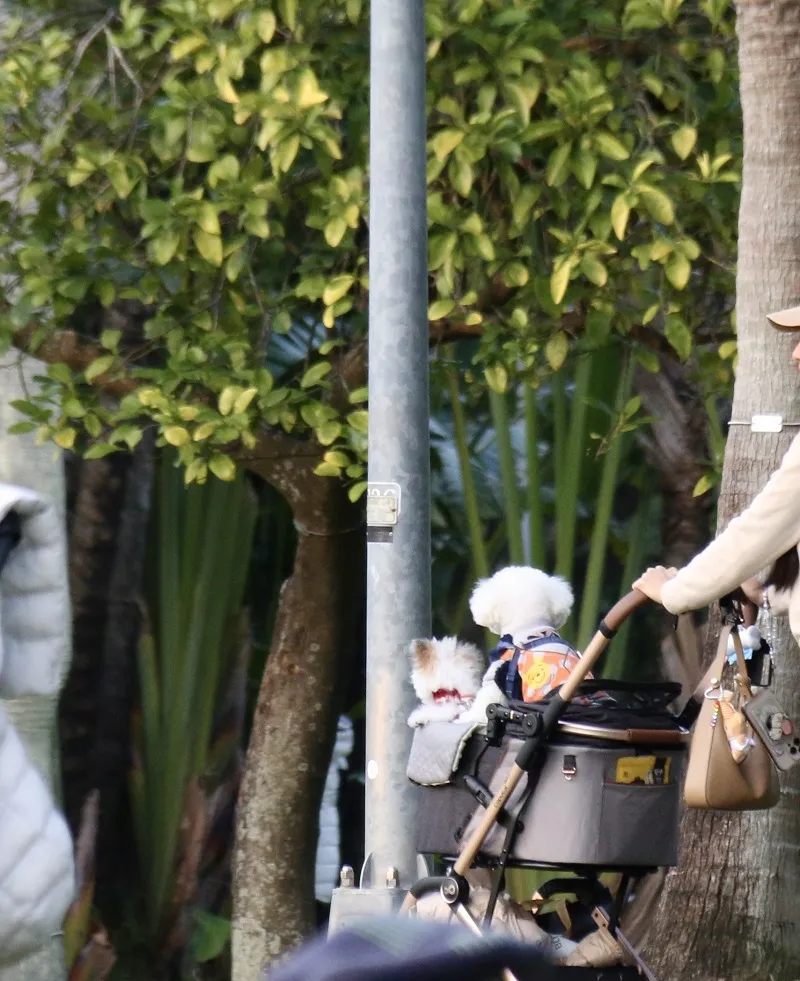
▲Two cute white dogs in a stroller wearing elaborate outfits