Every year, National Chengchi University (NCCU) welcomes students from across the globe. In classrooms, they gain professional knowledge; beyond campus, they experience a new pace of life. For many international students, part-time work becomes a bridge connecting daily life with local society. Beyond financial support, it offers a chance to step into Taiwanese culture and learn how to interact with people from different backgrounds. Malaysian student Lin Xue-Yi is one such student finding her own rhythm in Taiwan.
Taking Root: Independence and a Fuller Life
Before coming to Taiwan, Lin already had a strong impression of NCCU. She chose the university not only for its reputation but also for its internationalized teaching environment. While this eased her adaptation to campus life, learning to live independently remained a major challenge.
Her decision to take on part-time work stemmed from both financial needs and a desire for personal growth. On one hand, she hoped to earn extra income to ease her family’s burden; on the other, she wanted to gain life experience beyond the classroom. For her, part-time work was more than a source of income—it was an opportunity to engage with society, meet diverse groups of people, and develop new skills.

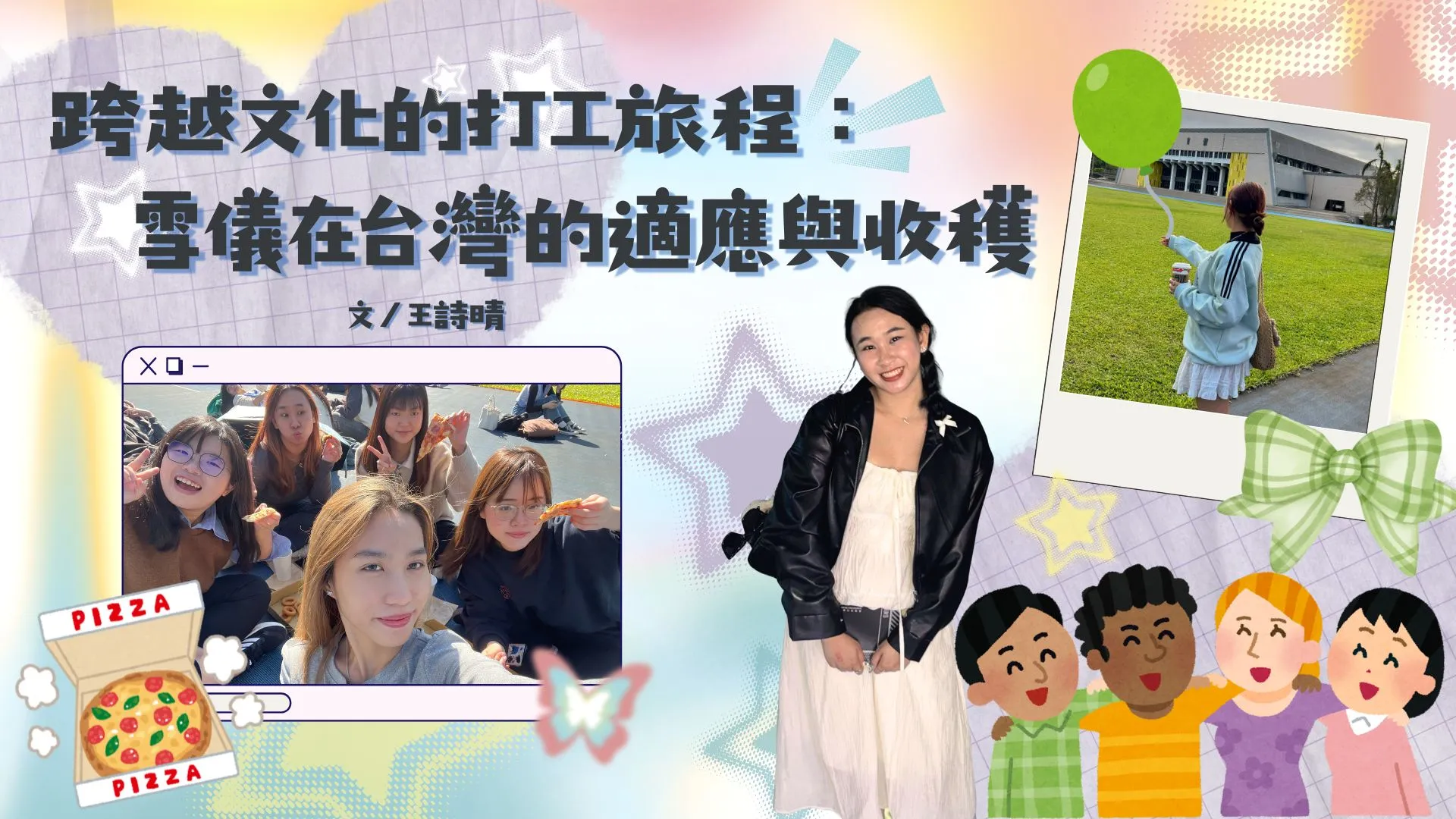
▲Malaysian student Lin Xue-Yi has embarked on a journey of study and part-time work in Taiwan. With each passing day, she continues to grow, gain experience, and learn how to find her place amid different cultures. (Photo by Lin Xue-Yi)
Lin worked in restaurants, helped with temporary on-campus jobs, and even tried being a “play companion sister” for young children. Each job presented its own challenges and rewards. For example, working with children gave her insight into differences between Taiwanese education and her own upbringing. These varied experiences not only deepened her understanding of Taiwanese society but also shaped her expectations for the future.
Navigating Cultural Gaps: Language and Workplace Differences
For international students, language is often the most immediate obstacle. Although Lin could handle daily conversations in Mandarin, she still struggled with vocabulary and phrasing in professional settings. At times, she remained silent to avoid misunderstandings—a pressure she felt strongly during her early days on the job.
Cultural differences gradually surfaced as well. Lin observed that Taiwanese workplaces tend to be more serious than those in Malaysia. Employees show strong dedication and caution in their roles, and communication is often indirect, with an emphasis on maintaining harmony. While hierarchical relationships exist, supervisors generally express concern and support. In contrast, Malaysian workplaces lean toward direct communication and more egalitarian relationships. This required Lin to adjust her expectations and communication style to avoid misunderstandings.
She also noticed differing approaches to problem-solving. Lin preferred straightforward solutions, while some colleagues or supervisors favored more complex considerations. She came to realize these differences were not about right or wrong, but rather reflections of distinct cultural thinking patterns. By learning to understand others’ perspectives, she found that cooperation became smoother.
As a foreign student, Lin’s identity brought both advantages and challenges. Her multicultural background allowed her to offer fresh viewpoints, but she also needed additional time to adapt to local norms and express opinions carefully.
Gradual Adaptation: Finding Strength in Cross-Cultural Experiences
When faced with cultural shocks, Lin chose to observe first. By watching how people around her behaved and communicated, she learned workplace expectations quickly and avoided unnecessary misunderstandings. When instructions were unclear, she repeated them for confirmation—a habit that slowly strengthened her cross-cultural communication skills.
Beyond work, she actively joined various activities and interacted with peers from different backgrounds. These exchanges helped her integrate more quickly and kept her open-minded toward cultural differences. Through daily interactions with customers and coworkers, her Mandarin fluency improved significantly, along with her confidence.
Crossing Cultures: A Student Worker’s Journey in Taiwan
NCCU’s support systems also played an important role. The Overseas Students Office, Office of International Cooperation, and Career Development Center provided assistance ranging from legal guidance to internship resources, ensuring international students could navigate academics and work with greater ease.
Lessons Learned: Finding Gentleness in the Midst of Challenge
Looking back, Lin recognizes that challenges themselves foster growth. Language barriers taught her careful expression; cultural differences trained her to see issues from multiple angles; and Taiwan’s rigorous work culture helped her develop focus and discipline. These experiences deepened her understanding of Taiwanese workplaces and strengthened her adaptability in multicultural environments.
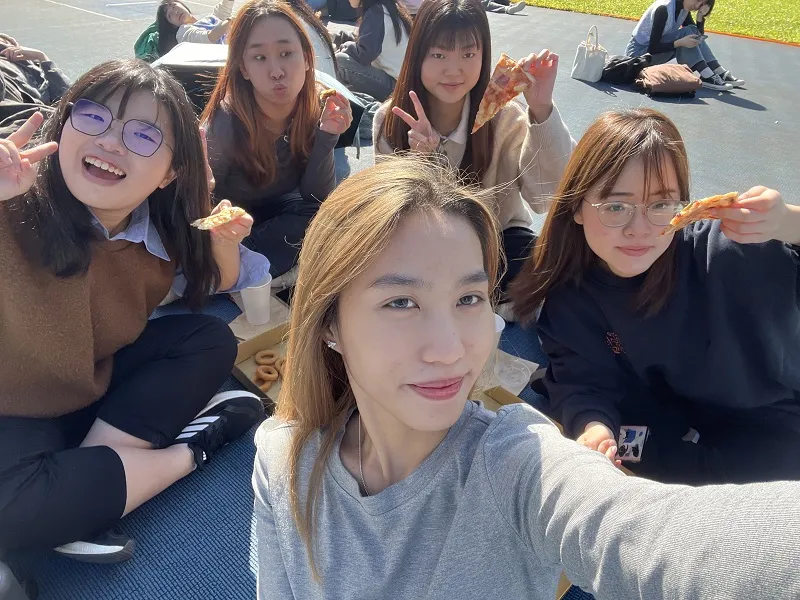
▲Sharing pizza and laughter with classmates on the campus lawn, enjoying a quintessential moment of student life in Taiwan. (Photo by Lin Xue-Yi)
She believes adapting to a new culture is not just part of work—it is essential to personal development. Learning to respect and embrace new perspectives helped her integrate more smoothly and boosted her confidence for the future. Her advice to new international students in Taiwan: do not fear inexperience. Everyone starts from scratch. Taking that first step teaches students lessons no textbook ever could.
At the same time, she hopes Taiwanese employers and colleagues can offer more patience and understanding. Clear instructions, encouragement, and inclusiveness help international students integrate into teams and showcase their abilities.
For Lin, her part-time jobs equipped her with crucial soft skills—cross-cultural communication, adaptability, and confident self-expression. More importantly, she learned to stay positive amid challenges and to trust that she can find her path in any environment.