The life of a graduate student at National Chengchi University (NCCU) is a rewarding mixture of lectures, research, and late-night study sessions in the library. While the intellectual benefits of studying at NCCU are why we’re here, it’s the island of Taiwan itself that often proves to be our most profound teacher. Long before it was known for its technological prowess, this island was called Formosa, the “beautiful island”, a name given by Portuguese sailors struck by its verdant, mountainous scenery. For many of us, local and international students alike, answering the call of that natural beauty is an essential part of our student life.
Luckily, one doesn’t have to venture far from our campus, located in the Wenshan District of Taipei, to find it. The hills surrounding NCCU are a hiker’s haven. On any given weekend, you can trade the sounds of the campus for the tranquility of the trails surrounding Zhinan Temple or ascend the winding paths through the tea fields of Maokong for a stunning panorama of the Taipei Basin. These green spaces are our collective backyard, only 15-20 minutes away by bus. They are vital respites that offer a quick dose of nature and a chance to stretch our legs after hours spent hunched over books or listening to the drone of lectures. They are fantastic, convenient, and deeply cherished by me and my fellow students.
But sometimes, the local spots aren’t enough. After a particularly demanding midterm season, the concrete confines of the city might begin to feel less like a vibrant metropolis and more like a cage. The familiar trails, though lovely, are still within earshot of the city’s hum. This fall, I craved a true escape—a journey that required a train ticket, a packed bag, and a commitment to disconnecting from the urban sprawl. My friend and I felt a pull towards Taiwan’s fabled east coast, a region renowned for its wild, untamed landscapes where the Central Mountain Range plunges dramatically into the Pacific Ocean. Our destination was set: Hualien County (花蓮縣).
Our adventure began in the organized chaos of Songshan Station in downtown Taipei, accessible from campus by bus number 66 in about 45 minutes. We boarded the Puyuma Express, a sleek, modern train that would whisk us away from the city’s grasp. The journey itself is an incredible experience. During the trip, the train travels eastward out of Taipei’s urban sprawl before turning south towards the green plains of Yilan, and then, afterwards, the view opens up. To your right, emerald mountains tower impossibly high; to your left, the vast, deep blue of the Pacific stretches to the horizon. It’s a two-hour visual crescendo that prepares you for the grandeur of the east coast.
Arriving in Hualien City, you can immediately feel a shift in pace. The air is cleaner, the buildings are lower, and the rhythm of life is slower. But this was just a waypoint for us. We navigated to a different platform and hopped on a local train, a slower, more deliberate service that stops at the small townships nestled in the East Rift Valley. An hour later, we stepped off the train in Ruisui (瑞穗), a quiet rural town famed for its fresh milk and position as a gateway to adventure. Surrounded by mountains on both sides and with the fresh, country air filling our lungs, we knew we had found the perfect home base for our outdoor explorations. The city felt a world away from my life as a graduate student in Taipei.
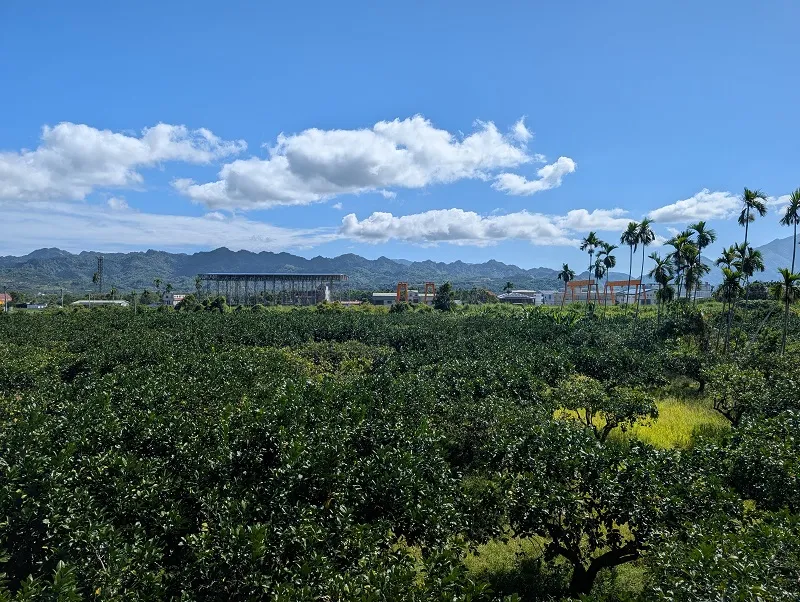
▲View from our lovely homestay in Ruisui, Hualien County
Once settled at our homestay in Ruisui, the real planning began. The East Rift Valley south of Hualien is a playground for outdoor enthusiasts, and our challenge wasn’t finding things to do, but rather choosing how to best spend our limited time. We wanted a trip with balance—a mix of high-adrenaline adventure and peaceful immersion in the landscape. Our plan quickly solidified around two distinct experiences that would showcase the diversity of the region.
First, we opted for a thrill. Ruisui is the starting point for the only officially sanctioned river rafting experience in all of Taiwan, a journey down the mighty Xiuguluan River. The promise of navigating white-water rapids as the river carves its way through the coastal mountain range to the Pacific was too exciting to pass up. This would be our dose of pure adventure. For our second activity, we chose something more leisurely the next day to balance out the excitement. We decided to explore a section of the valley’s renowned network of bike paths, themselves connected to the broader network that makes Taiwan one of the best places to bike in all of Asia. Our goal was to cycle the scenic route from the neighboring town of Yuli (玉里) to the beautiful Old Dongli Train Station in Dongli (東里). This would be our chance to slow down, breathe in the country air, and truly appreciate the serene rice paddies and mountain vistas that make this part of Taiwan so magical.
So, after a night of rest, we woke up on National Day (10/10) ready to celebrate the tumultuous birth of the Republic of China with an equally exciting activity: river rafting. We walked a short distance to the local train station to meet the driver who took us to the river rafting center. Shortly after arrival, we had to sign a few forms as well as drop off our loose items into some bags that would be waiting for us at the end of our journey. The staff then efficiently gathered the non-Mandarin speakers for a safety video in English, ensuring we all understood the basics of paddling commands and more. With the essentials of safety fresh in our minds, it was time to gear up. Once we had strapped on our life vests and helmets, we felt secure and ready for the adventure ahead. Now looking the part, we joined the colorful procession making its way down to the riverbank, where a fleet of inflatable rafts bobbed gently in the current, waiting for their crews. One by one, boats loaded with cheering rafters peeled away from the shore, and soon, it was our turn to push off into the cool, clear water of the Xiuguluan River.
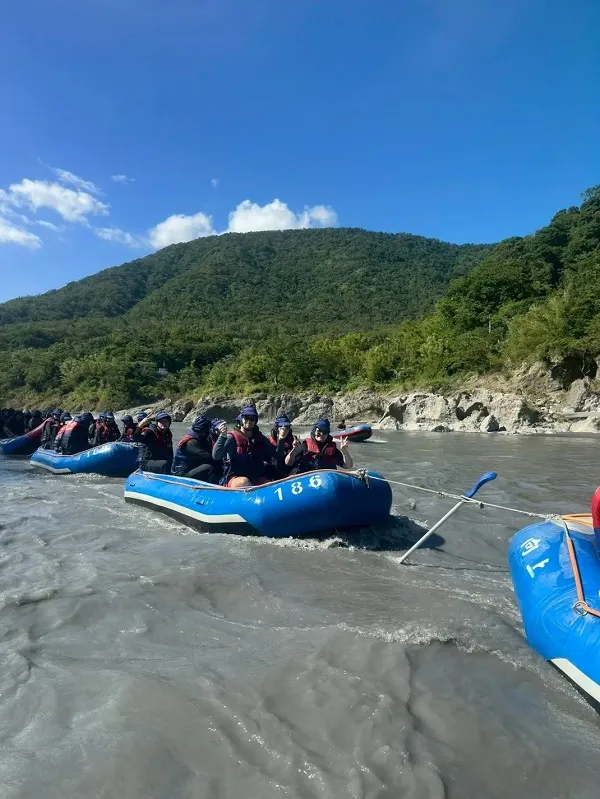
▲The author and his friend rafting down the river - From 向上泛舟's Facebook page
The moment our paddles dug into the water, the journey began. The river carried us through a stunning gorge, where massive, vegetation-covered rock formations towered over us, making us feel small against their sheer scale. The scenery was a mix of serene beauty and raw geological power, with the river itself serving as a playful guide. Long stretches of calm water would suddenly give way to sharp bends where the current quickened, churning into exhilarating rapids that sent cold, shocking spray over the raft and required frantic, coordinated paddling. Yet, the rapids weren’t the only battle. A chaotic, undeclared water war was being waged between all the rafts. The air echoed with gleeful screams of “Gōngjī!” (攻擊!)—“Attack!”—as crews furiously splashed each other with paddles and buckets, soaking everyone in a hilarious water fight. After hours of paddling and playing, the gorge opened up, the river widened, and the smell of salt was in the air. So, we positioned ourselves and docked our raft next to the shore where the river finally met the Pacific, exhausted but triumphant, our wild ride complete.
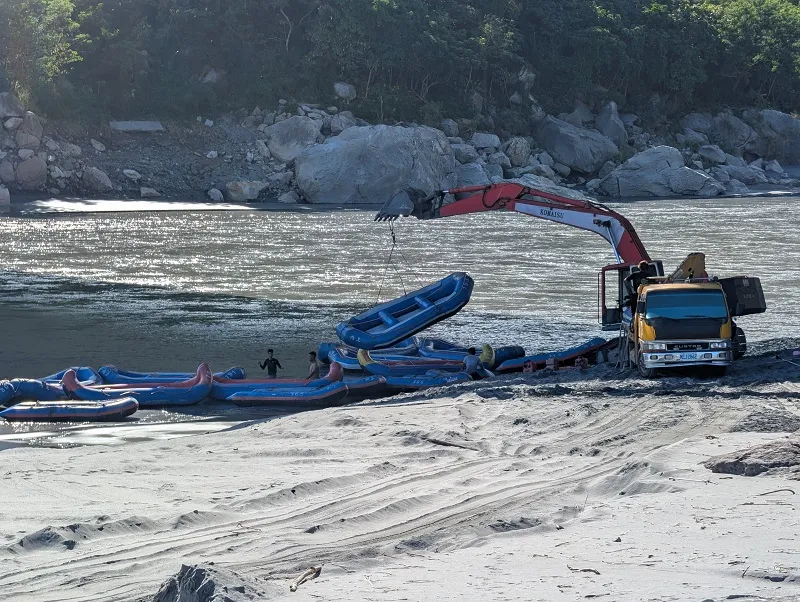
▲A truck with a crane helping retrieve all of the rafts after our trip
With such an exhilarating activity taking place on our first day, my friend and I decided that it would be best to take things a little bit slower the next. Being located so far away from Taiwan’s major cities, it was the perfect opportunity to enjoy biking. To link up with one of Taiwan’s best biking routes, we took a local train from our homestay in Ruisui to the neighboring town of Yuli. There, we found a small shop where we could rent a couple of bikes from a friendly, older shopowner. The bikes he provided were practically new and cost only NT$200 for the entire day! Soon, we found ourselves maneuvering through the quiet streets of Yuli to find the start of the Yuli-Dongli Bikeway, a 10-kilometer path that promised serene views and zero car traffic.
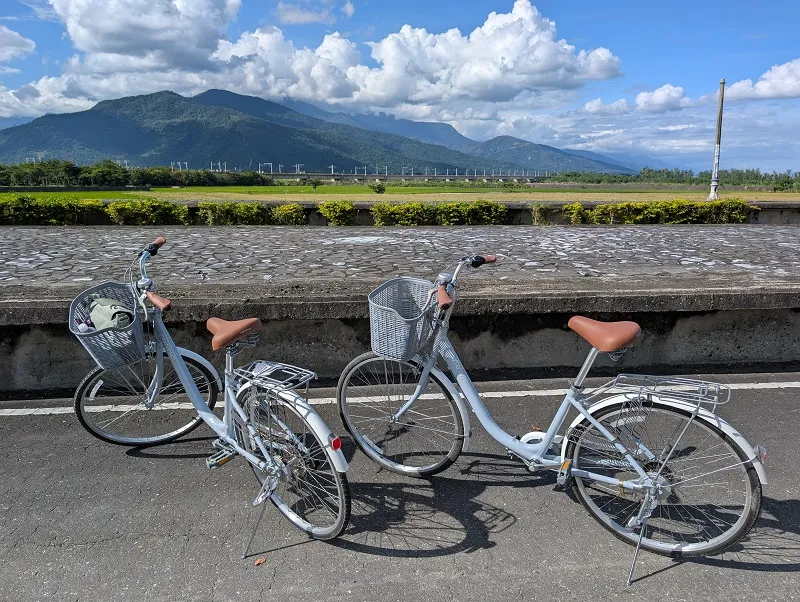
▲The bikes we rented with the vibrant green fields and mountains behind them
The bike path was a world away from the roaring rapids. As we pedaled, the landscape opened into a stunning panorama of green. Under the brilliant sun, the fields on either side of us shimmered in every conceivable shade, from vibrant lime to deep emerald, all framed by the distant mountains on either side. We soon came across a unique sign demarcating this as the only bike route in Taiwan where you can cross the geological boundary between the Eurasian Plate and the Philippine Sea Plate. A little further on, a section of the path was closed due to recent typhoon damage, forcing a detour onto the road. However, it was absolutely no problem, just some extra exercise with the same beautiful views. After about an hour of leisurely cycling, we reached the end: the beautiful remnants of the old Japanese-era train station in Dongli. The former platform is now a scenic rest stop, where we found an old man selling cold drinks and ice cream, his friendly cat snoozing peacefully out of the way of the sun nearby. It’s experiences like this that truly make Taiwan a biking paradise!
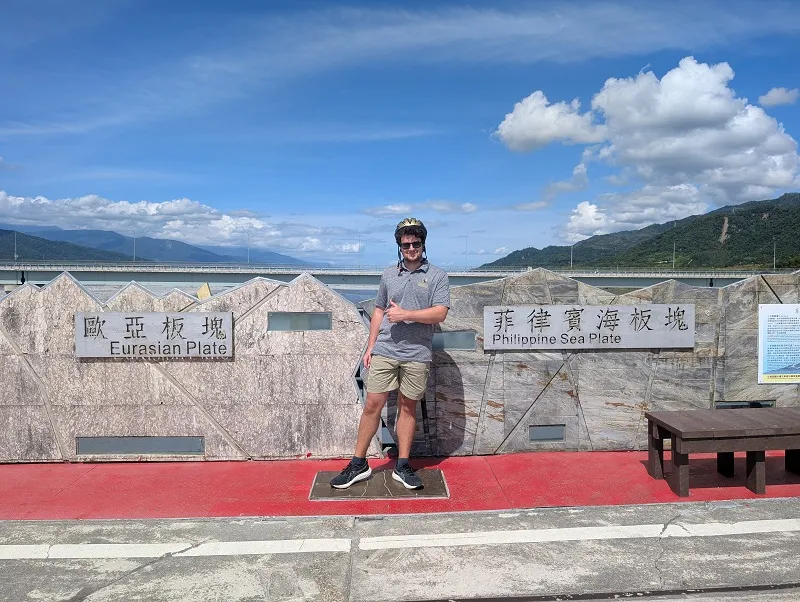
▲The author standing between the Eurasian Plate and Philipine Sea Plate
Sitting in the shade, sipping on cold water and watching the cat stretch, I reflected on our trip. We had experienced two very different, yet equally memorable, sides of Hualien County’s outdoor life. From the chaotic, adrenaline-fueled journey down the Xiuguluan River to the quiet, meditative pedal by the fields of the East Rift Valley, our trip was a perfect microcosm of what makes this island so special: the ability to find both thrilling adventure and profound peace, often just a short train ride away from each other. Back in Taipei, as I now walk through the familiar paths of NCCU’s campus, the memories of Hualien’s vast, green landscapes serve as a powerful reminder. A reminder that just beyond the library stacks and lecture halls, there is a world of natural beauty waiting to be explored. So, to my fellow students, when the academic pressure mounts, remember that Formosa is calling. Answer it.