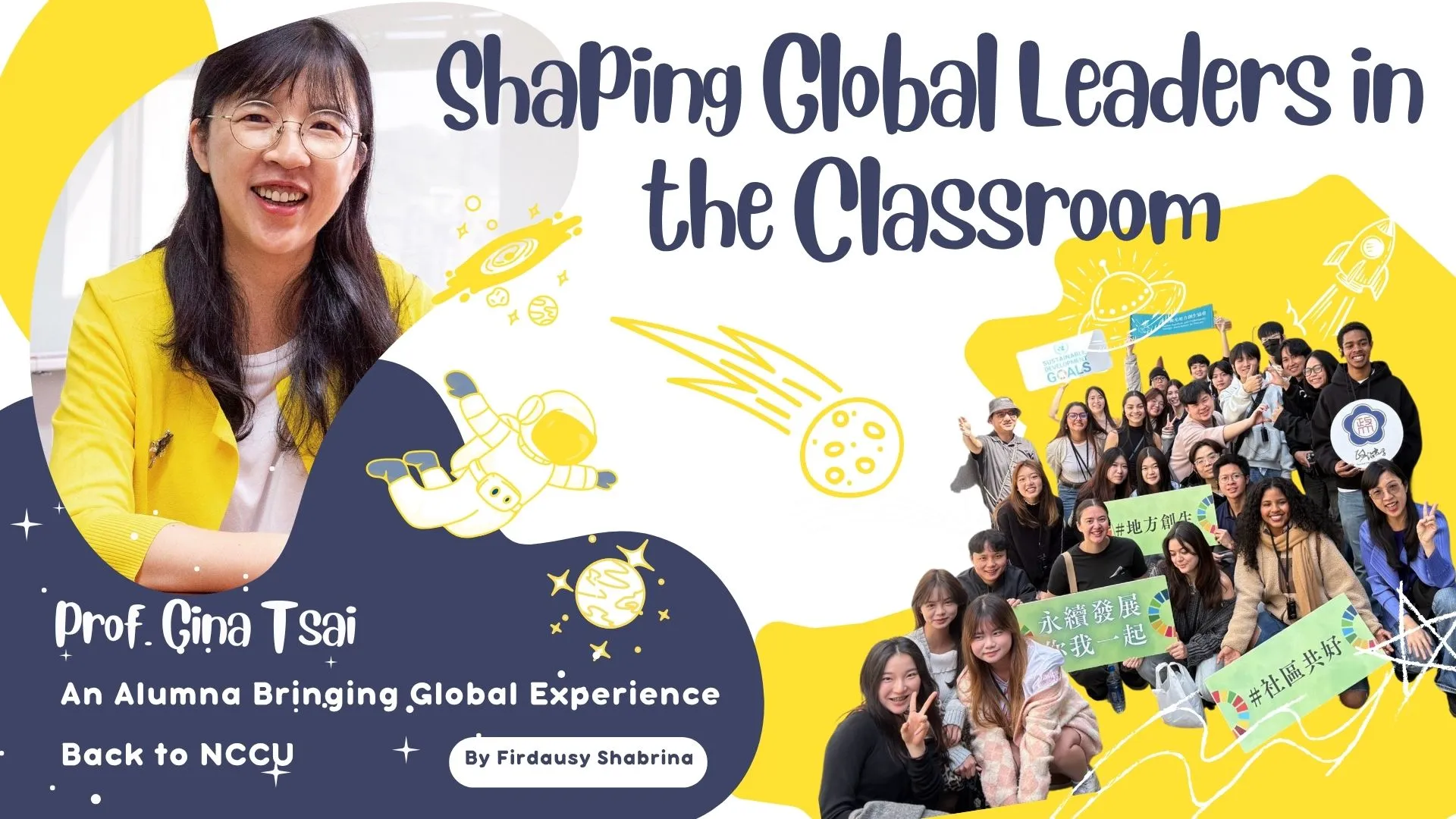
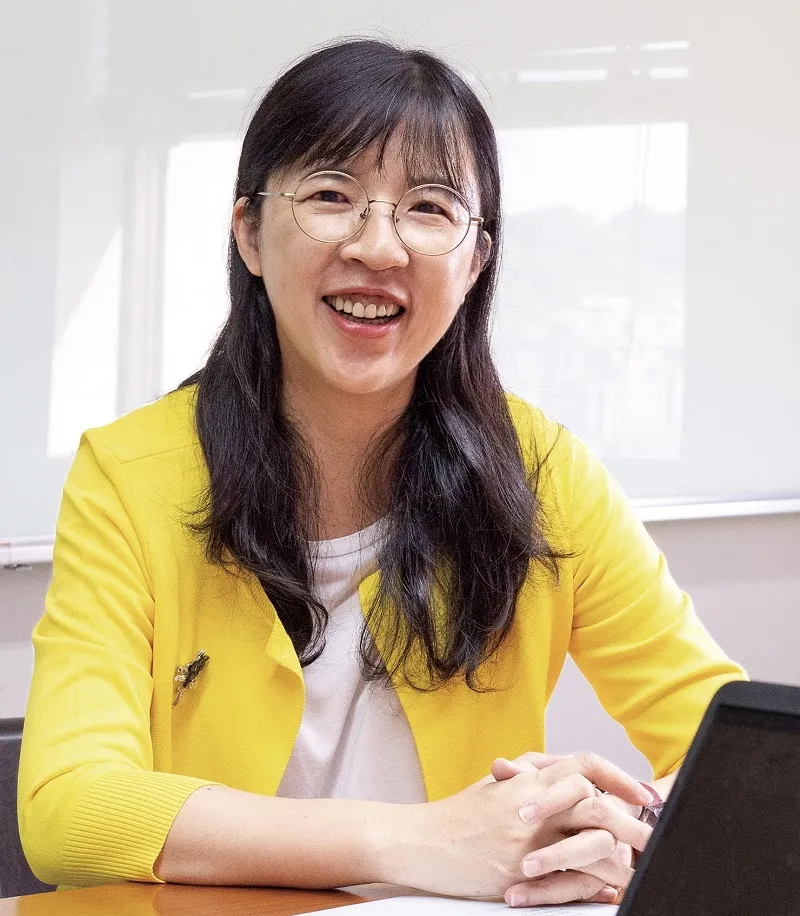
▲Dr. Gina Tsai, Public Policy & Sustainable Development lecture at ICI NCCU
From Global Career to Academia & Social Impact
Prof. Gina Tsai has maintained a relationship with NCCU for more than 20 years. She earned her J.S.D. at the School of Law (2012–2021), previously completed an LL.M. at National Cheng Kung University, and a double degree in LLB in Law & Foreign Languages and Literature at National Taiwan University.
During her Ph.D. program, Prof. Gina also took time to focus on her family, yet still managed to complete her dissertation in just 18 months, thanks to the support of her advisor and faculty. She officially received her degree in 2021, marking a long-standing academic connection with the university.
Before returning to academia, Prof. Gina built an impressive global career in multinational companies such as Microsoft, PTC, Airbnb, and MSD Taiwan. Her roles took her across Asia, including Korea, Japan, Singapore, and beyond, managing diverse teams, navigating cultural differences, and leading complex projects. Reflecting on those years, she shared, “I got to be more flexible, more open-minded, and learn how to listen. Without those experiences, I would have been a very different professor today.”
Beyond her corporate career, Prof. Gina is the CEO and founder of NCCU 50+1 Social Enterprise, connecting students with local communities to promote social revitalization and the implementation of the United Nations Sustainable Development Goals (SDGs). She also serves as President of the Creative Tourism and Community Design Association (CTCAT).
Her global experience in multinational companies, combined with her commitment to social impact, now informs her teaching at the International College of Innovation (ICI). She teaches courses such as Public Policy & Public Affairs and Sustainable Development and Regional Revitalization, equipping students with global perspectives and practical skills to create local impact.
These experiences spanning global business, academic research, and social enterprise have shaped the approach she now brings to her students. In the following sections, we explore the leadership lessons she distilled from her international career and how she integrates sustainability into her teaching and community initiatives.
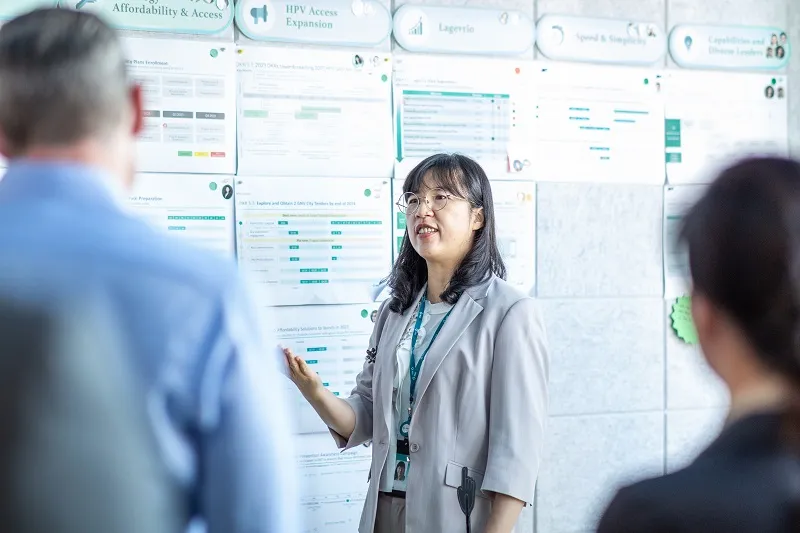
▲ Dr. Gina Tsai, 20 years of work experience at a Multinational Company
Beyond Academics – Prof. Gina’s Leadership Lessons
From her global career and personal challenges, Prof. Gina distills three essential lessons for students aspiring to become global leaders. Over twenty years in multinational industries, she led diverse teams and learned how management changes with context. At Microsoft, she faced limitations on regional roles: “I wanted to expand the coverage, not just Taiwan. But at that time Microsoft required relocation to Singapore or Beijing, and my family wasn’t willing to move.” That opportunity later came with PTC, where she managed a team of 20 across Asia while remaining in Taipei. At Airbnb, she faced the opposite challenge, leading a smaller team of first-job colleagues in a flexible startup environment, as she mentioned that, “Airbnb is very flexible, but you still have to act professionally. That was the challenge.”
These contrasting experiences from guiding seasoned experts across Asia to coaching young professionals shaped how she now teaches students, especially Generation Z. Drawing from them, Prof. Gina emphasizes three key strategies for aspiring global leaders: adapt quickly to new environments, cultivate genuine networks across cultures, and step outside your comfort zone to embrace challenges and growth opportunities.
1. Adapt and Learn from Every Experience
Prof. Gina’s early career required constant travel across Asia, adjusting to different cultures and government systems. She mentioned that “At first there were language and cultural barriers, but I found I was quite good at adjusting myself to talk with people from different cultures, even in government or local agencies. I became more flexible, open-minded, empathetic, and learned how to listen.”
Her advice to students is to actively seek new challenges. Adaptability and humility are foundations of leadership. To adjust successfully, she recommends observing local customs, asking questions, and being willing to change your approach.
She also offers practical guidance for students considering work abroad, “If you want to join a company in a very different culture say you are Taiwanese or Indonesian and want to work for a Japanese or Korean company don’t rush to relocate immediately. Start by working with their local branch first. This allows you to experience the culture and see if you are comfortable working in that environment. Once you feel confident and able to adapt, then moving to that country can be the next step to gain deeper experience.”
By starting locally, students can observe the company culture firsthand, learn the work style, and gradually build the confidence and skills needed to succeed internationally. Prof. Gina stresses that this approach is safer, more manageable, and allows young professionals to test their adaptability without the full pressures of relocating. She herself found this strategy effective early in her career, navigating multinational teams across Asia and the U.S. while balancing work and personal challenges.
2. Build Genuine Connections Across Cultures
Prof. Gina emphasizes that cultivating authentic relationships is as important as technical skills. As she explained, “Even though I speak English fluently and can write emails professionally, learning to work with people from different cultures was still a challenge. At the beginning, the hardest part was how to hang out with colleagues after work… how to build trust and a personal network with colleagues in the U.S. and Asia, when you only meet them once or twice a year.”
During her early career at Microsoft in Taipei, she collaborated remotely with colleagues across Asia and the U.S., often meeting them only at international conferences. This was before tools like Google Meet, LinkedIn, or other social platforms existed, so building relationships required creative effort and persistence. She learned not only work processes but also cultural nuances about how people communicate, make decisions, and build trust. To connect, she started with simple, universal topics like family, food, and travel, gradually building relationships that later proved invaluable.
Her advice to students is to start cultivating networks early, focus on sincere engagement, and recognize that friendships can evolve into powerful professional assets over time.
3. Step Outside Your Comfort Zone
At NCCU’s International College of Innovation, Prof. Gina ensures students put these lessons into practice. With classmates from 17–27 countries, she deliberately mixes groups to encourage cross-cultural collaboration. “As global leaders, you can’t only engage with students from Asia or Europe. Push yourself to interact with diverse cultures now the classmates you meet could become your global network for life.” She encourages students to take risks in their learning by volunteering for a leadership role in a mixed team, presenting ideas to an international audience, or proposing solutions to complex, real-world problems. These experiences mirror the uncertainty and adaptation required in a global career.
Prof. Gina also shares personal examples adjusting to startup-style environments with young colleagues taught her patience and flexibility, while managing senior professionals across multiple countries honed her negotiation and cultural sensitivity. Leadership, she stresses, begins in everyday actions learning to engage with difference, turning discomfort into growth, and applying lessons from the classroom to the broader world.
Sustainability Expertise Contributed Back to NCCU
Prof. Gina’s expertise bridges law and sustainability. With a background in business law, intellectual property, and over two decades in multinational companies, she also developed her focus on sustainability, ESG, and regional revitalization areas she had been passionate about since her student years, recalling, “Even as a college student, I was passionate about environmental law and anything related to the environment.” As President of CTCAT and Founder of NCCU 50+1 Social Enterprise, she has worked with communities, enterprises, and governments to advance cultural preservation, green practices, and social innovation experiences that now ground her role as a public policy and sustainability educator.
Motivated by this passion, she had long considered teaching part of her career plan. “Teaching as a university professor was always part of my plan, especially in sustainability and regional revitalization the areas I am most passionate about,” she recalled. While completing her Ph.D., she began envisioning how to bring her expertise and experience into the classroom.
That vision took shape when NCCU invited her to teach at the International College of Innovation (ICI). “ So I really appreciate that ICI NCCU offer me the opportunity to start sustainability and regional revitalization which I have the highly pationate for. I also know founded NPO and social enterprise for this and then so I start to teach from the sustainability first.” she said. Motivated by this, she started teaching while finishing her Ph.D., integrating her global experience, legal expertise, and social initiatives into her courses.
Her te aching philosophy is clear that equip students with practical skills and strong foundations they can apply in real life. In classes such as Public Policy & Public Affairs and Sustainable Development and Regional Revitalization, she connects sustainability frameworks and circular economy practices with policy and regulatory perspectives, highlighting how governance and law shape environmental strategies. She also adapts her teaching pace based on student feedback, ensuring comprehension before advancing to more complex topics.
Beyond lectures, Prof. Gina emphasizes experiential learning through guest speakers and field trips. “It’s very important for students to see the real world not just from an academic perspective, but to know what it actually looks like,” she stresses. By linking theory with practice, she empowers students to understand sustainability in context and to create tangible impact in their communities.
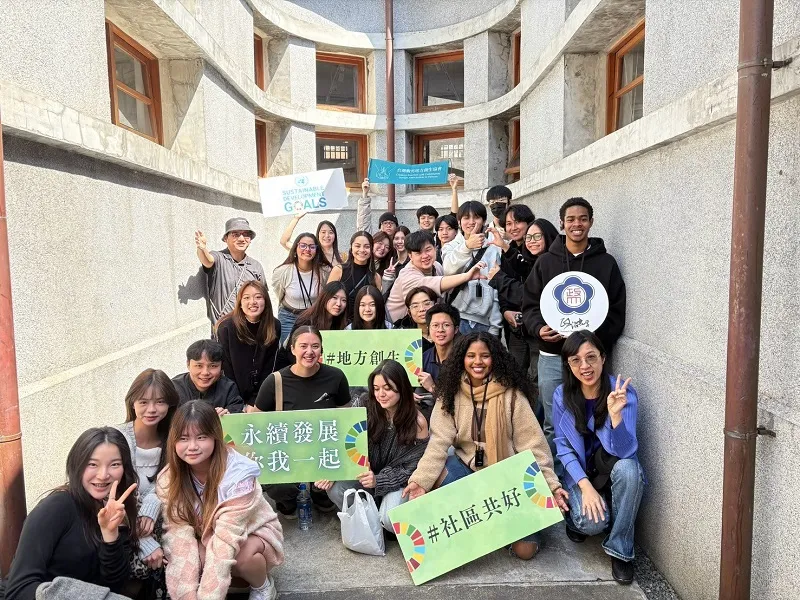
▲Dr. Gina Tsai and NCCU students during a course field trip, connecting classroom learning with real-world sustainability experiences.