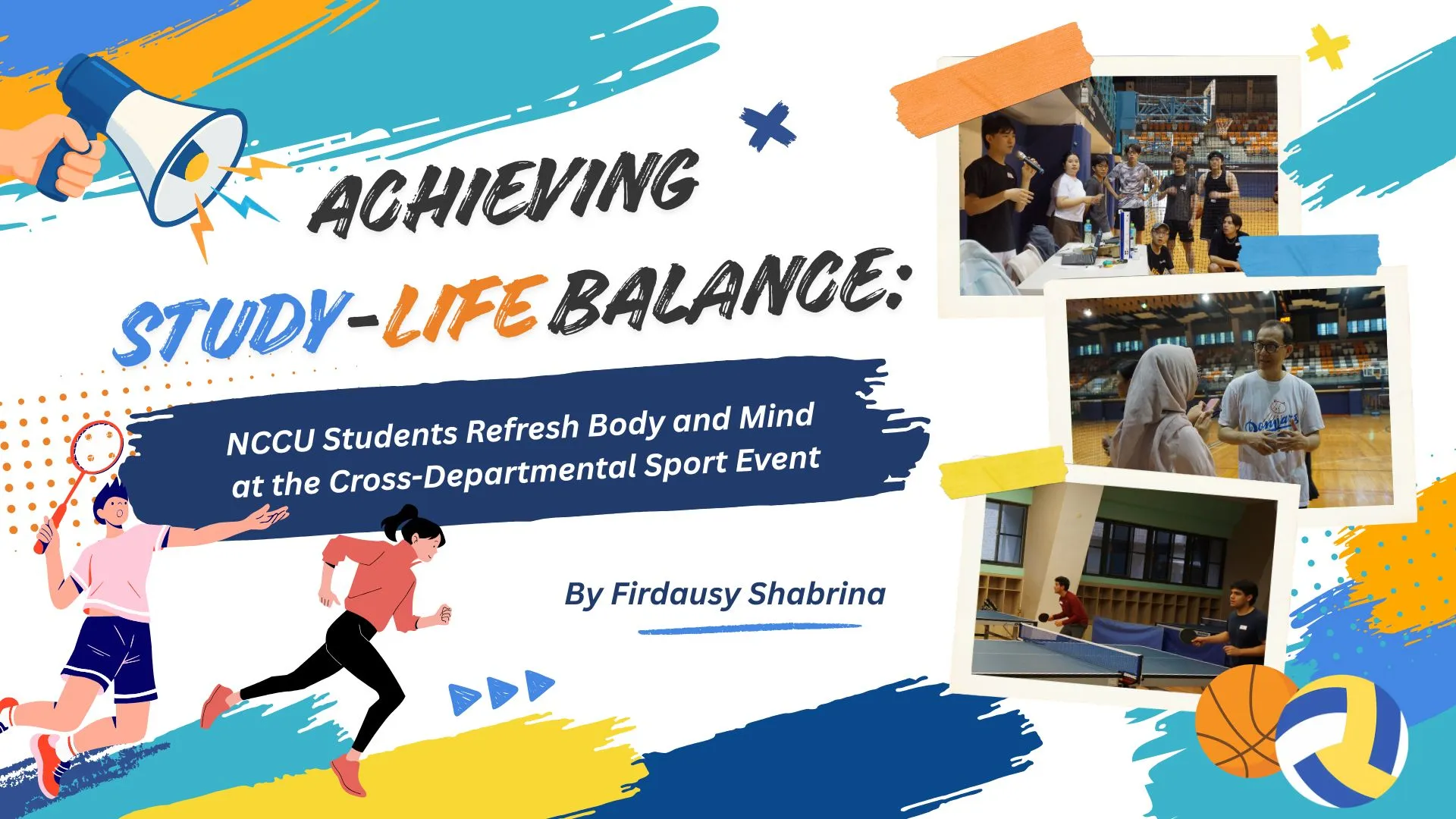
Saturday, April 18, 2026. Although the morning in Taipei started with clear, bright skies, the weather slowly shifted by midday, blanketing the campus in a heavy, gray overcast. Yet, inside the NCCU Gymnasium, the weather outside meant absolutely nothing. The atmosphere inside the arena was heating up, fueled by the palpable enthusiasm of NCCU’s students participating in the Cross-Departmental Sport Event.
For Ryan, a second-year GCIT student from Vietnam, the event was a welcome relief from the academic grind. Catching his breath on the sidelines, he shared: "This event is very foreigner-friendly. For me, team sports are the best way to communicate beyond language barriers. You don't need to speak fluent Mandarin to understand the strategy on a volleyball court or to share a high-five after a good play. It's just joyful." Ryan's sentiment mirrored the mood of the hundreds of others who refused to let their weekend be drained by the fatigue of midterm week.
The event invited students to register for a variety of sports: Basketball, Badminton, Table Tennis, and Volleyball.
What was refreshing was the lack of pressure to be a "pro." Students were encouraged to jump into whichever sport they liked, regardless of their skill level. This was about finding where one could channel the stress of midterms into physical movement. The competitive edge was sweetened by a point-collection system, where participating in different matches granted voucher points towards. This turned the gymnasium into a hub of high-energy interaction where students from different departments connected through shared effort, far from the isolation of their desks.
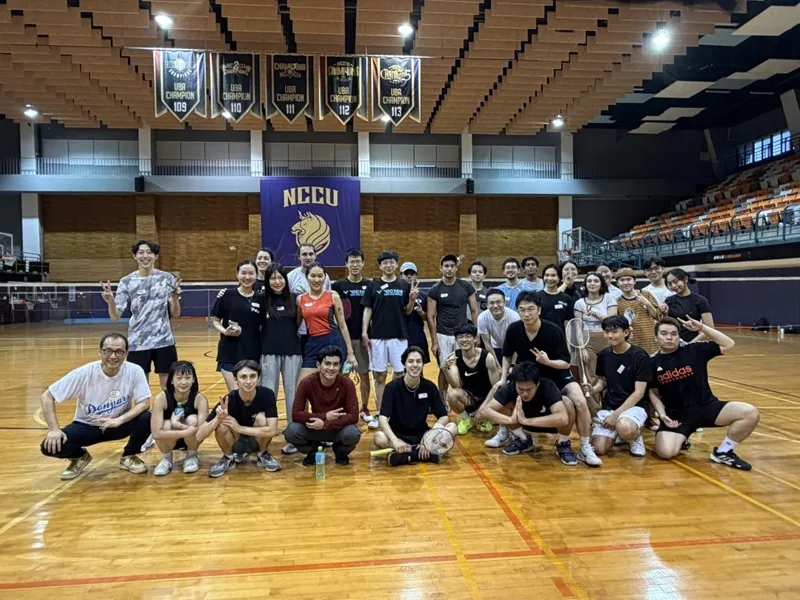
▲Prof. Jack Wu, Director of the IMES program, captured with participants at the NCCU Cross-Departmental Sport Event.
Balancing Academics and Well-being: A Campus That Cares
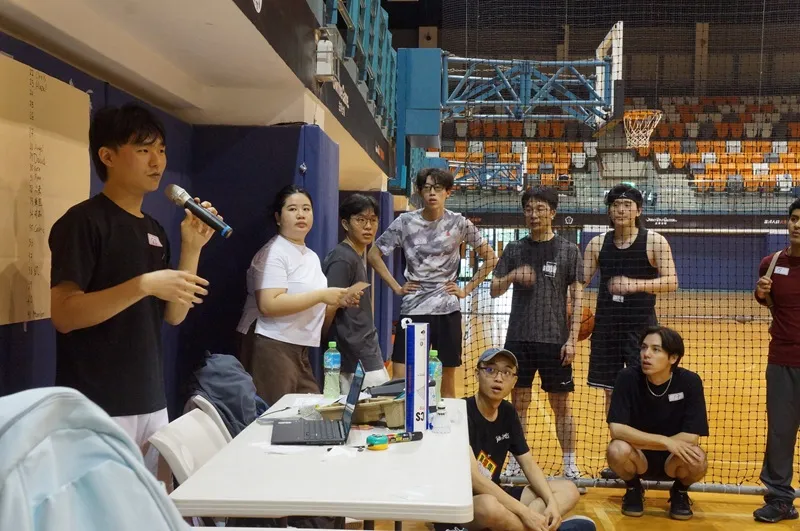
▲Chris from the IMES Student Council briefing the participants on the event flow and rules
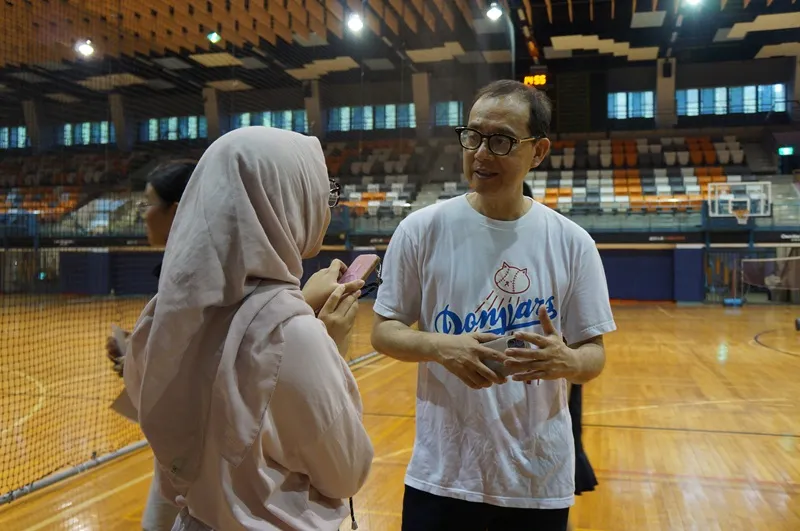
▲Prof. Jack Wu during an interview with the OIC student reporter
The man standing amidst the echoes of basketballs and the chatter of students, Prof. Jack Wu, the Director of the IMES program, is much more than an administrator of schedules and syllabi. He envisions the NCCU Gymnasium not merely as a concrete structure for physical exercise, but as a crucial, democratic space a "neutral ground" where the rigid hierarchical structures of the classroom vanish. In a culture where academic performance is often treated as the ultimate yardstick, he recognizes that the psychological toll on students the "midterm burnout" is a challenge that universities must address head-on.
He sees this Cross-Departmental Sport Event as a deliberate intervention. By booking the facility and curating a mix of competitive fun and communal participation, he is redesigning the campus experience. He recognizes that students need a space where they can be "human" rather than just "students."
When asked about his motivation, Prof. Jack shared, "Yeah, um, you know, like we had this kind of international sports day, uh, 2 or 3 years ago. And we had a pretty good time there at that time. But today, because in the morning, I have a so-called a jack cup, body bowl games. So I booked this gymnasium, and I think, you know, in the afternoon, we can have this kind of international sports days for the international students and also the local students who want to mingle with the international students. Okay. So that is my motivation for doing this."
He further emphasized the importance of balance, reflecting on his own time studying in Michigan, "Yeah, because, you know, when I study in Michigan, then at that time, I felt that the course work was quite heavy. And, you know, I was under a strength. But, you know, every day I would go to the gymnasiums to play basketball, and also go to the gym to do exercise. And I feel that, you know, it helped me kind of overcome the difficulties of studying. And I think, you know, mental health, and also your kind of studying has to be kind of balanced. You know, you have to find a balance between these two things. So there is why I want to have this kind of supposed days for our students, even though it's just only for fun. It's less competitive, but at least people can get together and then have fun."
For Prof. Jack, this commitment goes far beyond just a yearly sports event. He believes that a university shouldn't just be a place that demands relentless productivity, it should be an ecosystem that nurtures mental resilience. In the fast-paced rhythm of campus life, students often forget that physical health and simple joys are the very foundations that keep them going. By creating this space, he wants to ensure that every student feels supported not just when they achieve perfect grades, but also during those challenging moments when they're struggling with the weight of a semester.
This is the essence of humanistic leadership. Prof. Jack doesn't just focus on the curriculum, he truly cares about ensuring his students don't "burn out" along the way. To him, seeing students laugh, sweat, and bond with friends from different backgrounds is an achievement just as meaningful as any academic milestone. He is dedicated to building a campus culture where every individual feels connected, making the heavy academic load feel a little lighter when shared within a supportive community. By fostering this sense of balance, he hopes his students will grow into graduates who are not only intellectually capable but also grounded, healthy, and happy as they step out to face the world after graduation.
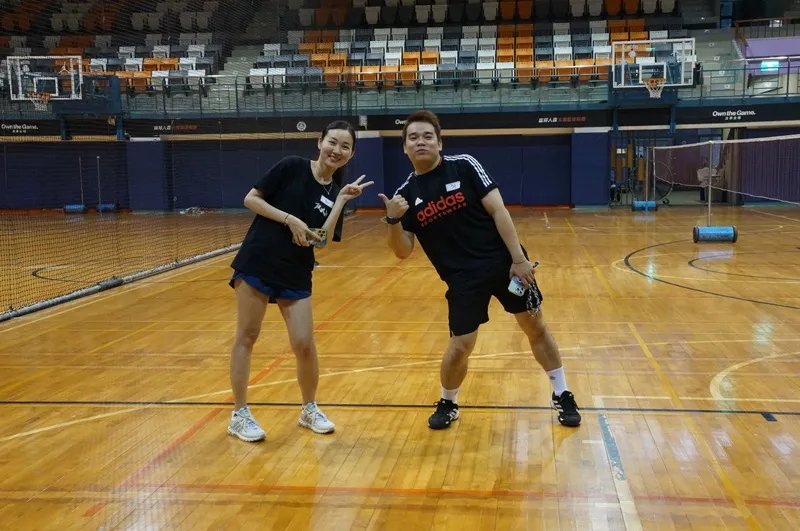
▲Ryan and other international students soaking up the energy during the sport day
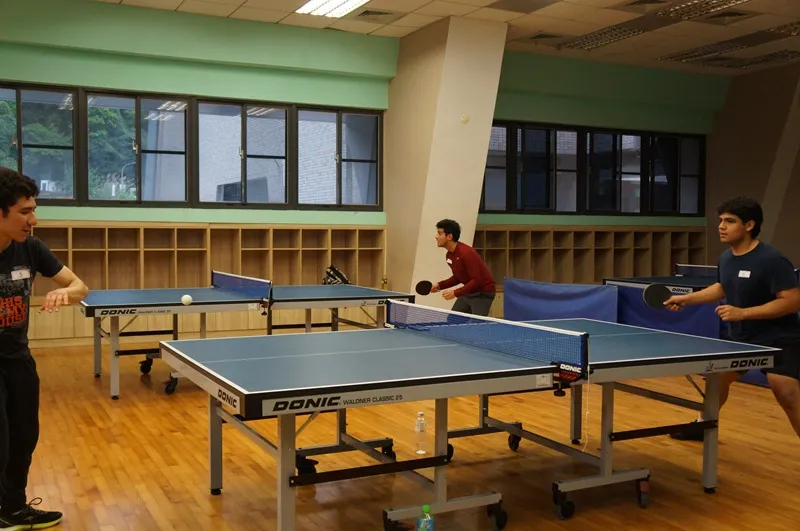
▲International students showcasing their skills in a friendly game of table tennis
Sweat, Messy Plays, and Zero Judgment
Inside the NCCU Gymnasium, the dynamic was far from polished and that was exactly the point. Before the games kicked off, Chris from the IMES Council added a humorous touch to ensure things remained fair. He took the microphone and gave a lighthearted instruction, "For those who only play badminton once a year, please step aside and gather on the left. But for those of you who play 'like a pro' or at least once a week please move to the right." This simple gesture set the tone; it was a masterclass in "messy" fun where the goal wasn't victory, but shared laughter.
The sound of sneakers squeaking on the court was constant, punctuated by outbursts of amusement whenever a shuttlecock went completely the wrong way. Milos, an international student from the IMPIS program, laughingly admitted his lack of preparation while catching his breath on the sidelines:
"I lost a lot of balls, and I'm very tired, even though I didn't run that much, so I'm just out of good conditions for playing. For the rate, I mean, it's kind of like arrogant if you're rating your own skill. If you say, 'Okay, I'm a 10 out of 10,' then that's just cocky. But for the energy, I think I really enjoy playing today. It's not really about showing off how good you are; it's just about having fun, actually."
This "lack of polish" became a powerful social lubricant. When someone tripped or completely missed a shot, the reaction wasn't judgment, but high-fives and encouraging shouts of "nice try!" For a few hours, the scoreline mattered far less than the shared laughter after a missed serve. It was a refreshing reminder that when you remove the pressure to be perfect, you create space for something much more meaningful, the ability to relate to one another without masks, turning a moment of physical failure into a catalyst for genuine human connection.
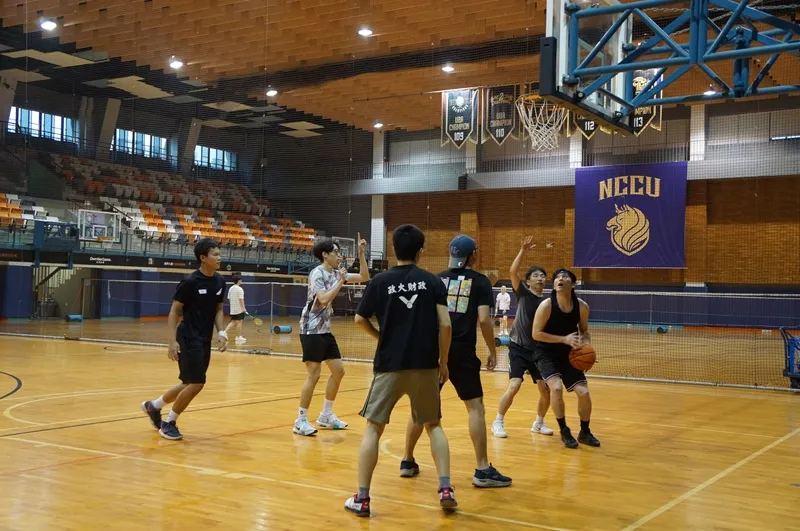
▲NCCU students battling it out on the basketball court
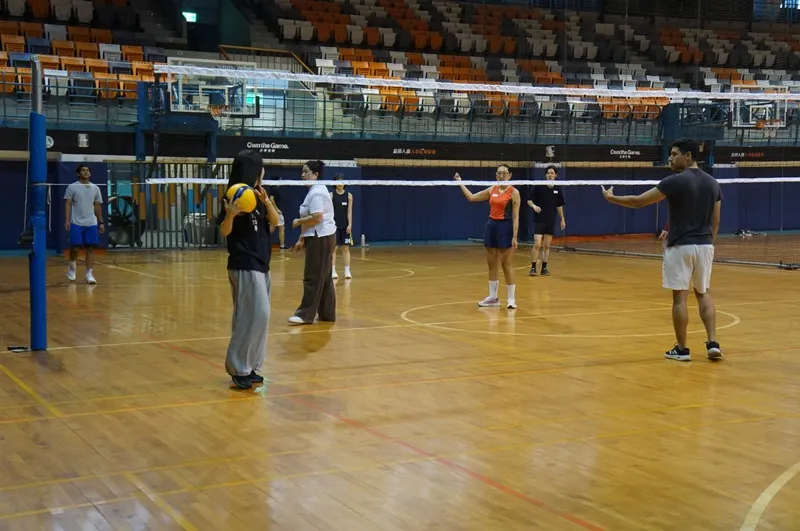
▲ Students enjoying the excitement of a volleyball match
Inside the NCCU Gymnasium, the dynamic was far from polished and that was exactly the point. Before the games kicked off, Chris from the IMES Council added a humorous touch to ensure things remained fair. He took the microphone and gave a lighthearted instruction, "For those who only play badminton once a year, please step aside and gather on the left. But for those of you who play 'like a pro' or at least once a week please move to the right." This simple gesture set the tone; it was a masterclass in "messy" fun where the goal wasn't victory, but shared laughter.
The sound of sneakers squeaking on the court was constant, punctuated by outbursts of amusement whenever a shuttlecock went completely the wrong way. Milos, an international student from the IMPIS program, laughingly admitted his lack of preparation while catching his breath on the sidelines:
"I lost a lot of balls, and I'm very tired, even though I didn't run that much, so I'm just out of good conditions for playing. For the rate, I mean, it's kind of like arrogant if you're rating your own skill. If you say, 'Okay, I'm a 10 out of 10,' then that's just cocky. But for the energy, I think I really enjoy playing today. It's not really about showing off how good you are; it's just about having fun, actually."
This "lack of polish" became a powerful social lubricant. When someone tripped or completely missed a shot, the reaction wasn't judgment, but high-fives and encouraging shouts of "nice try!" For a few hours, the scoreline mattered far less than the shared laughter after a missed serve. It was a refreshing reminder that when you remove the pressure to be perfect, you create space for something much more meaningful, the ability to relate to one another without masks, turning a moment of physical failure into a catalyst for genuine human connection.
Solidarity and the Path Ahead
This sense of togetherness goes far beyond the court. The event itself was a bridge between generations. In the morning, the gymnasium was filled with the competitive spirit of alumni from the Commerce Department, who took arrived to the court to relive their own college days. As the afternoon, the torch was passed to the students, creating a seamless transition that turned the space into a shared ground for the entire NCCU community.
Ryan, a GCIT Student who has navigated life as an expat in the Philippines before, reflected on how vital these moments are: "I think through sport, you can also make a lot of good friends. I just made new friends while playing sports with them. So it really brings you a good feeling."
In terms of branding, this event is a strategic step for the Office of International Cooperation (OIC). It proves that NCCU is not just a place for academic rigor, but a community where the student experience and sense of belonging are prioritized. As we look back, it's clear that this event was a small laboratory for real life. NCCU has proven that academic success, paired with well-being, is the key to excellence. On the NCCU courts, we aren't just learning how to win, we are learning how to grow together in a diverse, global community.