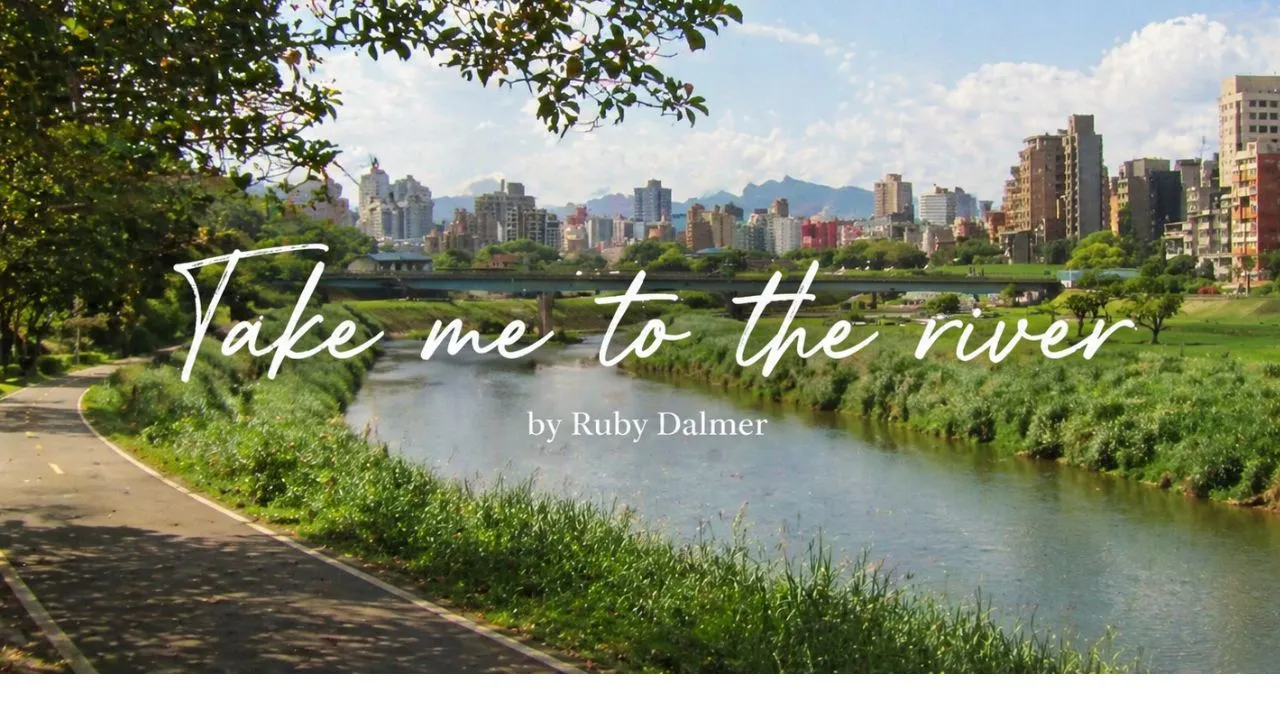
Taipei is a complex series of coursing waterways. 300 years ago, the city was essentially a large lake — submerged and swampy. Over time, mountains, roads, commerce, and people sprouted, transforming flooded basin into bustling city.
But Taipei is still defined by its watery arteries. Its main river systems — Tamsui River (淡水河), Keelung River (基隆河), Xindian River (新店溪), and Jingmei River (景美溪), organise urban life around their dividing lines.
In the pockets of space between river and road, people-centred urban design has created a thriving ecosystem of riverside life. In this curious space in-between, riverbanks have been radically transformed into vast networks of riverside parks.
29 riverside parks now snake their way through the city, spanning a distance of over 210 kilometres. From dragon boating, to bike raves, to temple karaoke, to second hand shopping — going down to the river takes on new meaning in Taipei.
Stepping into this riverside world unlocks a new level of city life — full of quirk, colour, and adventure. These parks are a living and breathing way of life here. In this article, I’ll unpack the history, significance, and uniqueness of these remarkable riverside retreats — looking into how people and parks empower each other.
Riverside parks — a global synopsis
Urban river corridors have long been hubs of commercial life. These rivers bring trade and prosperity — extracting and transporting capital across distances.
Because of this economic potential, people began to treat rivers as potential gold mines. Since industrialisation, many riverbanks lost their flora and fauna and began to sprout industrial plants, factories, and warehouses.
Stationing extractive enterprise on riverbanks had disastrous ripple effects for rivers all around the world. In these commercial contact zones, river-fronts became bloated with sewage and industrial waste, contaminating water in the process.
Older philosophies on rivers generally focused more on humans living in harmony alongside these waterways. There was an emphasis on respecting these rivers — extracting only what was necessary to live well and sustain communities.
For example, in Te Ao Māori, the worldview of Aotearoa New Zealand’s indigenous people, rivers or awa are thought of as living ancestors, inseparable from people. In a 2017 landmark legal victory, Aotearoa’s Whanganui River was even granted official legal personhood.
In the 1970s, city dwellers began to grow frustrated by the severed relationship between rivers and people. Spurred on by policy-makers and civil environmental awareness, the great river renaissance began.
Cities all around the world started to rediscover their rivers. Little by little, industry gradually relocated and people found more sophisticated ways to manage their sewage. Reattaching people to their river fonts became a public good — in the common interest of politicians and everyday people alike.
Urban green infrastructure is now a key marker of success for modern cities. They demonstrate a city’s ability to balance environmental, economic, social, and health goals together.
Living well with our rivers promotes happiness, health, and wealth — and has become a source of pride for many metropolises.
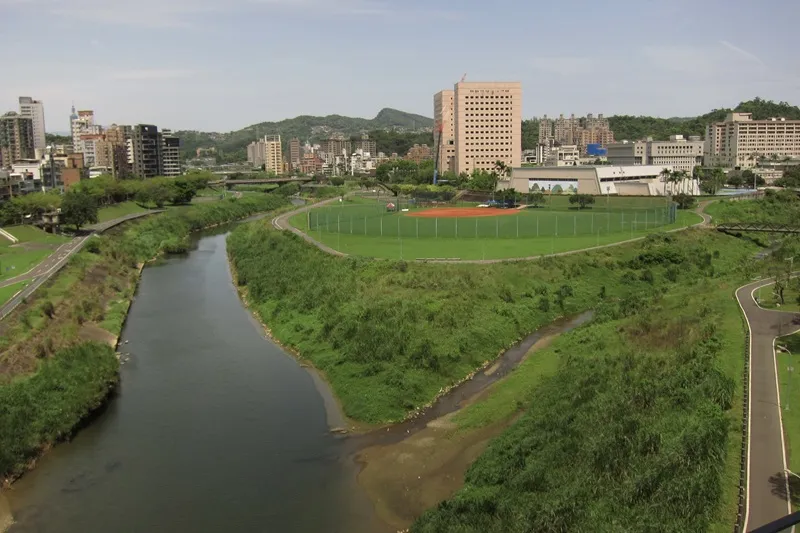
▲A shot of the riverside from NCCU
A riverside history of Taipei
The history of Taipei’s riverside is a snapshot history of Taiwan itself.
Indigenous peoples in Taiwan long relied on rivers for farming, fishing, and transportation. Lowland tribes had closer ties to river systems, becoming especially adept at creating riverside trade flows with other Southeast Asian countries.
In the late 16th century, the first Han settlers began to make their way from Fujian and Guangdong to Taiwan. Many of these early settlers were fishermen — and they quickly established trading posts and fishing villages across the island.
The vast, shallow lake that was once Taipei brought with it tremendous trade potential — and these early settlers took notice.
But the settlers weren’t the only ones paying attention. These waterways also helped open up Spanish and Dutch exploration, eventually controlling various parts of the island over various years.
As colonial powers changed hands — from Ming to Qing empire, to Japanese, to Kuomintang, these rivers continued to serve as a major drawing card for control of Taiwan.
In the 18th century, Xinzhuang Port was the prosperous centre of Greater Taipei. Accounts from the time describe sprawling markets, colourful sails, and lanterns scattered along the thriving riverbank.
As the 19th century approached, Taipei shed its lake status and left in its wake the meandering river corridors we know today.
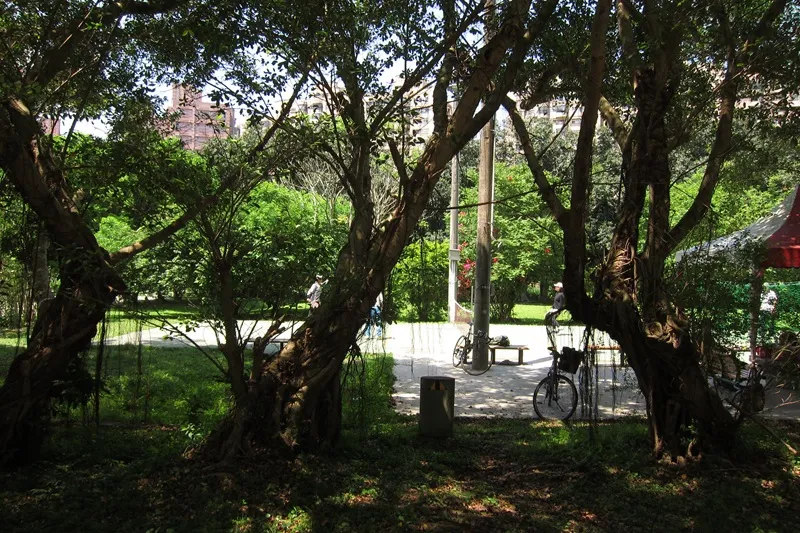
▲Riverside park scene
Along its biggest river — Tamsui, two towns came into being — Banka (萬華) and Twatutia (大稻埕). These riverbank neighbourhoods would go on to become the two oldest neighbourhoods of Taipei City.
By the mid-19th century, Tamsui became a critical international commercial port. This rapid industrialisation was great in the short-term, ushering in an influx of wealth to the island.
But gradually, the river fell on hard times — becoming polluted and cast aside, forgotten by Taipei residents. It wasn’t until much later that the city entered its riverside renaissance — beginning construction on the parks in the latter half of the 20th century.
Pro-people urban design
Over the course of this riverside journey, Taipei encountered a thorny problem. The city is exceptionally rainy. Taipei is one of the rainiest cities in the world, with rainy days making up roughly 60% of all days in a given year.
With that much rain comes a high chance of floods. Knowing Taipei is at great risk of a devastating flood as is, city planners got to work.
Policy makers needed to come up with a clever way of avoiding floods while also keeping people connected to their precious rivers. Riverside parks became the brainchild of this process.
High walls were constructed along the riverbanks — creating a comfortable distance between roads and potential flood waters. But they didn’t just stop here.
In this gap, the minds behind Taipei decided to go further — to cleverly use this unused riverbank space for public good.
Riverside parks began construction around these banks, radically rejuvenating Taipei’s rivers. The key ethos was to create community space for all walks of life — for rest, recreation, and relaxation.
But these parks aren’t just for community space and flood prevention. They also promote ecological protection — providing vast, protected green space for plants and animals to thrive.
These beloved parks are now home to such a diverse array of city life. Let’s go deeper — and look into the fabulous slices of life that flow alongside Taipei’s rivers.
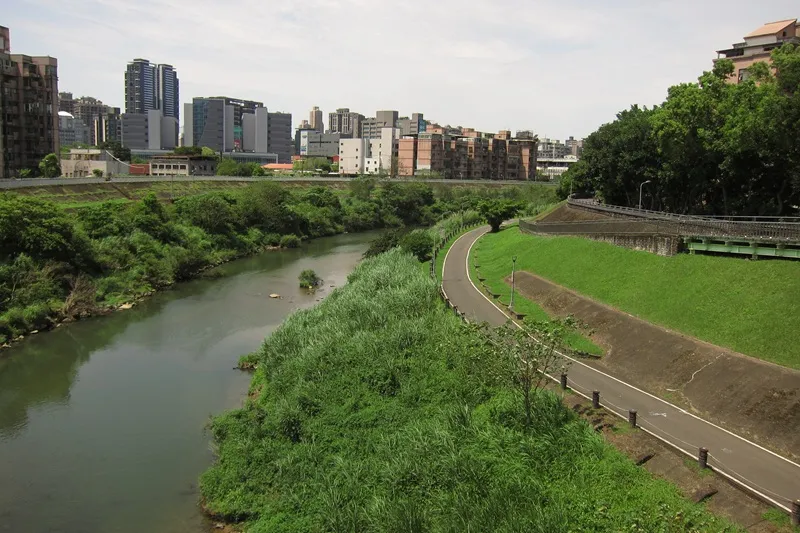
▲The riverside park from Yishou Bridge
Down by the river
Dotted along these riverside greenways sits a kaleidoscope series of attractions and activities. Here are some of my favorites.
Riverside bars
Possibly the most iconic Taipei riverside spot is Dadaocheng Wharf. On rare sunny days, locals flock to this bustling section of the riverfront.
Four centuries ago, Dadaocheng was once an export hub for Taiwan’s tea trade. This trade brought wealth to the whole neighbourhood, leaving some fascinating and remarkably well-preserved architectural relics dotted around the nearby streets — many of the red-brick variety.
In Dadaocheng, the main activity is sitting atop converted shipping container pop-up bars with craft beer and pub food — while watching the riverside sunset, of course.
If sunsets on a shipping container don’t appeal, you can instead hop aboard the Great River Queen — a sunset boat cruise that sails all the way to Guandu (關渡) and back.
Or there’s the Gongguan Riverside Plaza — a collection of casual pop-up bars scattered along the riverside park. This place is popular with NCCU students and is a reliable source of cheap-ish drinks, tasty eats, and a relaxed and social bar vibe.
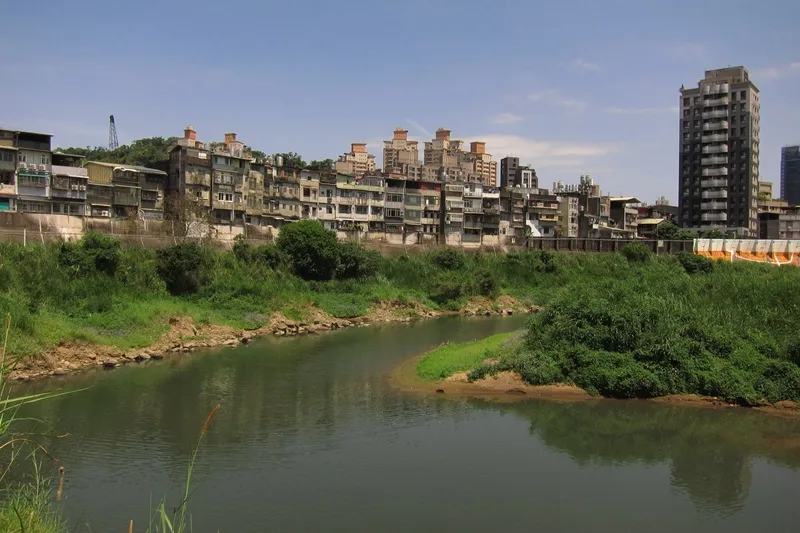
▲The riverside on a sunny morning
Skateboarding and swing dancing
Another sparkling feature of Taipei’s riverside is the thriving communities that have sprung up around both skateboarding and swing dancing.
At several key points along the winding riverside network, free skateparks sit under highway bridges — decked out with extensive ramps, vending machines, and covered seating areas.
These skate parks are always bustling. While the rings and ramps are non-judgementally shared by serious skaters and amateurs alike, friend groups often hang out around the perimeter.
Look a little deeper and alongside these skaters, you’ll also find a surprisingly flourishing swing dance community. After work in the evenings and on weekends, certain stretches of the riverside park morph into outdoor dance studios.
Usually older people — 叔叔阿姨們, these performers meet underneath highway bridges to practice partner dance. Someone brings a speaker and the whole place lights up.
For passersby, these unremarkable riverside plateaus become magnetic street performances — works of public art.
Riverside flea markets
For lovers of second hand shopping, Taipei’s riverside is the place for you. Sprinkled around the riverside highways are a couple of incredible flea markets.
Usually held on the weekends, vendors gather around the nearby banks, offering up a world class array of second hand treasure.
Whether you’re in the market for vintage denim, sparkly platformed flip flops, leather handbags, industrial tools, fishing lines, handworked meat cleavers, digital cameras, or 2000s-era alarm clocks, these markets have something for everyone.
My favourite is the Fuhe Bridge Flea Market. Head there on Fridays, Saturdays, or Sundays from 8am-12pm for some incredible thrift finds.
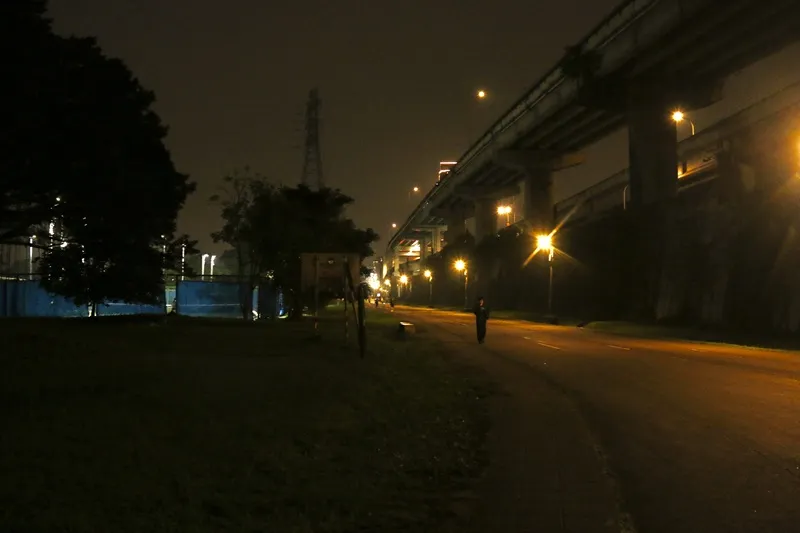
▲Riverside park by Wanlong at night
Dog parks and dragon boating
An unmistakable part of Taipei’s riverside architecture is the adorable animals who come along for the ride.
People bring pets of all different stripes down to the river to play — and these parks incorporate them into the design.
At least 4-5 fenced dog parks lie around the riverside park system, offering bountiful space for dogs to run free. These parks are even tailored to dog size — with dedicated small dog and big dog parks — all for free.
Dragon boating is also a beloved riverside past-time, with the Taipei International Dragon Boating Championships (台北國際龍舟錦標賽) marking the peak of the annual season.
In late June, dragon boaters and picnicking spectators alike flock to Dajia Wharf and Keelung River to soak up the racing atmosphere.
Temple karaoke
One of my favourite quirked-up river delights has to be temple karaoke. When biking down the river, expect to hear your soundscape occasionally morph into booming bass and passionate, questionably on-key belting.
The first time I heard this, I got curious and pulled over. I discovered that this karaoke was coming from make-shift stages outside the various temples scattered along the bank.
If you’re on the hunt to experience temple karaoke, head to Guandu Temple (關渡宮). This temple is a multi-level shrine to Mazu (媽祖), the sea goddess, and is sure to entertain.
Bike raves
Taipei is also home to bike raves — multi-hour moving raves that snake their way through the riverside parks.
These raves are a kind of urban parade — loud, social, and creative. The raves are often themed and involve things like flamboyant costumes and make-shift DJ decks on wheels.
They draw people from all walks of city life and are an unforgettable must-do.
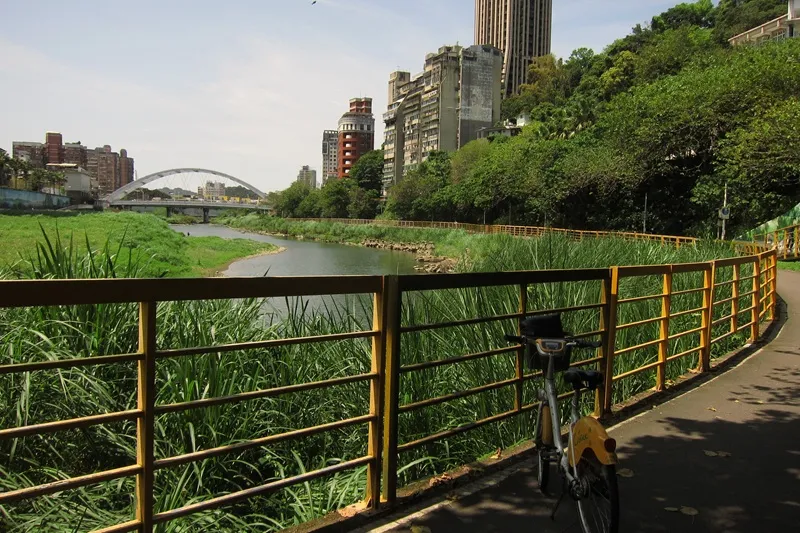
▲My favourite stretch of the riverside parks
Dinosaur park
Under Huazhong Bridge, the riverside is also home to a Dinosaur Park. This spot is full of impressive art installations — designed to be a kind of theme park for kids and adults alike.
It involves little stegosauruses, dinosaur eggs, mini tyrannosauruses, and even a pterosaur — faithfully flying above the area.
Lover’s bridge and wedding photoshoots
The riverside parks also incorporate the celebration of love into their design.
The red rainbow bridge in Chengmei Riveride Park (成美河濱公園) is one of these spots. This place is full of heart themed art and romantic neon light shows.
Many couples come here to attach a physical “love lock” to the bridge. Due to fears from the Public Works Department that people would pollute the river by dramatically throwing the keys into the river, a ‘Mailbox of Love’ was created.
This is a comically real city policy designed to promote love locks without the accompanying metal pollution caused by grand romantic gestures. Peak Taipei.
Love is also in the air at Guting Riverside Park — the unofficial spot for wedding photos in the city. The park is designed with several love-themed installations — like the Happy Bell Tower, Love Arch, and Blue and White Windmill.
Climbing gyms and social sports
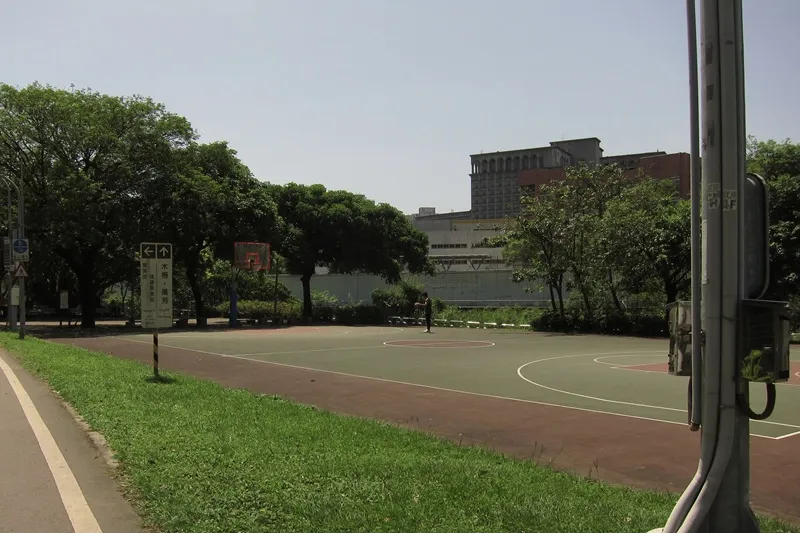
▲Man playing basketball
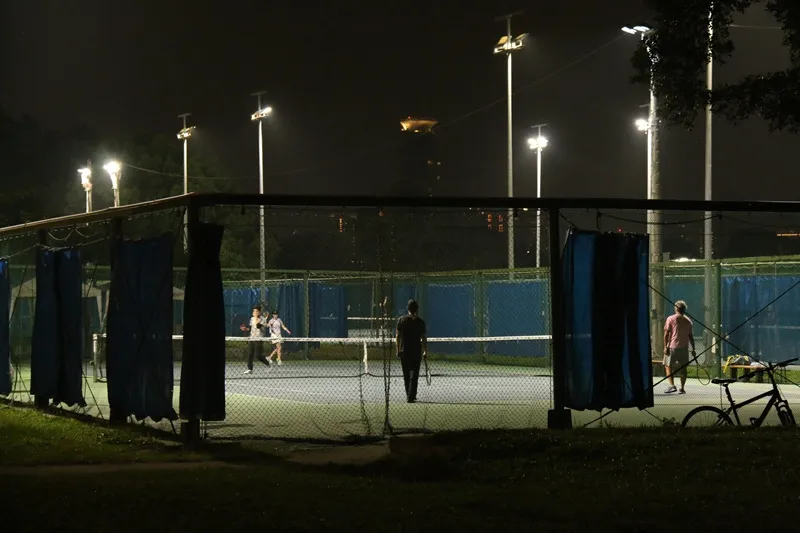
▲People playing tennis at night
Free sports for all is one of the coolest things about Taipei’s riverside parks. And whether you’re interested in solo sports or team sports, there’s something for everyone.
At several points along the river, the government has built free outdoor climbing gyms. These gyms attract all kinds of climbers and even have bouldering walls too.
Then there are the vast number of basketball courts. No matter what part of the river you’re at, expect to see these courts filled with people — from social teams, to the one-off player giving it a go.
There are also countless tennis courts, badminton courts, and roller skating rinks.
Not to mention the cricket. Keelung River is home to the only official cricket pitch in Taiwan — planted right on the river.
Picnics in the park
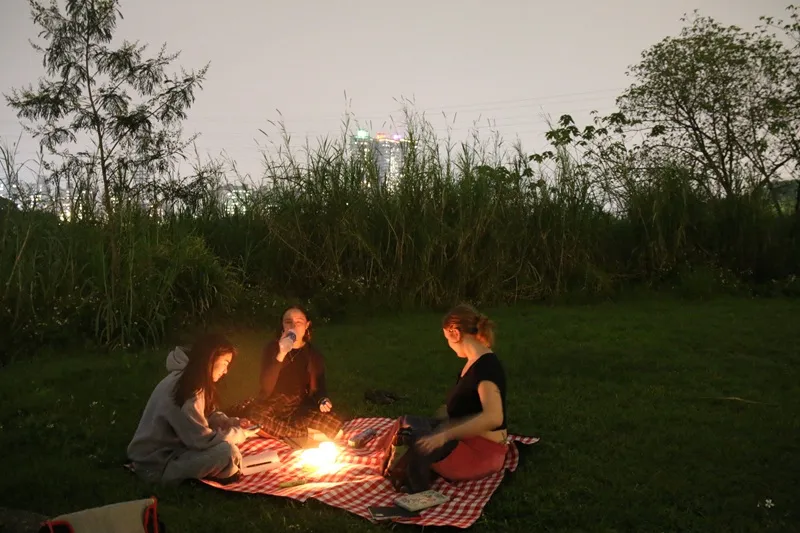
▲Night picnic with friends
And finally, there is the most tried and true riverside park activity — picnicking in the sun with friends.
Having somewhere free, accessible, and beautiful to sit in nature with friends is a public good we should never take for granted.
Some of my favourite Taipei days have been spent laying on a picnic blanket with good company by the riverside. And the cool thing is, no matter where you live in the city, you’re never too far from a riverside park.
A social infrastructure of happiness
Taipei’s riverside parks are so much more than an architectural feature. They actively build happier, healthier societies — with positive downstream environmental, economic, social, and health impacts for all.
In Taiwan, like everywhere around the world, we are physically living closer together while socially drifting poles apart. Social isolation is on the rise and parks help remedy this hurt.
Down at the riverside, we meet each other. We bump into bizarre pockets of raucous temple karaoke and swing dancing. We witness a young couple pose for their wedding photos. We see a grandfather teaching his grand daughter to roller skate — hugging her tightly after a fall and tending to grazed knees.
The parks we build are inseparable from the people we are. We need them to connect with our collective humanity — to realise that every person we encounter is living a life as rich, woeful, joyous, complex, and important as our own.
Taipei’s riverside parks are a rich tapestry of human experience. They are a special and wonderful part of life in this city that makes us fuller people — for ourselves and for each other.