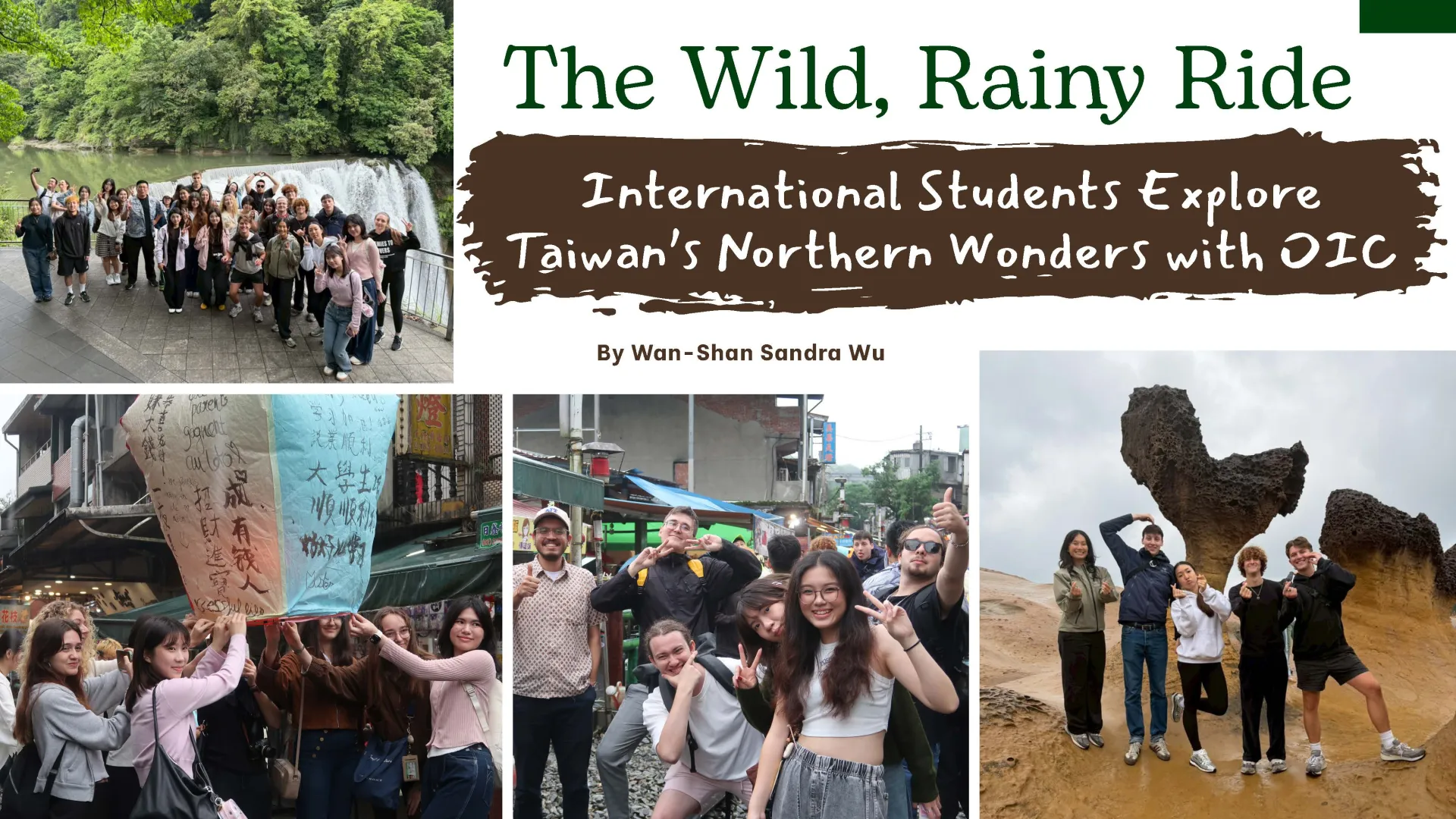
The rain that had been hanging over Taipei for days finally loosened its grip just enough for Saturday morning’s departure, as if the weather itself had agreed to grant a brief window for adventure. Organized by NCCU’s Office of International Cooperation (OIC), the Northern Coast one-day cultural trip brought together around sixty international and exchange students for a day of scenery, food, and shared experiences outside the routine of campus life in the Wenshan District. For many, it was not only a chance to dive into Taiwan’s most iconic geographical landmarks but also a rare opportunity to meet peers from across the globe in one place.
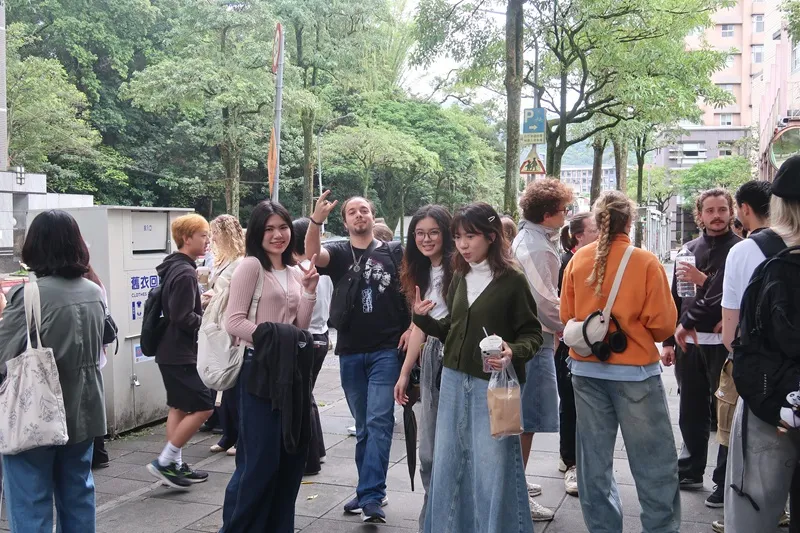
▲Students at the gathering spot, waiting to embark on their new trip
By 9:00 AM, the gathering spot near Wanxing Elementary School was already buzzing with energy. Two tour buses waited nearby as students gradually congregated, some standing awkwardly in the corners, others excitedly greeting people they had never met before. The crowd was wonderfully diverse with students from the United States, Canada, France, Korea, Japan, Poland, Belarus, Cambodia, Vietnam, and beyond all united by the same destination and the same anticipation for a rainy, wild ride.
The "Little Niagara"
The expedition began in the lush, verdant folds of the Pingxi District. Here, the Keelung River carves through steep sandstone cliffs, creating a landscape that looks like it belongs in a prehistoric epic. As the buses emptied, the group moved along the riverbank, crossing a swaying suspension bridge. Our unofficial guide for this leg of the journey was an adorable, attention-seeking local dog who trotted at the front of the pack, occasionally looking back to ensure the "humans" were keeping up.
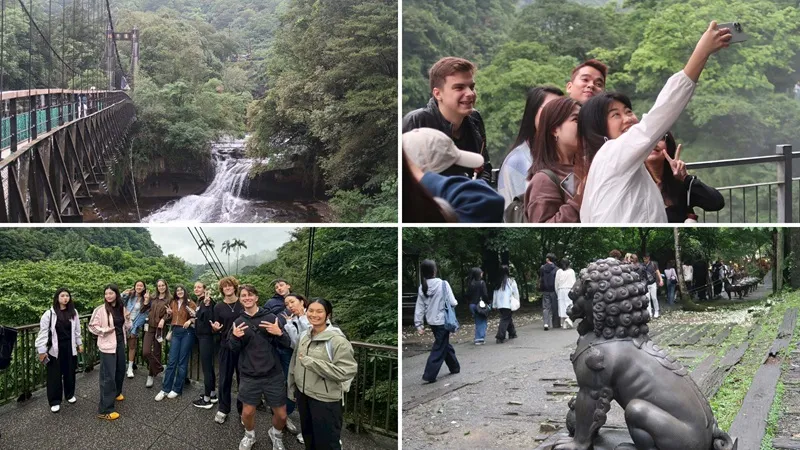
▲The morning journey through Pingxi features lush mountain scenery, misty suspension bridge crossings, and quiet moments of discovery along forest paths guarded by stone lions
Before we could even see the landmark, the air began to vibrate. The deep rumble of falling water grew louder until it filled the air, signaling our arrival at Shifen Waterfall. Often called the "Little Niagara of Taiwan," the falls are a geological masterpiece: 20 meters tall and 40 meters wide, creating a horseshoe-shaped curtain of white water that thunders into a deep emerald pool.
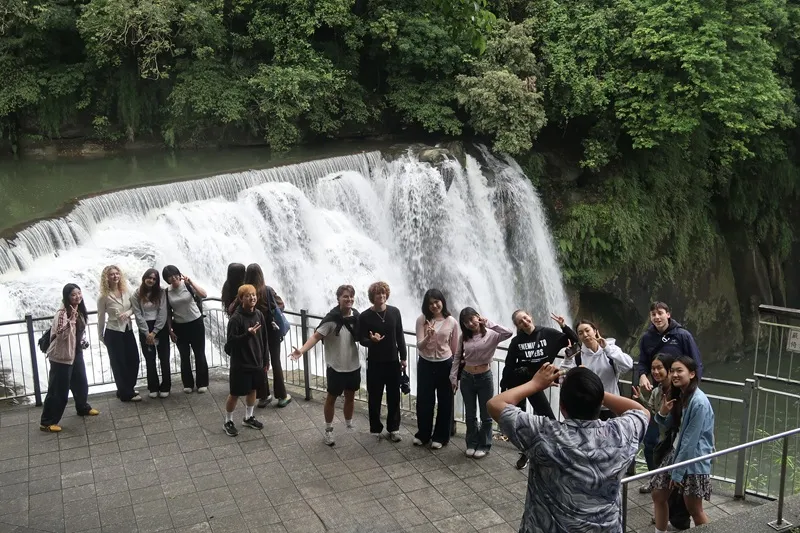
▲The Little Niagara of Taiwan
Just as we reached the primary observation decks, the sky finally let go of its long-accumulated rain. However, instead of ruining the moment, the drizzle performed a bit of alchemy. The falling rain merged with the waterfall’s spray, causing the observation decks to be partially obscured by a rising shroud of vapor. It created a dreamy, mystical ambiance that felt more like a movie set than a tourist site.
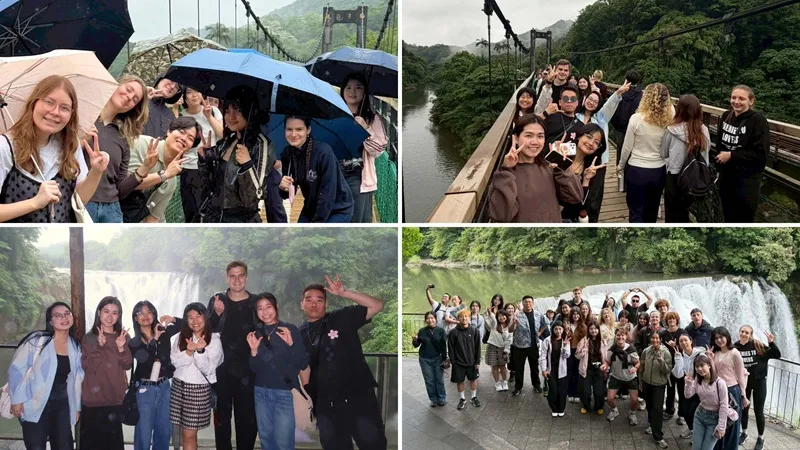
▲Students gather for a majestic photo in front of the Shifen Waterfall
Max, an exchange student from Belarus, noted that the waterfall felt powerful in a way that differed from the landscapes he was used to. “It feels alive,” he said, looking toward the mist. “It is not just beautiful. It has energy.” That sense of energy stayed with us as students wandered freely across various hidden observation decks, seeking the perfect panoramic angle to capture the waterfall.

▲students enjoying Taiwanese cuisine together at round tables
Despite the dampness, the raw power of the falls left the group in a state of quiet awe before we retreated for a lunch of traditional Taiwanese mountain cuisine with hearty greens, braised meats, and seafood that provided a much-needed "thermal reset."
Wishes upon the Wind
Shortly, the students arrived at Shifen Old Street for one of the day’s most memorable activities: the sky lantern experience. The street itself is built directly alongside an active railway line, with shops and cafes sitting so close to the tracks that pedestrians must scatter like pigeons whenever the local train whistles its approach (of course we had the honor of experiencing this part as well.)
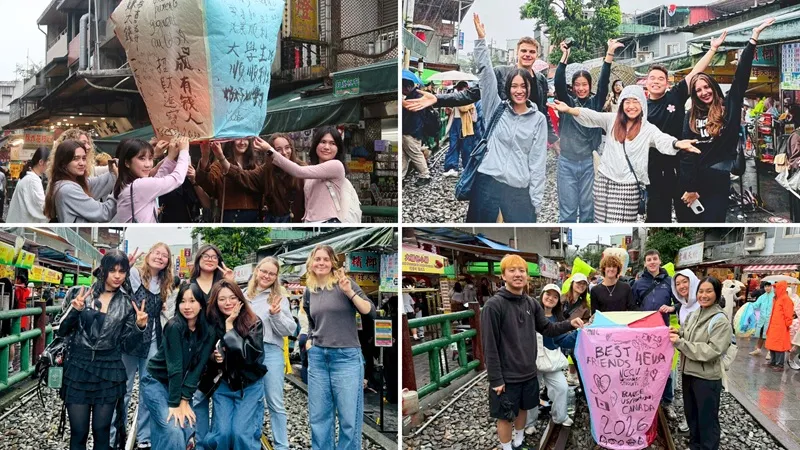
▲Students stood together to take photos on the active railway, proudly showcasing their lanterns
Historically, Shifen was a vital coal-mining hub during the Japanese colonial era. These lanterns were once used by 19th-century villagers as a signaling system to alert families in the mountains that the town was safe from bandits. Today, they drift upward as a different kind of message, carrying the dreams of those below.
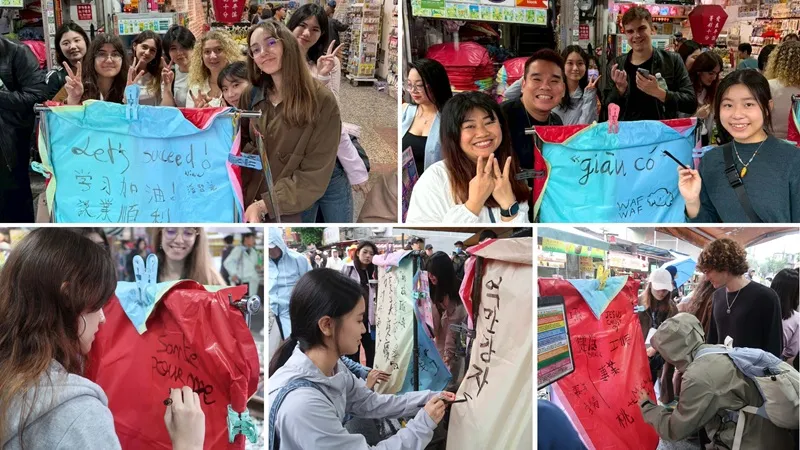
▲Using traditional brushes and ink, students decorate their lanterns with personal hopes and goals written in French, Vietnamese, Korean, and Chinese before sending them into the misty sky
Students were divided into small groups, carefully writing wishes with black ink on colorful rice-paper walls. Each hue represented a different hope: red for health, yellow for wealth, blue for career, and pink for happiness. The mood shifted from lighthearted to deeply personal as the writing continued. Max, who is currently studying in Poland, paused longer than most. On his lantern, he wrote a wish for peace and political stability in his home country, Belarus. As the lantern lifted into the sky, it carried something heavier than ink. Tatiana, also studying in Poland, reflected on the ritual's simplicity: “There’s something freeing about writing down a worry or a hope and then physically letting it go into the sky.”
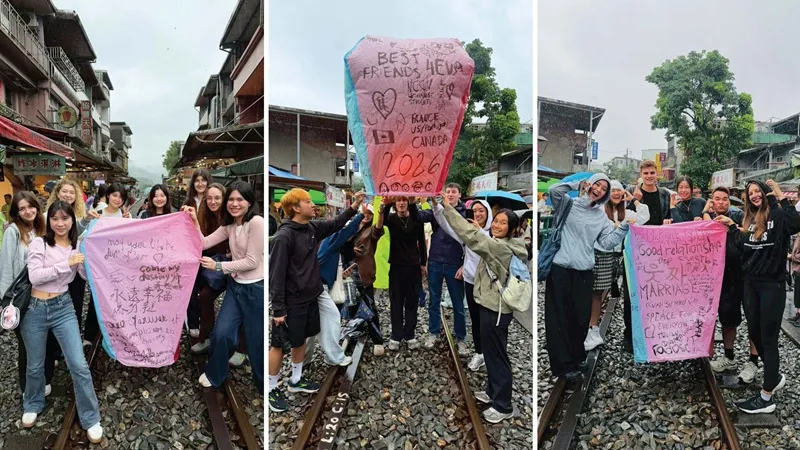
▲Pink side of the lantern is for happiness and relationship
The release was not without its drama. May, from Cambodia, laughed as her group struggled to keep their lantern steady. As it was let go, it tilted sharply toward a nearby apartment building. “It was the kind of moment that makes everyone gasp at once,” May recalled. Luckily, the lantern changed its direction at the last minute. The event organizer, Yulin, quickly stepped in to reassure the group, explaining that residents are well-accustomed to such near-misses. The tension quickly dissolved into nervous laughter as the glowing orbs eventually rose like stars against the grey sky.
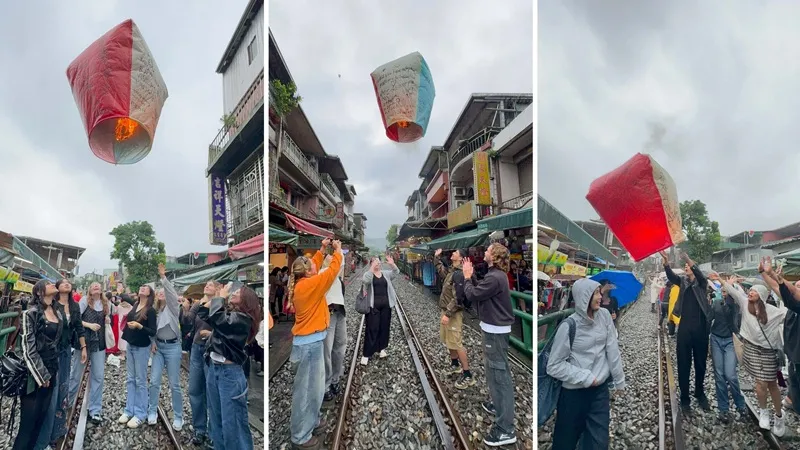
▲As the students watched their lanterns float gracefully into the sky, May’s group was momentarily startled when their lantern tilted sharply (captured in the third image)
Yet, this beauty invited a moment of quiet reflection on our role as visitors. As we watched the lanterns vanish into the fog, many students spoke about the balance between celebrating this vibrant tradition and protecting the lush forests that catch them once they fall. It was a lesson in mindful travel and realizing the heavy environmental price remains behind. This awareness added a layer of respect to the experience, making the act of "letting go" feel even more significant.
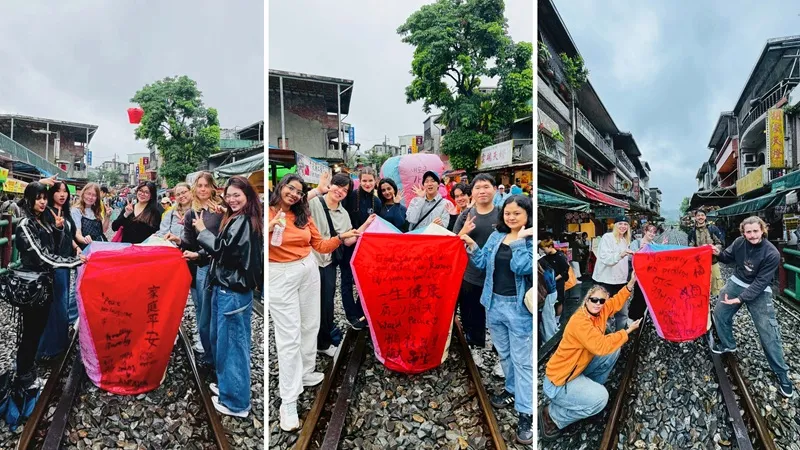
▲Red side of the lantern symbolizes health
The Sculpture of Time
In the afternoon, the buses carried us to Yehliu Geopark. Contrasting the soft, misty vibe of Shifen, Yehliu was sharp and windswept. This slender promontory is a graveyard of sedimentary rocks sculpted by thousands of years of erosion and tectonic uplift.
The most famous formation, the "Queen’s Head," drew everyone’s attention. Resembling the profile of Queen Elizabeth II, it serves as a poignant reminder of nature's transience. Due to weathering, the Queen’s neck thins by nearly two centimeters every year. Standing before the landmark in 2026 felt like a rare privilege. “It reminds me of the fleeting nature of beauty,” said Minh, a student from Vietnam. Minh's peer, Ryan, remarked that the formations felt almost unreal. “It looks like something made by hand, as if by craftsmen, not by nature.” Whether it was the honeycomb patterns or the "raw beauty" observed by students from France, the coast left a powerful impression that didn't require perfect weather to be felt.
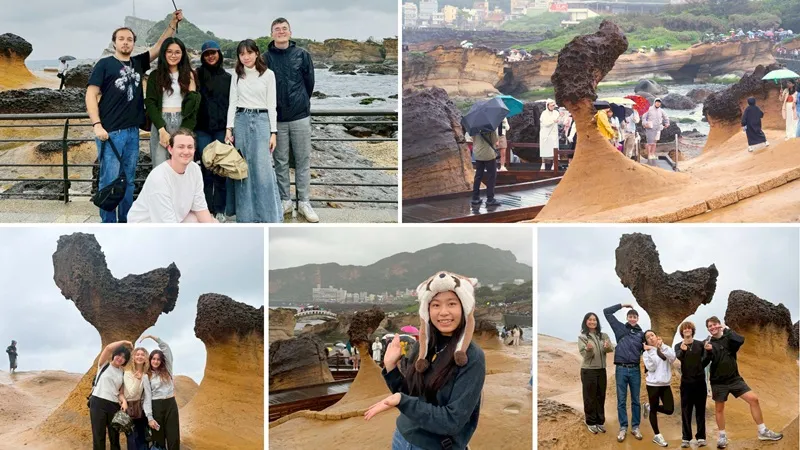
▲Students used their imagination to pose with the iconic Queen’s Head and the heart-shaped rock sculpted by the sea.
Walking through the park’s open layout, students were struck by how fragile these ancient stones truly are. Without heavy fencing, the park relies on the conscience of its visitors. It sparked a thoughtful dialogue among the group: how lucky we are to stand so close to history, and how vital it is to resist the urge to touch or lean on the sandstone. Each student seemed to move with a little more care, realizing that the best way to "touch" this beauty was with a camera lens rather than a hand. As we posed with the unique heart-shaped formations, there was a shared sense of gratitude for the chance to see a world so raw and cinematic.
Keelung Miaokou
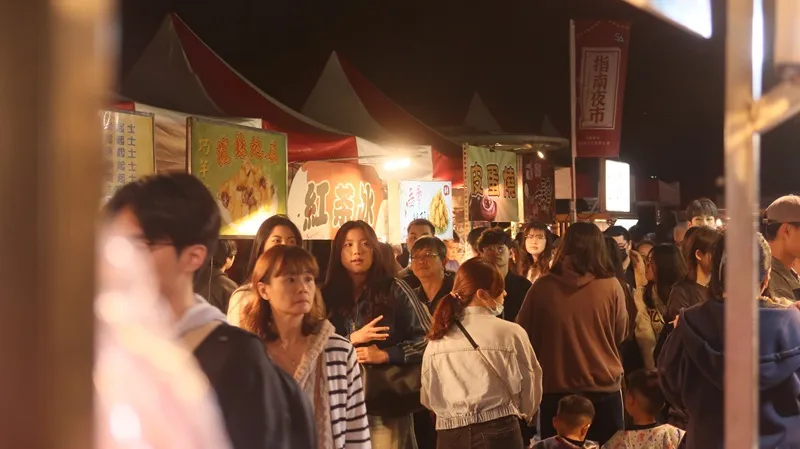
As dusk fell, we arrived at the Keelung Miaokou Night Market. The atmosphere shifted to one of bright signs, sizzling stalls, and the aroma of deep-fried snacks. Students split off to fill their growling stomachs, lining up for "Nutritious Sandwiches," fried squid, and the legendary mini-sausages that drew incredibly long queues.
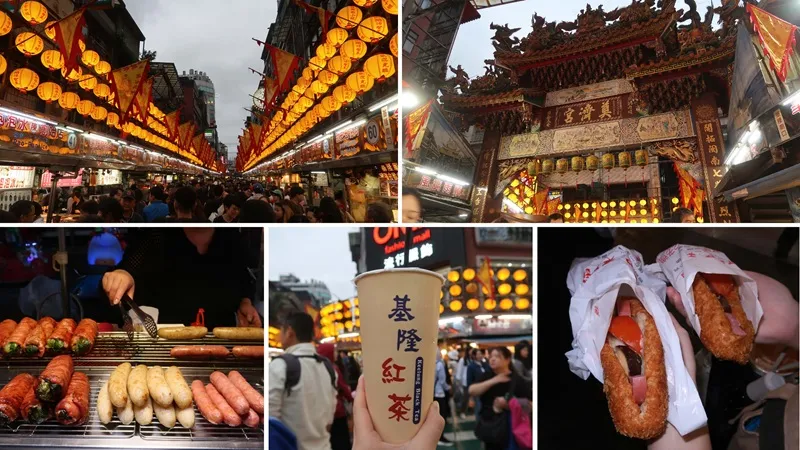
▲After admiring the intricate architecture of the Keelung temple, the students dispersed to satisfy their appetites at the local food stalls
An exchange student from France noted that the market felt like the most "local" part of the trip. “It is the kind of place where you just keep discovering new things,” he said, clutching a bag of sweet potato balls. The market became less about eating and more about sharing, as groups bumped into one another to trade snacks and recommendations.

▲Students trying out classic Taiwanese street food in the Keelung temple front
A Rolling Concert Hall
The return journey was a total transformation. The quiet, polite atmosphere of the morning was replaced by the easy camaraderie of people who had survived a "wild ride" together. Muddy shoes and damp jackets notwithstanding, the energy was electric.
Someone found the onboard microphone, the karaoke system flickered to life, and the drive back to Wenshan transformed into a rolling concert hall. From Bruno Mars to global pop hits, the entire bus sang in unison. At that moment, music, language, and nationality faded into the background.
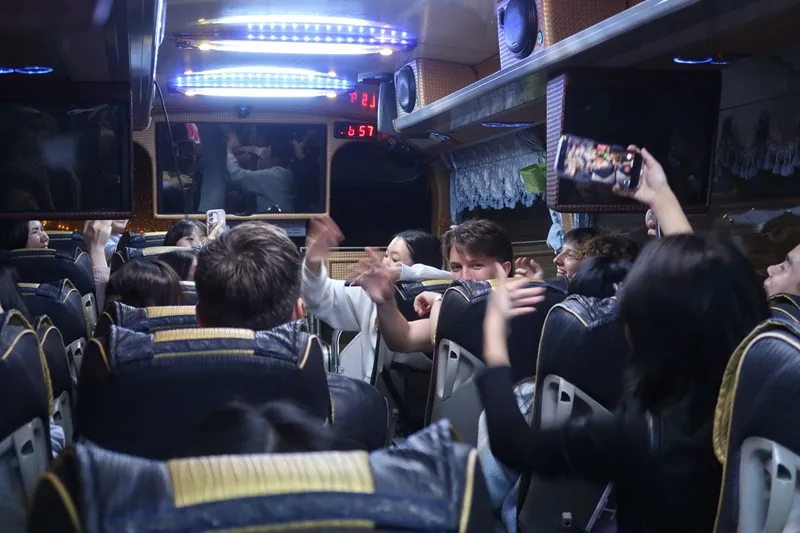
▲The students conclude their adventure with a high-energy karaoke session on the bus ride back to NCCU
For NCCU’s international students, the Northern Coast trip was a reminder that the most meaningful parts of studying abroad happen outside the classroom, in the conversations over lunch, the shared panic of a stray lantern, and the songs everyone somehow knows on the ride home. On a rainy Saturday, the coast gave us scenery and culture, but it also gave us something much harder to photograph: a true sense of connection.
A big thank you to the OIC for making such a wonderful experience possible!