From Taipei Buzz to Yilan Bliss: A Day of Discovery
Against the backdrop of recent persistent rain, November 8th, 2025, dawned with a blazing, glorious sun. This celestial blessing seemed tailor-made for the day trip ahead. Organized by NCCU’s Office of International Cooperation (OIC), this meticulously planned excursion to Yilan was a chance for Taiwan’s international and exchange students to break free from the campus bubble and dive deep into the island’s rich culture. Honestly, with a typhoon looming just days away, this unexpected good weather sparked a palpable sense of anticipation and the clean, bright joy of students ready to explore Taiwan.

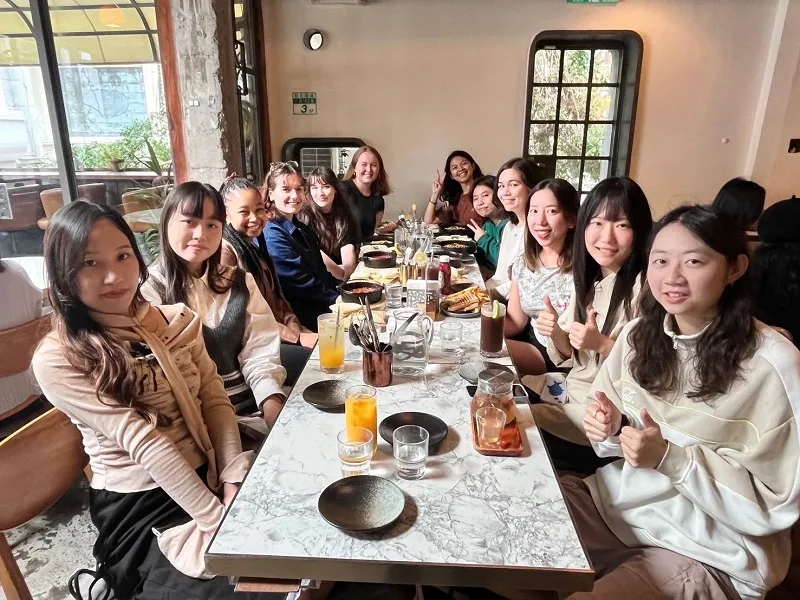
▲Students at the gathering spot, waiting to embark on their new trip (photo: Sandra)
Towards 9 in the morning, the gathering spot at Wanxing Elementary School Bus Stop quickly buzzed with the energy of around 60 students. Two large tour buses stood ready, emblems of the day’s journey into the less-trodden paths of Taiwanese life. As students from every corner of the globe congregated, the initial awkwardness quickly melted into shared excitement.
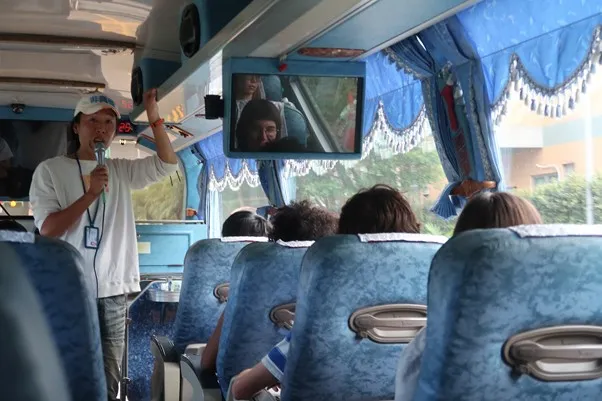
▲Our amazing tour guide for the day, sharing fun facts about Taiwan (photo: Sandra)
The journey began with the spectacular Hsuehshan Tunnel (雪山隧道). Our amazing tour guide, who was both funny and incredibly informative, kept our still-sleepy bus rocking with stories, including fascinating facts about the Atayal indigenous tribe we were about to visit. Hearing about how Aboriginal people are allowed to own guns for hunting (with permits, of course) offered a glimpse into a culture rooted deeply in the land. As the bus drove through that never-ending, 12.9 km feat of engineering, my excitement grew. I was heading into the mountains, ready to see Taiwan in a whole new light.
An Atayal Welcome
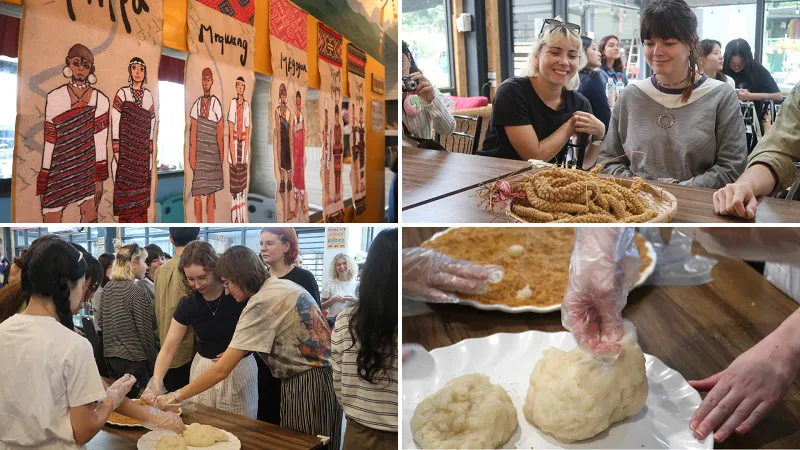
▲Student learning about Atayal culture through fun and interactive activities (photos: Sandra)
The first stop was 可美 LOVE, an Atayal indigenous restaurant where the rich, earthy aromas of mountain cuisine immediately greeted our senses. But before the feast came the fun physical labour: Atayal rice pounding. Rice mixed with millet was placed in a large wooden mortar, and the challenge was on to pound them into sticky mochi dough.
Students enthusiastically volunteered, gripping the heavy wooden pestle to pound the mixture into a chewy mochi dough. The restaurant was filled with rhythmic thud-thud-thudding, accompanied by the encouraging cheers, claps, and impromptu singing from the Atayal hosts.
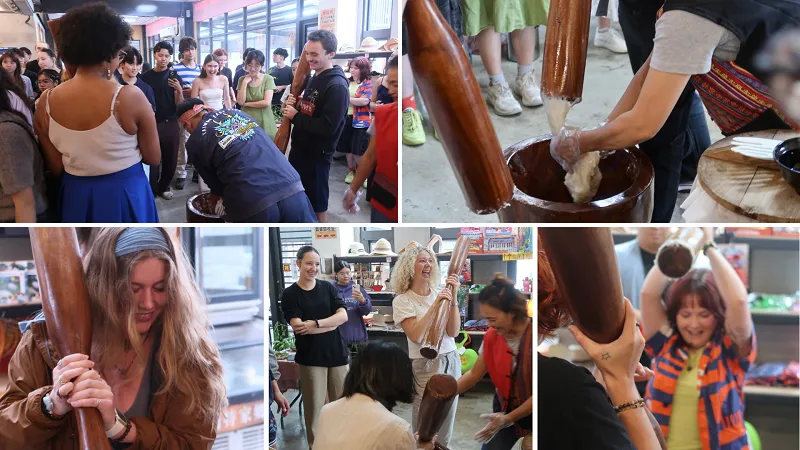
▲Students participating in the Atayal rice pounding activity (photos: Sandra)
The spirit of collaboration was infectious. Once the task was done and the dough was sticky enough, it was time for the tasting. We formed the warm mochi into balls and smothered them in sweet, sugary peanut powder. It was such a delightful welcome treat and definitely worth the physical effort and the wait. This simple, hands-on activity was the perfect welcome, symbolizing the unity and collective spirit so central to Atayal culture.
A Taste of the Mountains: Discovering Maqaw
With our appetites thoroughly worked up, it was time for lunch, featuring the culinary gem of the mountains: maqaw (山胡椒), or mountain pepper. It is the dried fruit of the Litsea cubeba shrub, a distinctive spice with a citrusy, spicy aroma that combines notes of pepper, ginger, and lemon.
The indigenous feast was a culinary map of the mountains. For many, it was their first encounter with Taiwan’s unique ethnic flavors. An exchange student from Germany immediately fell in love with this ethnic flavour, which enhanced everything from the wild boar sausages to the refreshing maqaw chicken soup.
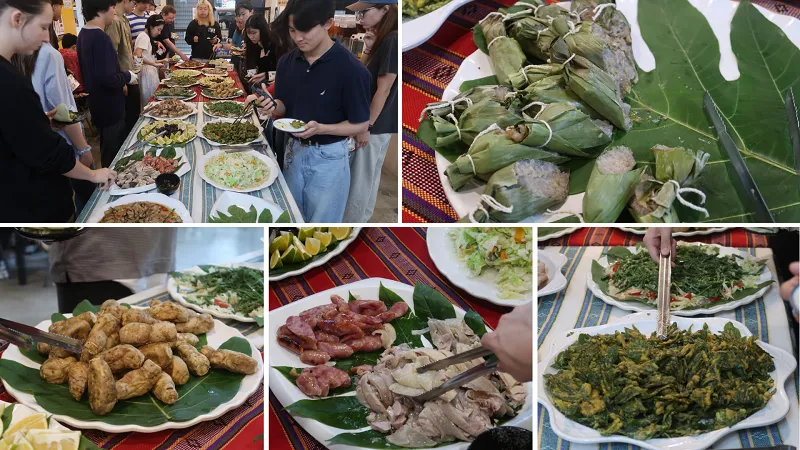
▲Two rows of dishes are laid out for lunch, featuring ingredients gathered from the mountains and rich ethnic flavors (photos: Sandra)
My absolute personal favorite has got to be the sticky rice wrapped in a banana leaf. It had a natural sweetness from the banana that was perfectly balanced, much lighter than sugary peanut mochi. The entire experience was a testament to the freshness of the ingredients, most of which were sourced from nearby mountains.
The hospitality of the Atayal owners was boundless, encouraging students to try every dish and even pack “doggie bags” for later, ensuring everyone left with both satisfied stomachs and a deep appreciation for the region’s unique flavors.
The cultural immersion continued at the Atayal Life Museum in Datong Township, a repository of history and artistry dating back to the Japanese occupation era. Following an insightful short film on the tribe’s rich history, the students rotated through two engaging workshops.
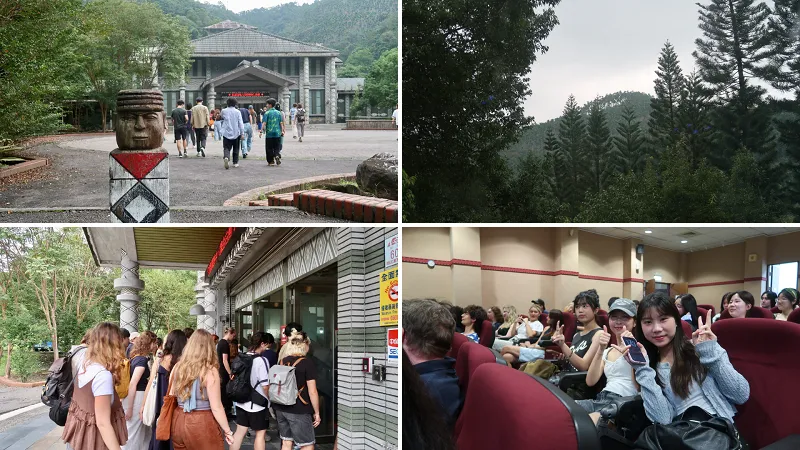
▲(photos: Sandra)
The Millet Keychain: A Blessing for the Future
During the beading workshop, an Atayal elder explained the ritual of hanging dried millet on the house porch. A visual indicator of a family's work ethic, determining their community status and marriage possibilities. Under her guidance, the students threaded colorful beads and millet seeds onto threads to craft beautiful keychains.
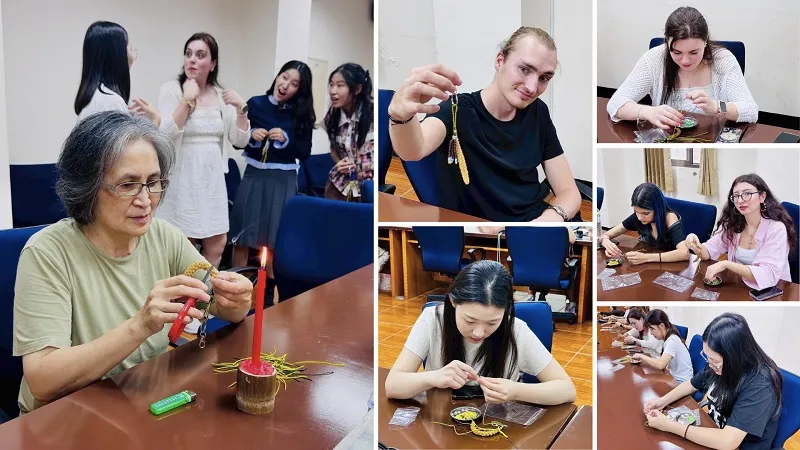
▲Students during the beadwork handicraft workshop (photos: OIC)
"I really connect with the story behind the millet. It offers such a wonderful concept of earning respect through hard work," an exchange student shared. "Making this keychain felt very meaningful. The elder's wish for a 'wonderful harvest' of friendships and memories from our short stay is truly special. It's the perfect memento."
The museum also offered a poignant glimpse into the evolution of cultural practices. A skilled artisan herself, the Atayal elder invites us to explore the museum and identify her specific works of rattan and bamboo weaving. She spoke candidly about challenging traditional gender roles. Given that women were historically barred from male activities like rattan weaving and hunting (with similar restrictions on men), her journey was revolutionary. She became one of the first female rattan weavers, embodying a powerful spirit of cultural preservation and modern resilience. She is a beautiful example of how traditional boundaries can be blurred and redefined in a new context.
Traditional Dance
For many, the Traditional Dance Workshop was the clear highlight. Dressed in pieces of intricately woven Atayal cloth, the students came together to form a large, joyful circle, hands linked in anticipation. An Atayal woman patiently demonstrated the traditional moves for us, guiding us through each step with care. Yet, for all her patience, the complex dance remained a challenge, and our circle frequently broke down in laughter and shared struggle.
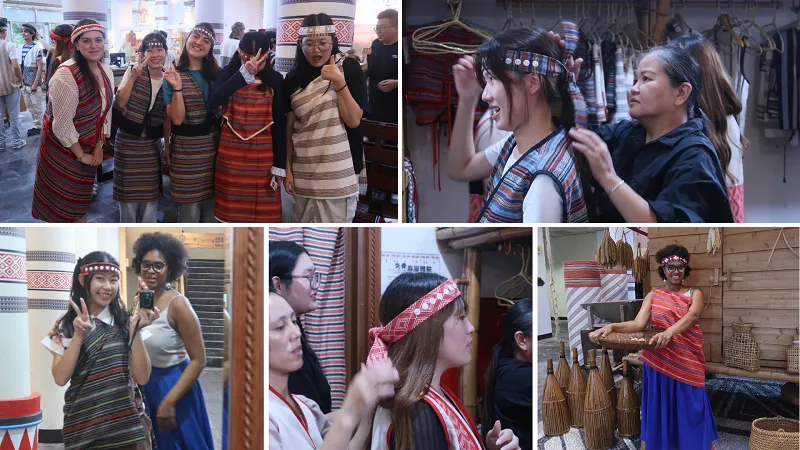
▲Students dressed up in pieces of intricately woven Atayal clothing (photos: Sandra)
DeMaili, an American student, laughed as she shared: "The rule is, 'You gotta dance like nobody's watching,' but that truly didn't matter here. We were tripping over ourselves and totally off beat, but we were all just cracking up, letting the music move us."
Our tour guide perfectly summed up our dancing struggles on the way back, joking that he could easily tell we "must perform really well in the classroom, judging by what he had just witnessed, but absolutely not in dance halls."
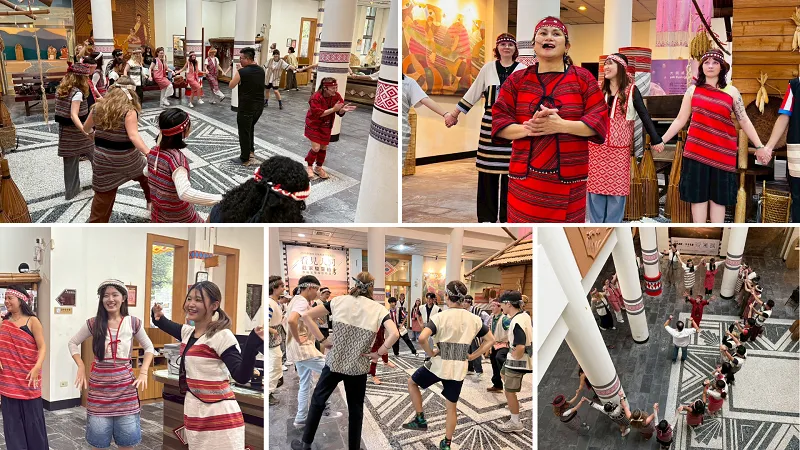
▲Students learning traditional Atayal dance, following the rhythmic steps and movements taught by local instructors (photos: OIC)
Although it was certainly no simple task, and we struggled most of the time, the experience was pure, uninhibited fun. Looking back at the video, I still laugh at how bad I was; it's just a funny memory to cherish. As we held hands, we also forged new connections. I especially loved the part where we ran around the space while still holding onto each other like a human train. (Maybe because that part didn't require any dancing!)
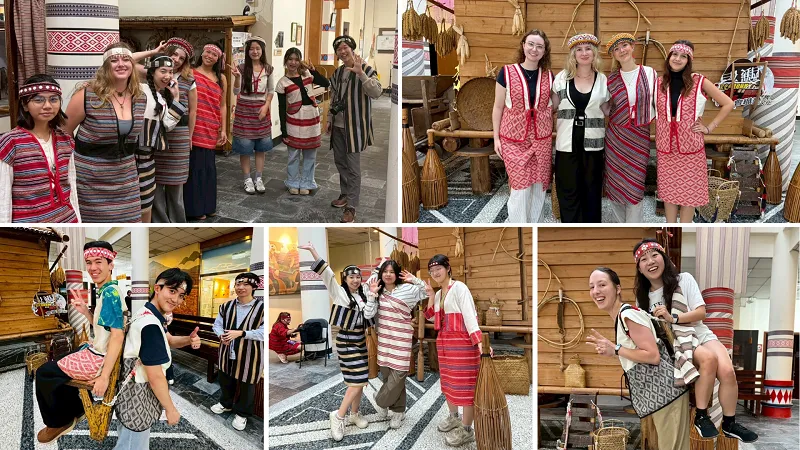
▲(photos: OIC)
Hot Springs in Jiaoxi
As the sun began to dip, the final destination beckoned: Jiaoxi Hot Spring Park (礁溪), a town renowned for its mineral-rich springs. This was a chance for the students to unwind and enjoy a core part of Taiwanese leisure culture.
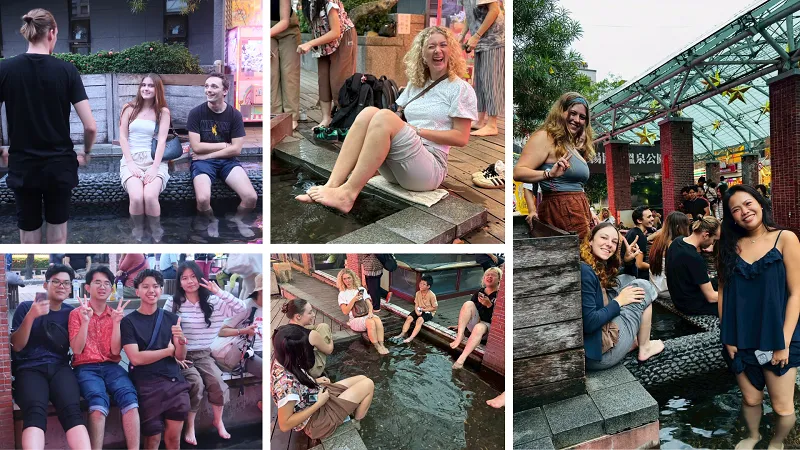
▲Some students relaxing together at a public foot bath
Many opted for the free, public foot bath spring. Alice, a French exchange student, confessed that dipping her feet in was a shock since she hadn't anticipated the intensity. It was surprisingly hot, especially since the locals looked so relaxed about it. She lasted less than a minute before having to pull out her legs, which had turned bright pink up to the knee. The intensity was too much, but watching her new friends react the same way made it hilarious. It became a great, shared cultural shock.
In stark contrast, a few brave souls and local bathers demonstrated their tolerance, dipping their feet completely or even walking through the hot water. Others chose the more novel experience of the “Doctor Fish” tanks at 重口味溫泉魚, where tiny fish nibbled away at dead skin, a sensation that ranged from ticklish amusement to nervous laughter.
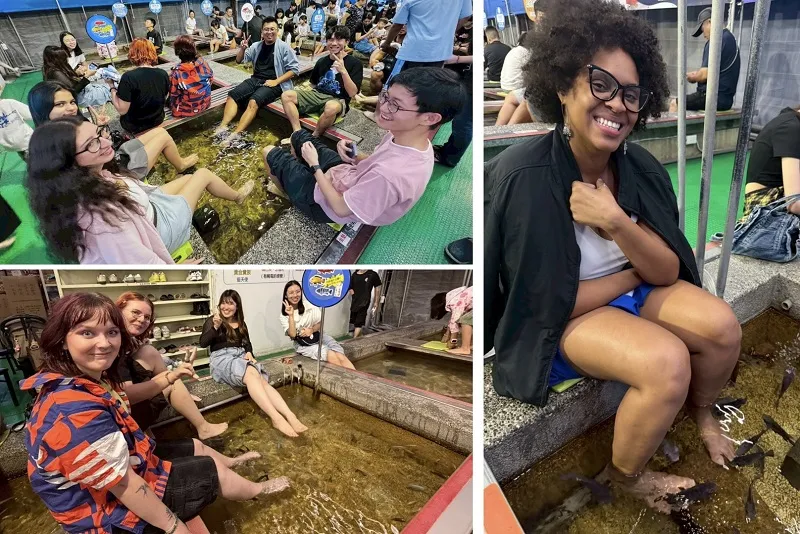
▲Others chose the “Doctor Fish” tanks, which cost less than 100 NTD and offered a fun, tickling experience (photos: OIC)
The day concluded with a brief, delicious detour around the nearby night market, where the students indulged in classic Taiwanese snacks before the bus journey back to the university.
Closing reflection
The OIC’s Yilan outing was a curated journey through culture, history, and community. From the collective joy of mochi pounding to the warmth of the Atayal people and the surprising heat of the Jiaoxi springs, the day proved that the best way to explore Taiwan is by diving headfirst, side-by-side. The connections forged and the cultural insights gained are truly a "harvest of friendships and memories" that will undoubtedly enrich the students' entire stay on this beautiful island.
I arrived as a reporter covering the story for the OIC. Yet, as a half-Taiwanese, half-Thai student who has always felt a degree of disconnection from this island, the trip quickly became something far deeper. Experiencing Taiwan's Indigenous culture through the fresh, appreciative eyes of the international community gave me a profound, renewed appreciation for the diverse soul of my home. Witnessing this vibrant journey of discovery alongside others was, simply put, the best possible way to discover a new, essential part of my own country.
A big thank you to the OIC for making such a wonderful experience possible!