BY Angela Glowacki
On May 13 and 14, NCCU held its annual World Food Festival, hosting over 20 booths run by students eager to share dishes from their countries. Dozens of countries were represented, serving up a wide variety of dishes and beverages. Despite the hot weather, the Festival attracted crowds of students on both days.
The Turkish Student Association’s booth served up an impressive menu, my favorite bite from there was decidedly the apple donuts. The Vietnamese Student Association’s booth was just as popular as it was last year, with them reselling their most popular dishes well before the end of the afternoon. The Malaysian booth attracted a lot of attention as well, as students gave out samples of Mi Goreng to students, attracting more attention and pulling in customers.
In addition to Southeast Asia’s strong representation, booths from Korea and Japan also drew steady crowds. The Korean booth leaned into crowd pleasers like tteokbokki, while the Japanese booth served bento boxes and street food.
The Paraguayan booth was hosted by students from the Association of Paraguayan Students in Taiwan. I spoke with Susan Dávalos, a second year Global Studies (ICI) student working the booth to learn more about the food she was serving. She shared historical context for the sopa that they were serving. Although sopa means soup in Spanish, this sopa was actually more like cornbread. Susan explained that this creation was a result of a kitchen mix up, when a cook accidentally added too much corn flour to the soup they were preparing, resulting in the dish transforming into a solid rather than a liquid. The cook served it up anyway and it soon became an international dish.
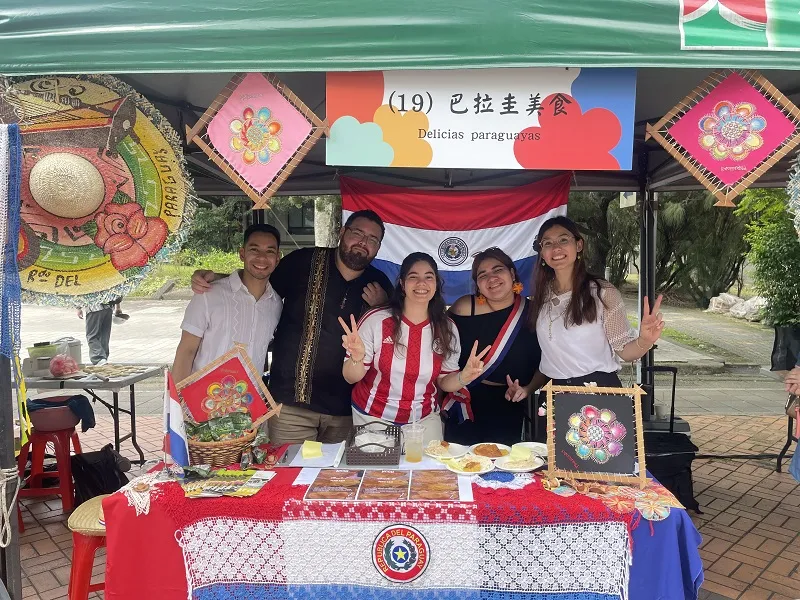
▲Paraguayan Booth
The next booth I visited was hosted by Business Administration student Benaleey Benjamin from Palau, who served up a variety of dishes, namely tapioca sushi. Tapioca sushi was actually created by Benaleey’s mother, Telchii Ngltengat, who is a former cook and current professional weaver in Palau. Telchii created tapioca sushi for Benaleey, who had a strong preference for Japanese food. Using local Palauan ingredients, Talchii created this sushi dish that blended both Palauan and Japanese flavors. This dish became popular at the high school that Telchii worked at, Belau Modekngei School, and soon became a special dish in the community.
Lastly, I couldn’t leave the Food Festival without paying a visit to my fellow patriots at the American food booth. IMICS student KC Crosby hosted a booth last year and after its success, she returned with the same (tariff free) shrimp etouffee and beignets, as well as adding peach iced tea to the menu. KC shared that she elected to share this dish with NCCU students as an homage to her grandfather who grew up in Louisiana. A departure from traditional/stereotypical American food, KC’s dishes brought a unique and personal touch.
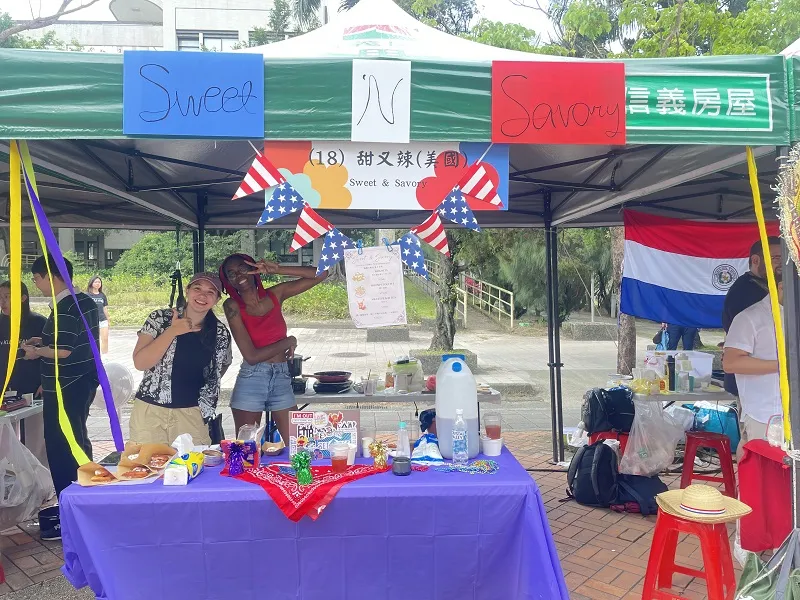
▲American Booth
Throughout the event, students gathered with their friends on the grounds by the Administration building, creating a communal energy that gave the environment an extra sense of warmth. All the students working the booths were very friendly and enthusiastic, eager to talk about the dishes they were serving. I was very impressed when I considered how much of a task it was to decide to open a booth at the food festival. Students are given full reign to organize everything themselves: sourcing ingredients, setting up their booths with decorations and cooking supplies, preparing the food, pricing, and serving. It’s a big responsibility, but also a valuable opportunity for them to share a part of their culture while gaining hands-on experience in running a mini food business. The added bonus? They get to keep their earnings, so it’s a rewarding and profitable challenge.
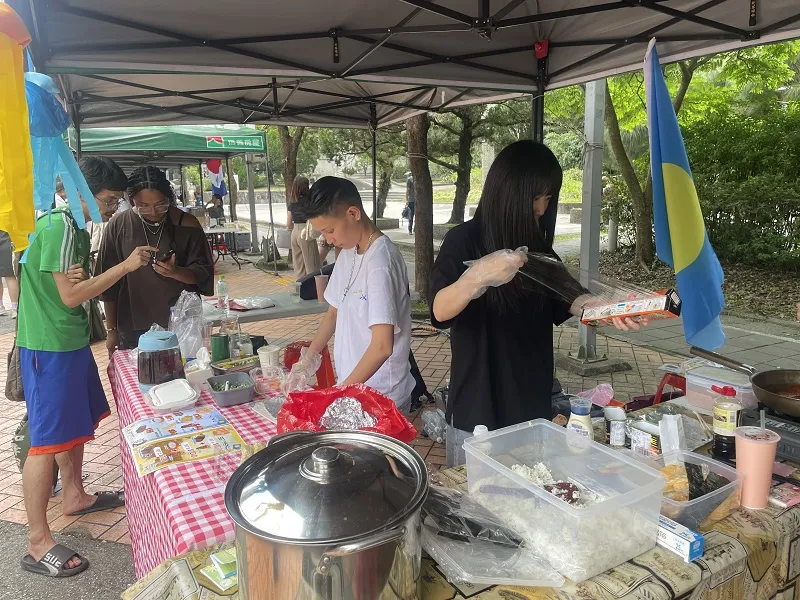
▲Palauan Booth
This being my second and final time attending the World Food Festival, I am thankful that I took extra time to speak with the students running the different booths and learn about the inspiration and stories behind their dishes. Beyond being a showcase for the culinary skill of students, the festival served as a reminder that food is never just food – it’s memory, migration, adaptation, and identity all rolled into one bite.
From kitchen accidents that became tradition, to hybrid dishes born out of family bonds, the festival revealed how recipes carry personal and collective histories of their creators. These foods didn’t only represent nations, they also represented people, families, and moments of creativity and improvisation that crossed borders. In this sense, the World Food Festival was not just a celebration of global flavors, but also a celebration of the rich cultural fabric that makes our university community so unique. When people bring their food to the table, they also offer up their stories – making the experience that much more meaningful.