Article by Han Pham
Have you ever wondered how international students at NCCU spend time together and learn about each other’s cultures? At National Chengchi University, cultural exchange is more than just a concept taught in the classroom—it's an experience you can taste, touch, play, and enjoy. Recently, students from Korea, Indonesia, Thailand, and Japan came together for a large-scale cultural night filled with traditional games, vibrant storytelling, delicious food, and joyful moments of connection. The event allowed participants to savor each country's unique flavors while partaking in traditional games. It brought everyone closer through playful traditions and flavorful bites that truly represented each culture’s spirit. It was not just a fun evening; it was a journey across borders, all within a single night.
Each student association carefully prepared its exhibition booths, which were beautifully decorated with cultural symbols, traditional artifacts, and interactive displays that brought their heritage to life. Every corner radiated cultural pride and excitement, featuring vibrant costumes and mouthwatering food exhibits. As participants arrived, enthusiastic organizers greeted them warmly. The evening began with a lively ice-breaking session designed to encourage interaction and laughter. Through fun games and cheerful activities, students from diverse backgrounds quickly bonded, creating a welcoming and energetic atmosphere that set the stage for the night’s festivities.
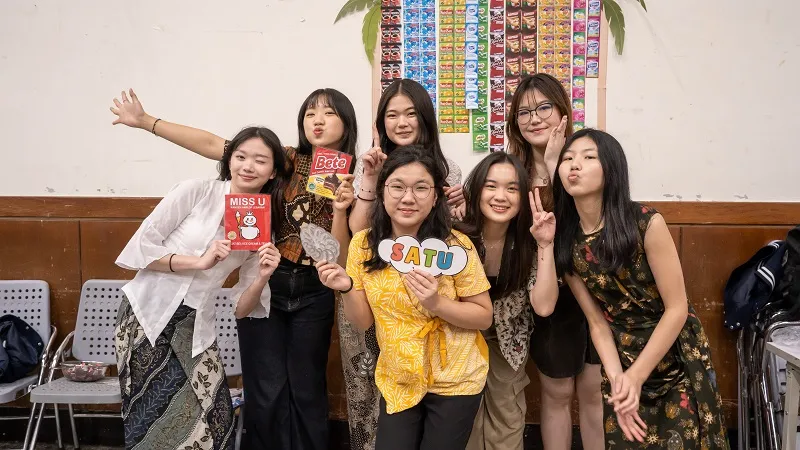
▲The Indonesian Student Association booth comes alive with decorations, traditional attire, and interactive displays, offering a glimpse into Indonesia culture.
As the president of the Thai Student Association at NCCU, Milljanista (李欣悅) has played a crucial role in fostering connections among international students through cultural exchange events. She shared that organizing these gatherings has been a long but rewarding journey. Along with her team, she dedicated significant time and effort to planning performances, games, and networking activities to bring together students from diverse cultural backgrounds.
Milljanista believes such events are essential, as international students often remain within their cultural groups, making connecting with peers from other countries difficult. These gatherings provide a valuable opportunity to step outside those boundaries and form new cross-cultural friendships.
Milljanista is grateful for the friendships she has built at NCCU. She fondly recalls meeting many Indonesian students, particularly during her first year living in a shared dormitory. Her Indonesian roommate became a close friend, and she also connected with other Indonesian classmates through Chinese language courses. However, she notes that academic settings rarely allow for relaxed, meaningful interactions. For her, events like these are not just enjoyable; they are necessary for building a more inclusive and connected international student community.
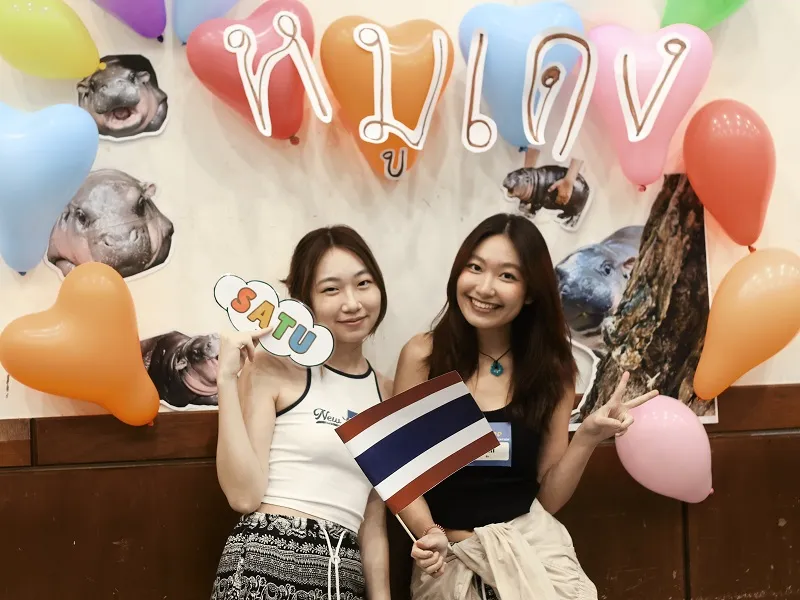
▲Milljanista (right), sophomore at NCCU ICI
Thanks to the organizer's efforts, attendees could enjoy authentic snacks from Korea, Indonesia, Thailand, and Japan. The venue was filled with the enticing aroma of spicy Thai chicken nuggets paired with milk tea, the rich flavors of Indonesia's famous Indomie noodles and satay, and Japan's signature matcha, among other delights. Students not only savored these delicious offerings but also had a profound learning experience about the cultural significance of each dish.
After the food-tasting expertise, the atmosphere became more lively as students began to connect. The focus then shifted to dynamic performances. Each student association took the stage to showcase a unique aspect of its heritage. The Thai and Indonesian Student Associations energized the crowd with dynamic performances of songs in their native languages, filling the hall with rhythm and emotion. Meanwhile, the Korean and Japanese Student Associations captivated the audience with high-energy dance routines that blended traditional and modern styles, generating cheers and excitement. The performances received enthusiastic applause, highlighting both the artistic talents of the students and the beauty and diversity of the four nations.
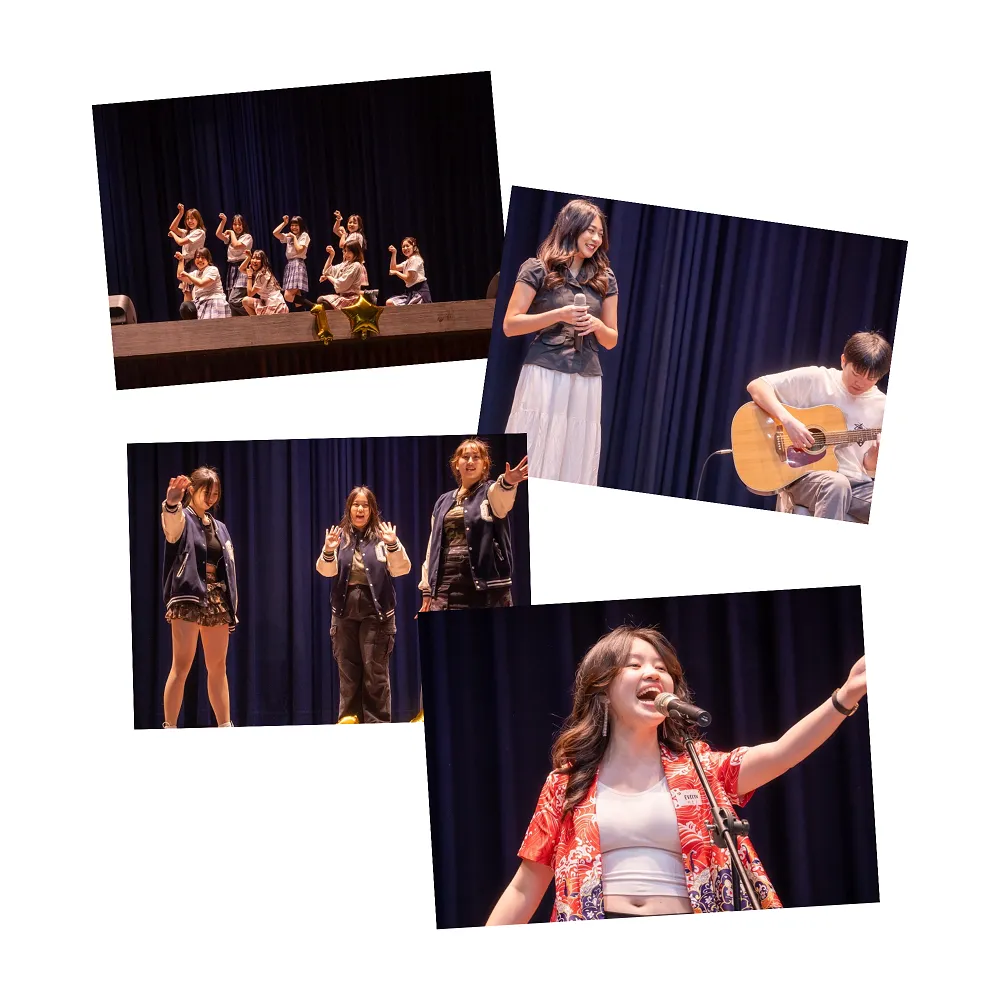
▲The stage comes alive with high-energy dance routines and soulful songs, each reflecting the four nations’ rich heritage.
Notable memories of the night include attendees participating in traditional games from various countries. One highlight was the Japanese New Year’s game, Fukuwarai, or "Lucky Laugh." In this game, a player is blindfolded and given paper cutouts of facial features such as eyes, a nose, and a mouth. The player must place each piece onto a blank face outline while others provide verbal directions or watch and laugh. Once the blindfold is removed, everyone enjoys the silly results, making the game a source of laughter and joy.
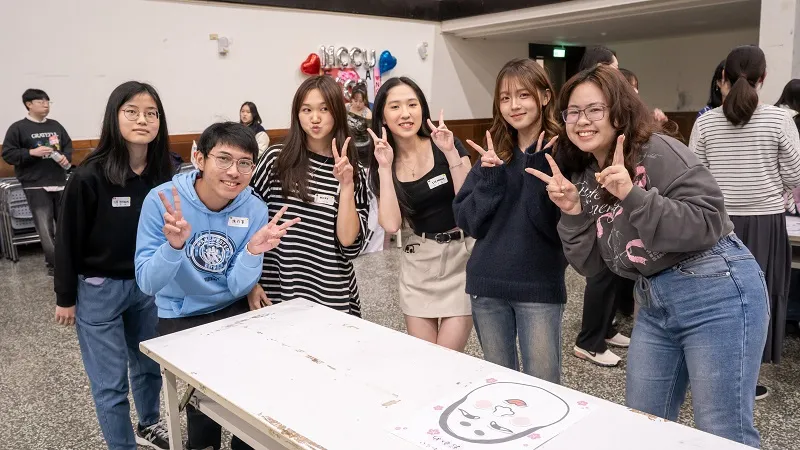
▲Laughter fills the room as students play Japan’s traditional game Fukuwarai , creating hilarious, mismatched faces.
Next, the Thai Student Association introduced Mon Son Pha, or "Hide the Cloth," a traditional circle game for children. In this game, players sit in a circle while one person, known as the “Mon,” walks around holding a cloth. As a chant is sung, the Mon secretly drops the cloth behind one of the players. When the song ends, the chosen player must quickly notice the fabric and try to catch the Mon. If they fail, they become the next Mon, and the game begins again. An amusing twist is that the Thai Student Association uses a water pistol instead of a piece of cloth as a reminder of Songkran, Thailand's famous water festival.
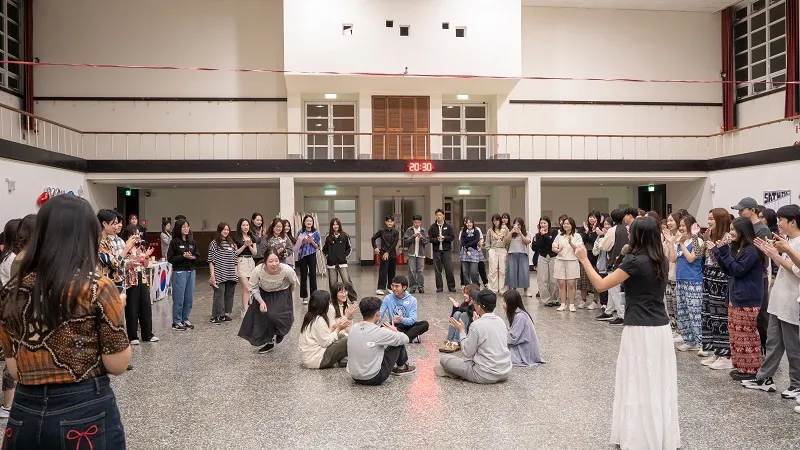
▲The energy was high as international students played Thailand’s Mon Son Pha; players quickly reacted as the chant ended, trying to catch the Mon before it was too late!
Students also enjoyed a lively Korean game called Kkori Japgi, or Tail-Catching. In this game, players are divided into two teams, with each team forming a single-file "dragon" by holding onto the waist of the person in front of them. The last person in line tucks a cloth "tail" into their waistband. When the game begins, the players at the front try to grab the opposing team's tail while protecting their own. The game ends when one team manages to take the other team's tail, and that team is declared the winner.
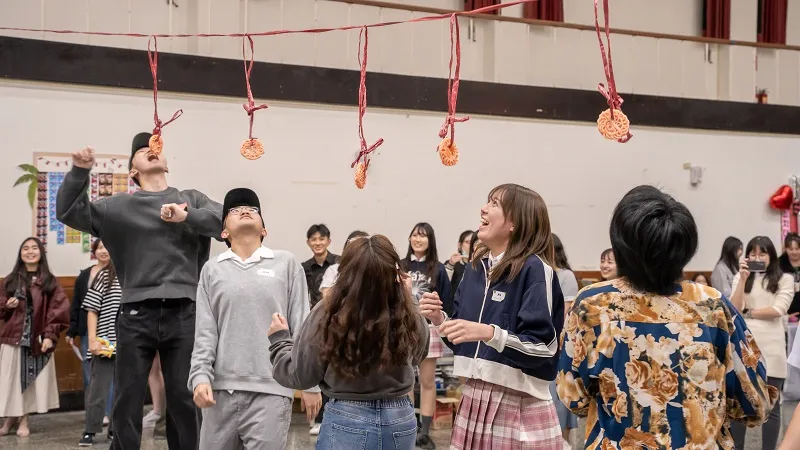
▲Participants in the Lomba Makan Kerupuk (Cracker-Eating Contest) leap and stretch to devour their rice crackers—hands-free!
The session concluded with Lomba Makan Kerupuk, or the Cracker-Eating Contest, a popular game during Indonesia's Independence Day celebrations. In this contest, rice crackers are tied to a horizontal rope at mouth level. Participants must eat the dangling crackers without using their hands, which requires jumping, stretching, and biting while keeping their hands behind their backs. The first person to finish their cracker wins, making it an exciting and energetic challenge for participants of all ages.
As the night drew to a close, prizes were distributed to lucky winners, and the event concluded with a group photo session that captured the joy and unity of the evening.
Rebecca, a sophomore in the Department of Money and Banking and a member of the Indonesian Student Association, shared that after being introduced to each other by the NCCU Student Association, she and her international peers collaborated to bring everything together. Their collaboration is not just about tasks; it's a testament to the strength of their shared experiences and friendships.
Reflecting on the sense of community among international students, Rebecca notes that these connections often develop naturally. Many international students take classes together, join student associations, or participate in cultural events, which makes it easier to bond despite their diverse backgrounds. The Overseas Chinese Association and OIC, with their buddy programs and language workshops, also significantly bridge the gap.
When asked about the impact of these events, Rebecca expressed a strong hope that they will encourage international students to feel more engaged with the NCCU community. She acknowledges that international students offer diverse perspectives but may sometimes struggle with feelings of isolation due to cultural differences. Instead of allowing individualism to create distance, she believes these events provide opportunities to build meaningful relationships and foster a more interconnected student body.
Comparing NCCU’s diversity to that of other universities, Rebecca highlights its strong international environment. She has noticed an increasing number of Indonesian students and a growing mix of cultures, making NCCU stand out as a diverse and globally connected campus. She is filled with hope and excitement as she anticipates this trend to continue, allowing international students to feel more included and supported in their university experience.
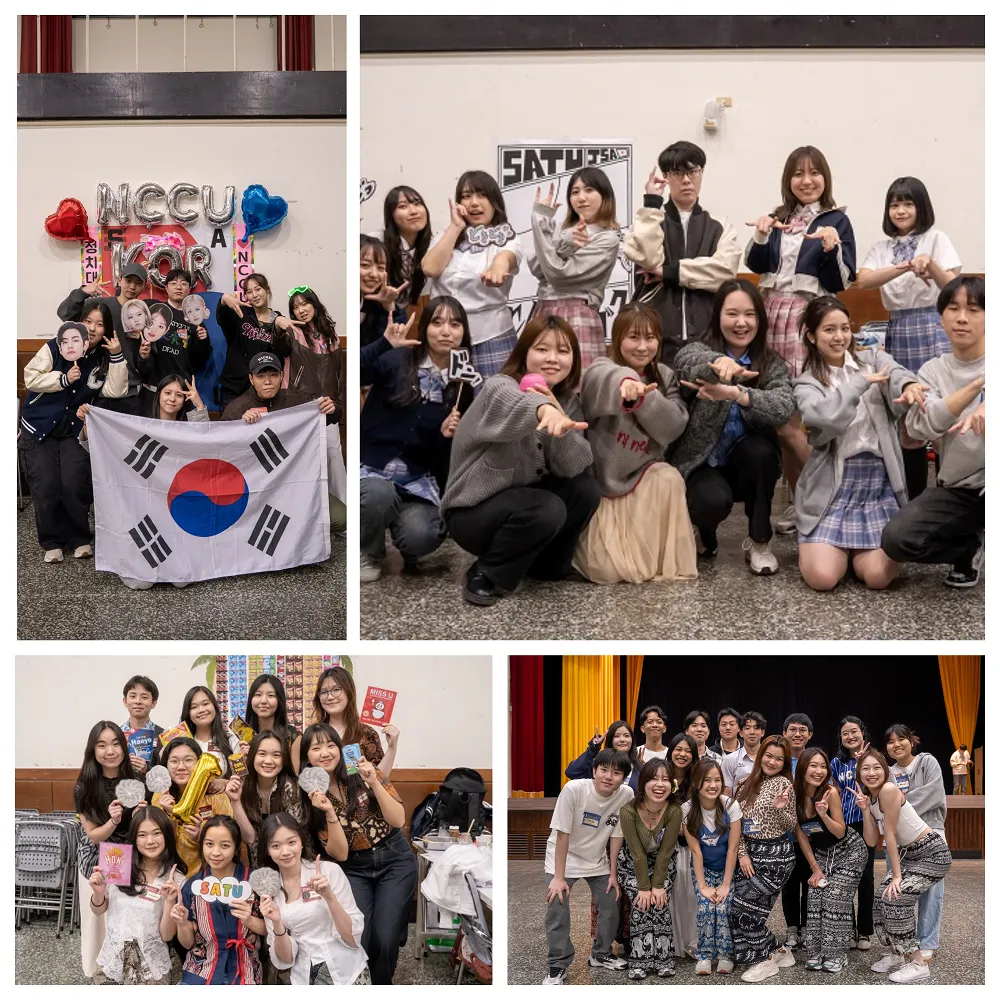
▲ From Korea, Indonesia, Thailand, and Japan—Student Association members pose for a group photo, marking a successful night of cultural exploration and connection.
The artistic exhibition and exchange at Siwei Hall was a resounding success, fostering a sense of global community among students. The event, which highlighted the importance of understanding and celebrating cultural diversity through food, performances, and games, left a lasting impression on all who attended. As students departed with new friendships and cherished memories, the event stood as a testament to the power of cultural exchange in creating a more connected and harmonious campus environment.
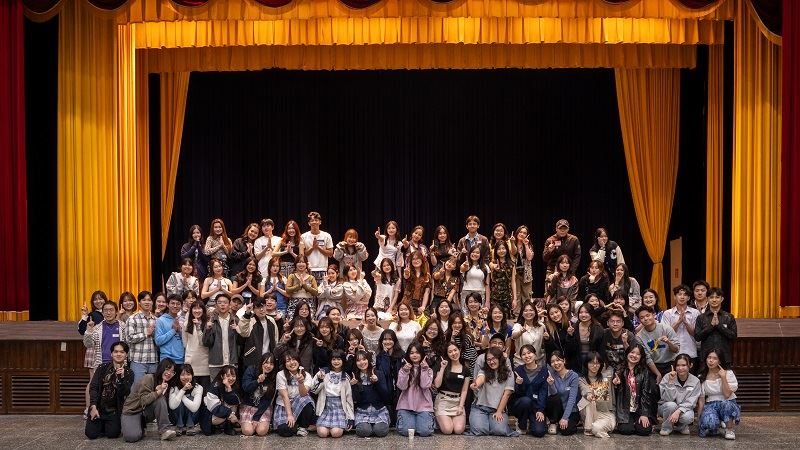
▲A moment of unity—students from Korea, Indonesia, Japan, and Thailand gather for a group photo, celebrating a night of cultural exchange and friendship.
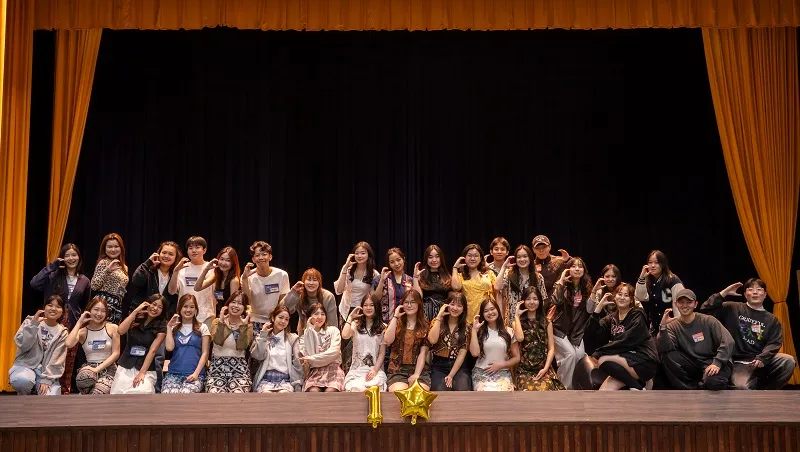
▲ The Student Association members proudly represent their countries, ready to share their culture and traditions with their fellow students.