By Montana Meeker
A History of Service
On December 7th, twenty-two international students and faculty members from NCCU traveled to volunteer at Guandu Nature Park for the “ESG in Action” event sponsored by the International Master’s Program in Applied Economics and Social Development (IMES). This event was led by Professor Alicia Say alongside IMES Program staff and the IMES Student Council. However, this is not the first time that NCCU international students have volunteered at Guandu. When Professor Alicia Say was herself a student in the International Master’s in Business Administration program at NCCU (IMBA), she came to the park to volunteer. Professor Say shared: “Twenty years ago, I was the President of the IMBA Student Council, and I organized a group of student volunteers to come to Guandu Nature Park and volunteer. Together, we built a birdwatching facility. It is a full circle moment for me that today, twenty years later, we are back to help the park once again.”
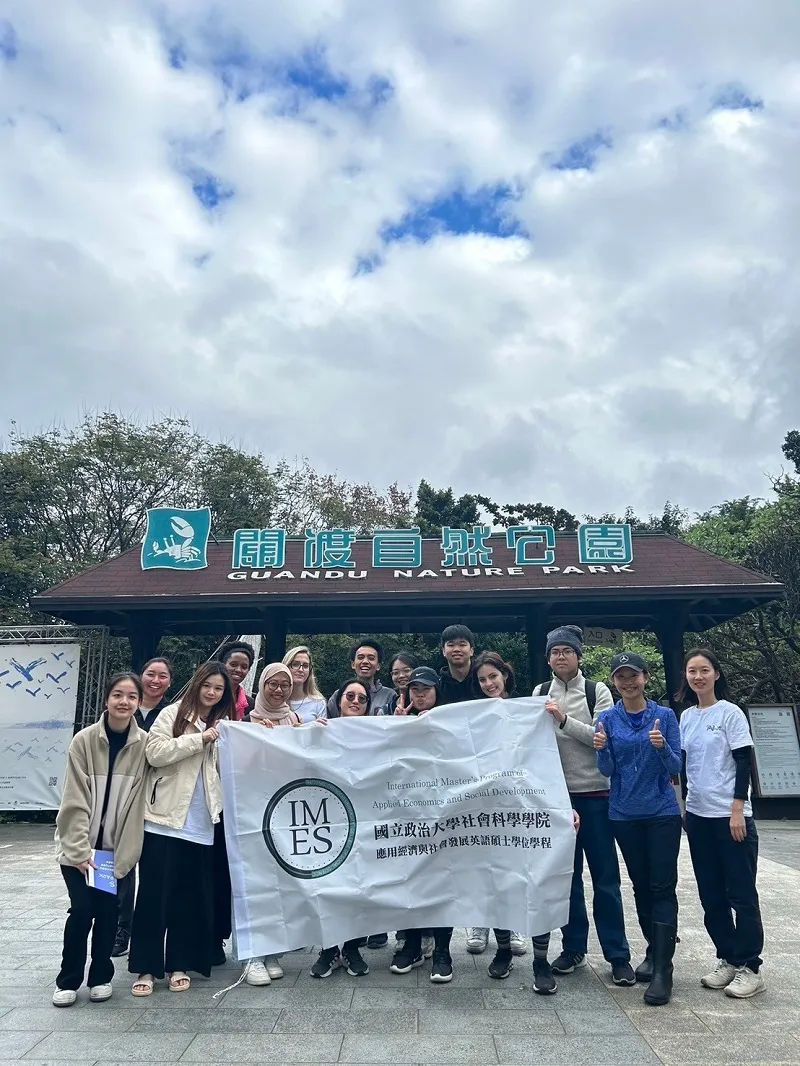
▲NCCU International Students at the Entrance to Guandu Nature Park
Guandu Nature Park: Preservation to Protect the Future
Guandu Nature Park is located southwest of the Guandu Plain in Taipei Basin, where the Keelung River intersects the Tamsui River. When explaining the significance of the park to student volunteers, Professor Alicia Say stated: “This park was developed to protect an area of great ecological significance. Many years ago, developers planned to build on the wetlands that are now enclosed within Guandu Nature Park and the surrounding area. Due to the work of regional activists and government intervention, the park is now a protected region and has been under the care of the Wild Bird Society of Taipei since 2001. If the attempted development had not been stopped, the entire Taipei region would have experienced an overall temperature increase of about one degree celsius.”
Today, Guandu Nature Park is a government-protected nature preserve made up of beautiful ponds, trickling streams, and lush wetlands. Guandu is a major stopover site for migrating birds, especially waterfowls and shorebirds, as well as an important wintering and breeding ground for many species. 283 species of birds have been recorded at Guandu so far, qualifying this wetland as an Important Bird Area (IBA) recognized by the organization BirdLife International[1]. In particular, the park is home to the Black-Winged Stilt, a migratory bird that stops in Taiwan during its annual trek from lands as far as North Korea all the way down to Vietnam and Indonesia. Professor Say shared with students that due to the comfortable environment of Guandu Nature Park, it has become a home year-round for the Black-Winged Stilt, and the birds now nest there. “Guandu Nature Park is like a five-star hotel for the Black-Winged Stilt. This area was preserved in part to protect them as they migrated, and the park did such a good job of that that many of the birds decided not to leave, and raised their families here.” Volunteers of all ages, biologists, ornithologists, and students all work in the park, studying the unique birds, flora, and fauna that live there. During the event, an ornithologist who worked for Guandu Nature Park shared information about the tracking and surveying methodologies used to study different bird types with NCCU student volunteers.
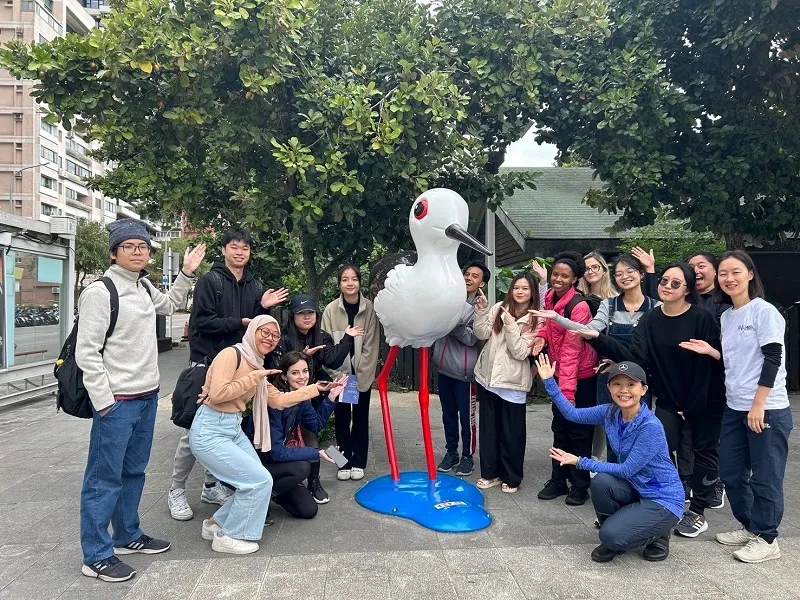
▲NCCU Students Pose with Guandu Nature Park’s Black-Winged Stilt Statue
ESG in Action
After Taiwan experienced an extended typhoon season in 2024, many trees fell within the park, and debris was scattered on trails throughout the preserve. While typhoon cleanup efforts have been underway for the past few weeks, there were still many areas of the park that required clearing and maintenance. NCCU volunteers chopped, dismantled, transported, and disposed of six trees that had fallen on trail pathways within the park. Volunteers formed assembly lines and passed heavy branches down the trail, loaded logs into carts and cleared brush. Dismantled limbs were taken to the park’s composting area, where they were carried by volunteers down the hillside and placed onto compost piles. Volunteer Edna Mae Casquero Pastrana of the IMES Program shared her feelings about the work: “After a grueling semester, helping with these challenging and enjoyable tasks was a chance to feel like I was useful to the environment. It was nice to be a part of something larger than myself and my individual professional and academic contributions.”
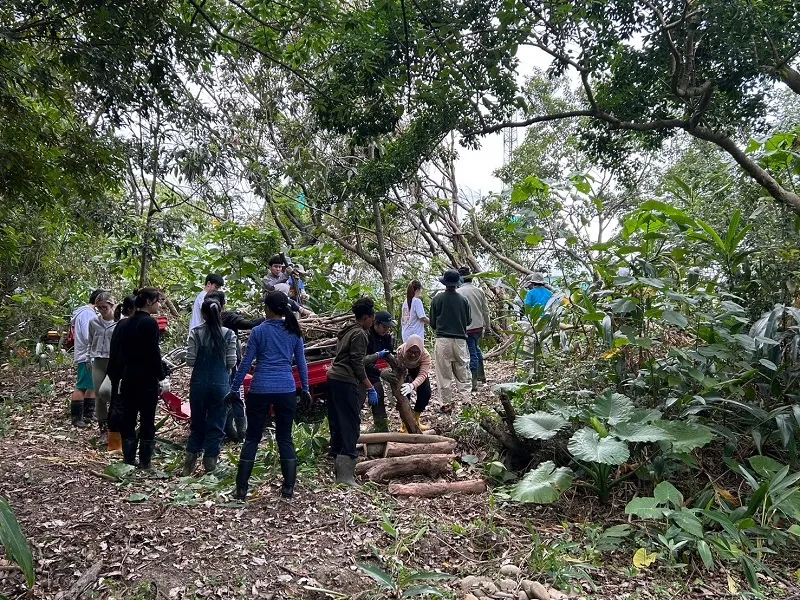
▲NCCU students cleared six fallen trees from the trails in Guandu Nature Park
The increased rainfall from the typhoons also led to overgrowth of certain invasive species on the park’s forest floor. NCCU student volunteers worked to identify and remove arrowhead plants choking the growth of native underbrush. Students filled multiple bags with extracted weeds, clearing the way for local plants to regain space and regrow. Guandu staff biologists worked alongside students to guide volunteer efforts and ensure that only invasive species were removed.
Making New Friends and Working Together in the Holiday Spirit
The event was attended by students from a diverse range of international programs at NCCU, and multiple countries and academic backgrounds were represented among the volunteers. This provided a unique opportunity for attendees to meet new people and befriend classmates from different disciplines. Student organizer and Vice President of the IMES Student Council Shania Karunacantika said of her experience: “For me, this ESG event was very meaningful. I felt like I contributed something good to nature while enjoying an outdoor workout with fresh air and green scenery. I personally really enjoyed the time we spent [at Guandu Nature Park], and the weather was perfect for outdoor activities. It’s been a long time since I have had this kind of experience, so it definitely refreshed my mind! I’d love to join this kind of event again if I had the opportunity.” Aswini Kumar, a doctoral student in the IDAS program, agreed: “Indeed, [this event] was a great therapeutic activity for a mentally exhausted PhD candidate. Connecting with nature is always the best fuel, and heals our soul. After all, we are social animals who need a sense of connectedness! We take care of our humble souls together with beautiful nature. We should initiate these activities more often for both our physical and mental health.”
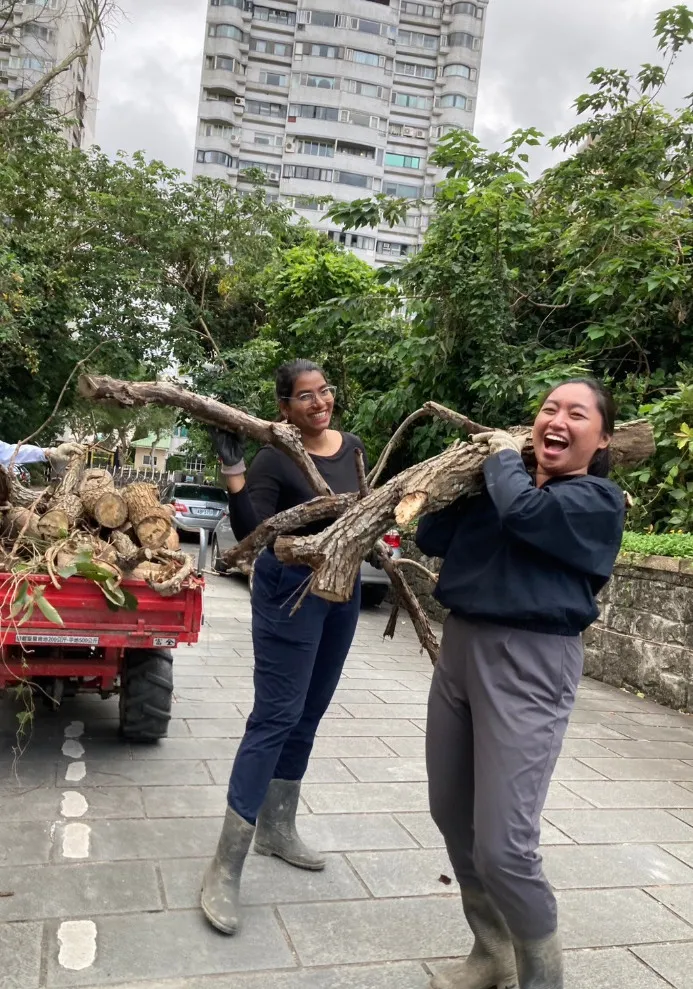
▲Valerie Valenzuela (IMPIS) and Aswini Kumar (IDAS) Disposing of Typhoon Debris
As the event occurred around the advent of the holiday season, students felt the trip was a well-timed opportunity to celebrate the holidays by giving back to the earth and their community. After the trip concluded, Valerie Valenzuela of the International Master’s in Political Science (IMPIS) program at NCCU shared the following sentiments about her experience: “This initiative beautifully embodied the [holiday] spirit of giving and reminded us of the joy that comes from working together for a good cause. The friendliness and helpfulness of my fellow volunteers made [my] experience not only productive but also enjoyable. Their positive energy contributed greatly to the success of the activity, [and] I truly hope to be of service again in the future.”
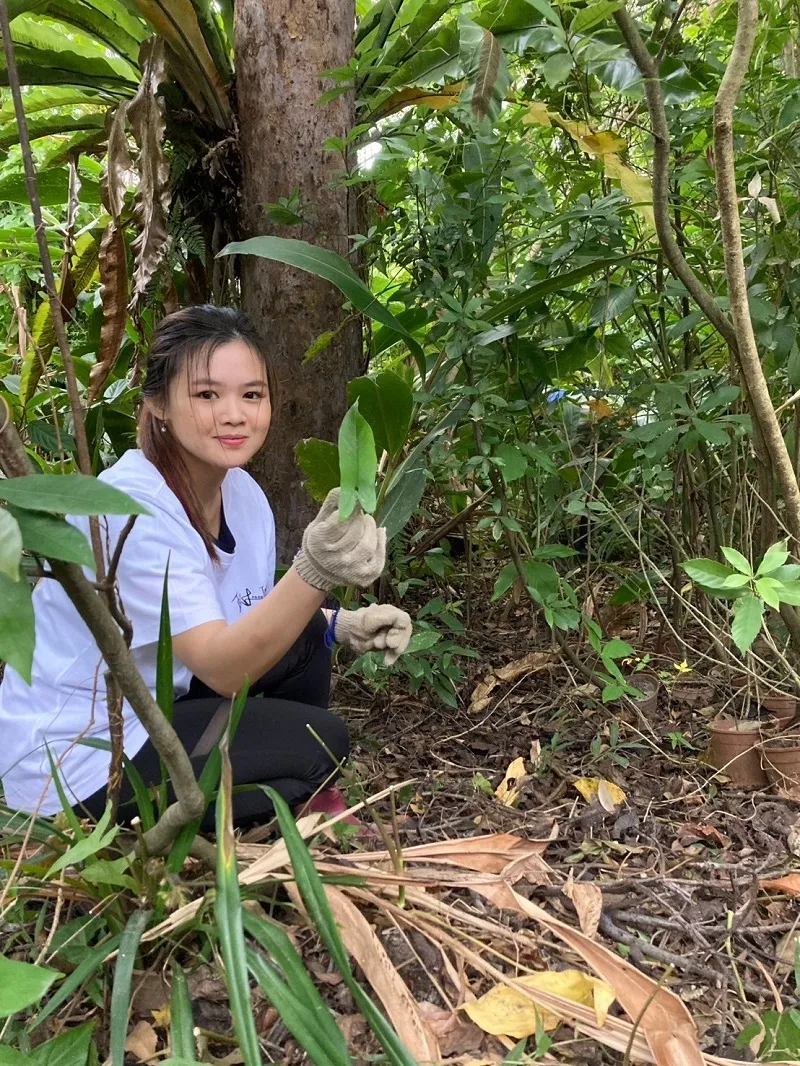
▲Shania Karunacantika (IMES) shows an example of an invasive arrowhead plant
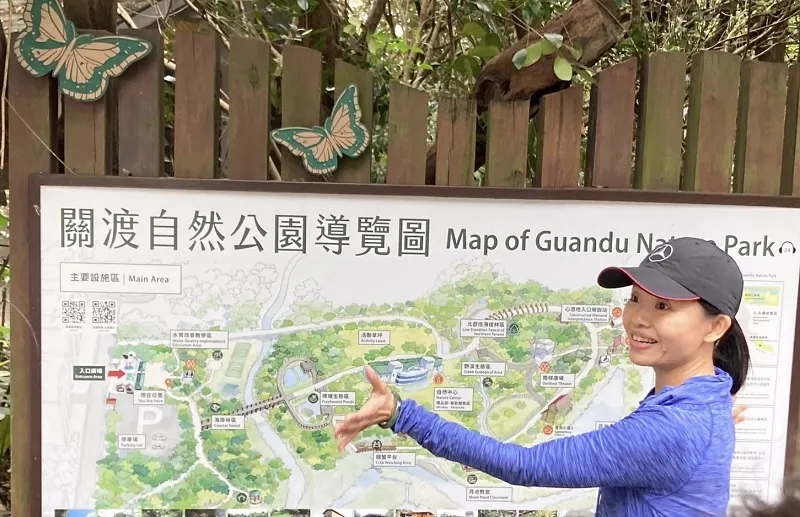
▲Professor Alicia Say (IMES) Introduces Students to Guandu Nature Park