by Kaitlyn Crosby
This past October, Taiwan hosted its 22nd annual LGBT Pride Parade. As one of Taiwan’s most notable events, the parade brings in thousands of people domestically and internationally to take part in celebrating the nation’s LGBTQ+ community. This year’s pride saw a massive turnout, including several NCCU students. NCCU Gender Studies Club (NCCU Lu Ren Jia Gender Research Institute) went as a representative of the university and took part in the parade.
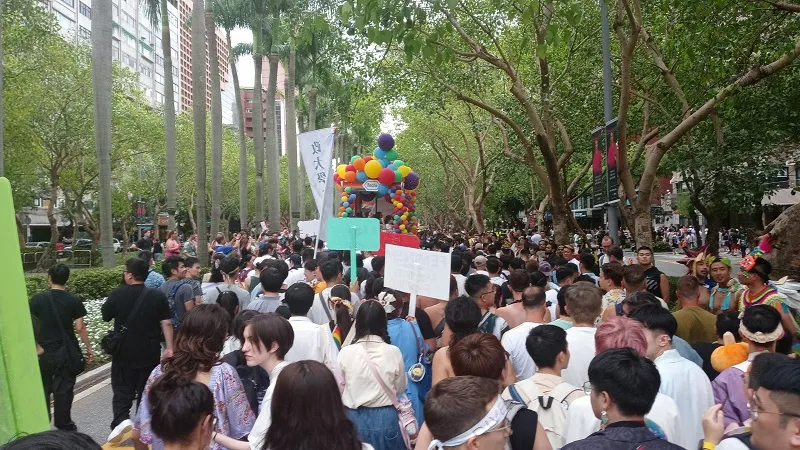
▲NCCU Gender Studies Club (LRJ) at Pride
On Saturday, students took the bus from campus to Taipei City Hall before heading to the parade assembly point in front of the main stage. A multitude of organizations and nonprofits held booths along the entrance, including Taiwan Love & Hope Association and Amnesty International. Other regional organizations were in attendance such as Kyushu Rainbow Pride from Japan. Attendees waved their rainbow flags, drag queens walked the grounds with dazzling makeup, and musicians and organizations took to the main stage- serenading the crowd or sharing information on resources for the queer community. At 2 pm, the parade march commenced, where parade floats blasted music to an energetic crowd. The NCCU gender studies club held its banner high while marching down the packed streets.
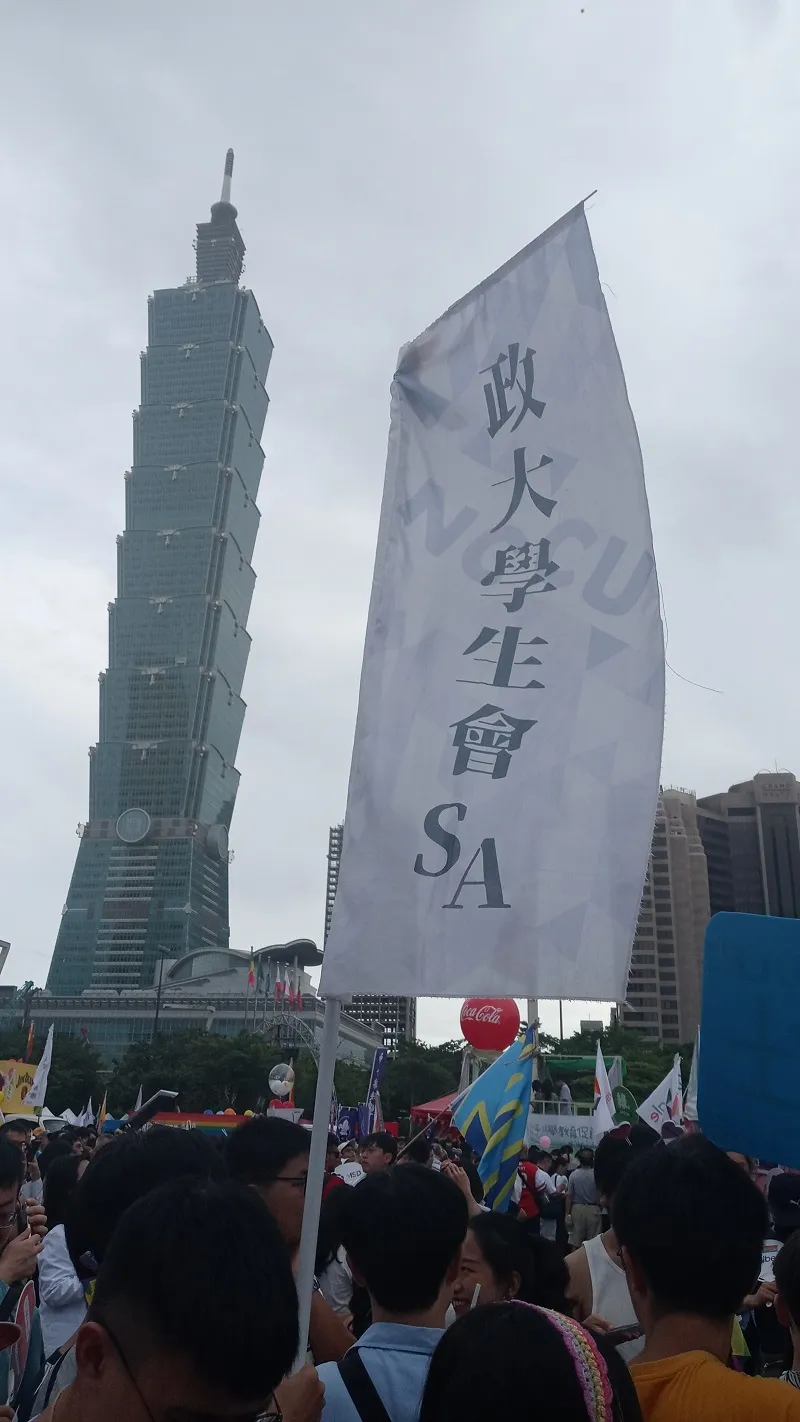
▲NCCU LRJ’s banner next to Taipei 101
As the parade walked and waved past people lining the sidewalks, the sight of various groups represented in the crowd highlighted how diverse Taiwan’s pride has become over the years. As one of the first countries in Asia to legalize same-sex marriage, Taiwan became a travel destination spot for LGBTQ around the world, but also a hub for those to feel free in expressing their queer identity. International student “Pax” mentioned, “I really enjoyed seeing the diversity of people here, whether that be nationality or also age. Seeing some young children with some older folks just really shows the wide range of people who support pride”. Robby, a 1st-year international master’s student in Asian Studies, highlighted similar sentiments, “given Taiwan’s history and location, I found this year’s pride to be diverse and was happy to see people from around the world. It is obvious that Taipei is becoming an international city and I hope in the future Taiwan can continue its role as a haven for the LGBTQ+ community”.
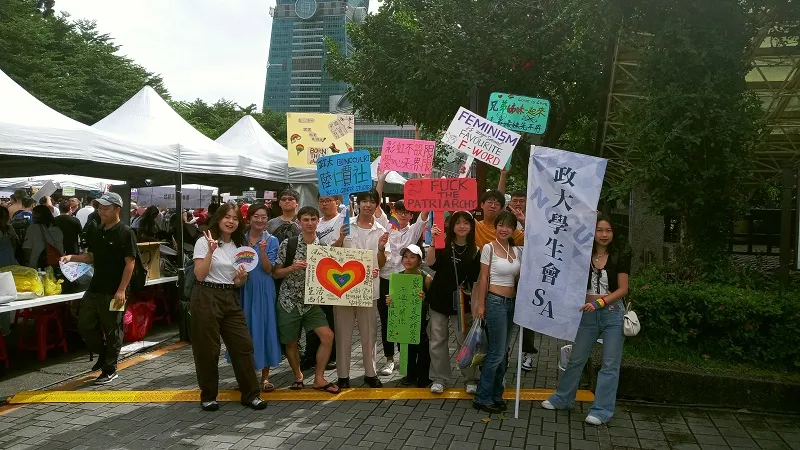
▲The Pride March
This year’s tagline for pride was “Embracing Inclusion”- a message that was seen physically in the parade’s promotion but also socially which can be seen through the conversations about protecting migrant workers and signs promoting queer solidarity with other social movements. There was also a notable representation of queer minorities. Seeing those in the crowd with asexual flags and Taiwan’s Aromantic Group speaking to the crowd aided in the message of inclusion for this year’s pride.
The parade regrouped back at Taipei City Hall Plaza, where the sun finally poked through the clouds and more musical performances took place to greet weary yet excited parade goers. While pride had come to an end, there was still a sense of comfort in being alongside fellow LGBTQ+ friends and allies. “I still want to find even more queer community,” Pax had said towards the end of the parade, “That’s part of what motivated me to want to come to Pride and just feel the general energy of more folks who support Pride in the city”.
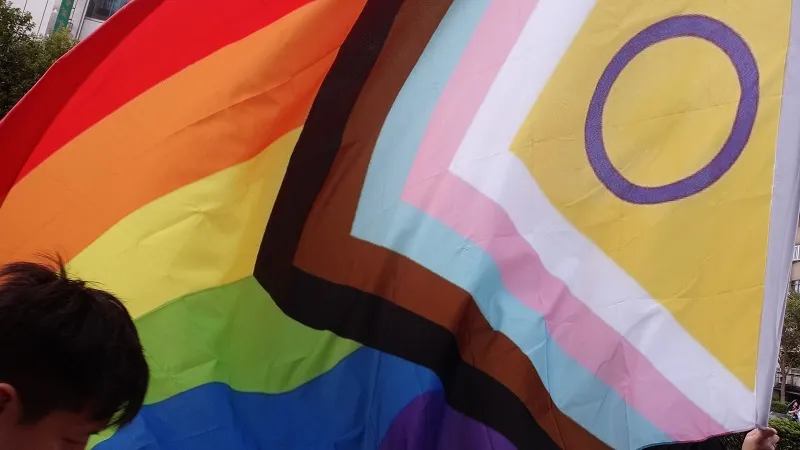
▲The Pride flag
Taiwan’s efforts in creating a safe space outside of pride are apparent not only in the dozens of queer advocacy groups and queer spaces but also in the ability for those to simply exist. Julia, a 2nd year master’s student in Communication Studies says that she feels comfortable here in Taiwan. “I also definitely don’t feel uncomfortable on campus, I don’t feel like talking about my identity when it comes up in conversations is something that is not welcomed”.
“I have felt comfortable expressing myself and am happy that me and others I care about can express ourselves as well.” Robby says, “I plan to continue taking part in the activities organized by the university’s LGBTQ+ club”.
NCCU and Taiwan have created a space where queerness can exist in public. Where same-sex relationships and gender orientation aren’t scrutinized. While conflict and prejudices still exist toward the LGBTQ+, Taiwan has shown its willingness to solve these issues and even strives to create a more inclusive community.