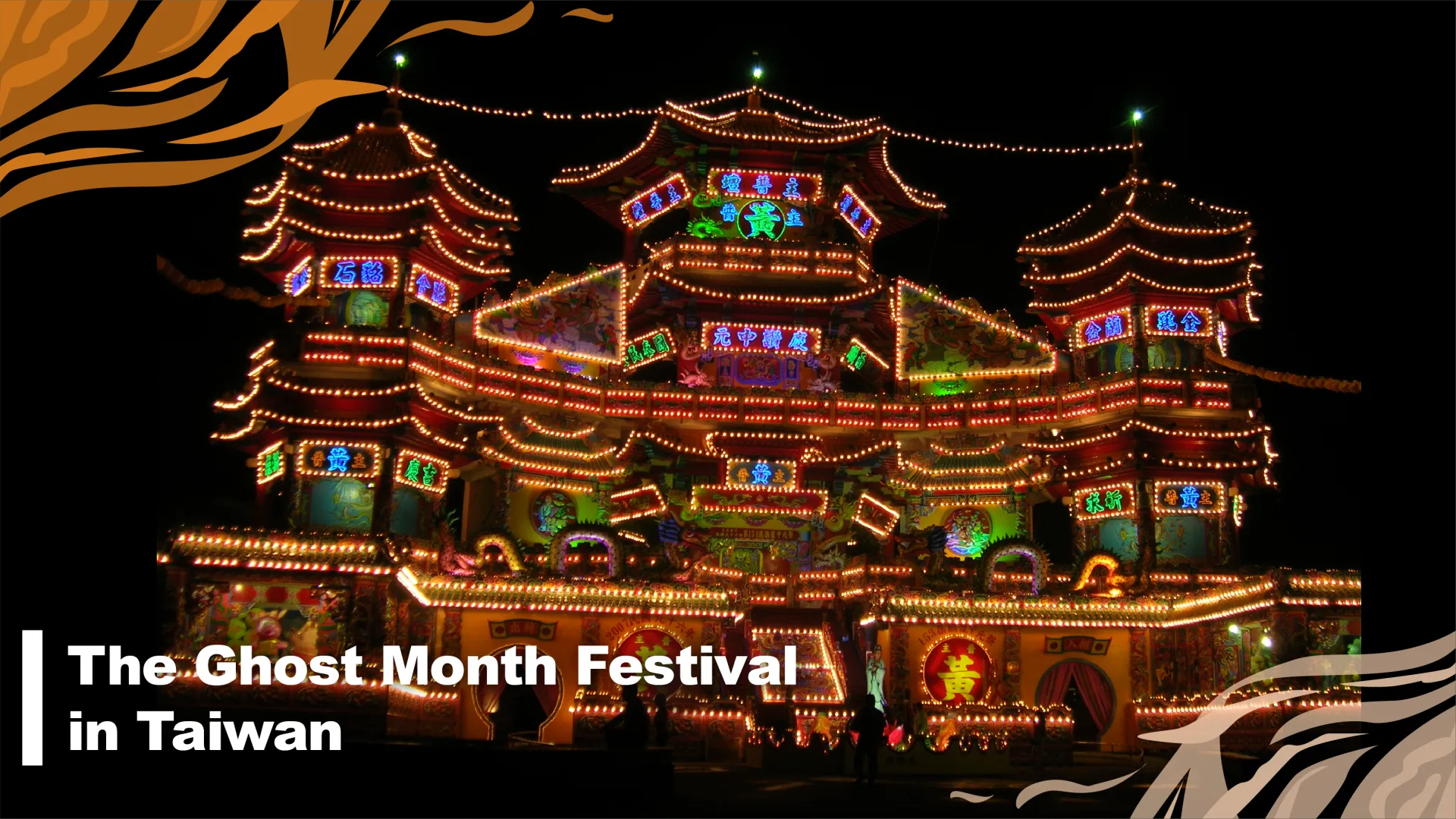
By Isis Calderon
The Ghost Month Festival is a fascinating aspect of Taiwan's rich cultural heritage, blending together various religious and cultural motifs. This month-long tradition, which has deep roots in longstanding practices, provides meaningful insight into the intricate beliefs and customs that shape Taiwanese society.
Understanding the Ghost Month Festival holds particular significance for the community of foreign students. As we engage with Taiwanese society, gaining insights into its cultural and religious practices becomes an avenue to foster cross-cultural understanding and appreciation. By delving into the customs that underpin this festival, we not only expand our knowledge but also enrich our experience as residents of this diverse and dynamic nation.
In line with the Chinese lunar calendar, the entirety of the seventh month bears the name "Ghost Month." In the year 2023, as per the Gregorian calendar, this intriguing span is set to commence around August 16 and conclude near September 14. This temporal alignment provides a unique opportunity for us, as foreign students, to delve deeper into the cultural tapestry of Taiwan and embrace the essence of the Ghost Month Festival.
Origins and Significance:
This core belief mirrors analogous celebrations across the globe, such as the renowned "Dia de los Muertos" or "Day of the Dead" observed in Mexican culture. Just as the Ghost Month Festival bridges the gap between the living and the spirit world in Taiwan, El Dia de los Muertos serves as a poignant juncture where the departed are welcomed back to the realm of the living, reuniting families and communities in a shared remembrance of loved ones.
Cultural and Religious Practices:
Central to the Ghost Month Festival is the practice of erecting intricate altars adorned with an array of offerings. These offerings are intended to appease and honor the spirits of departed kin, serving as a conduit to the afterlife. The meticulously prepared feast often includes sumptuous dishes that were favorites of the deceased, along with symbolic paper money known as “ghost money”.

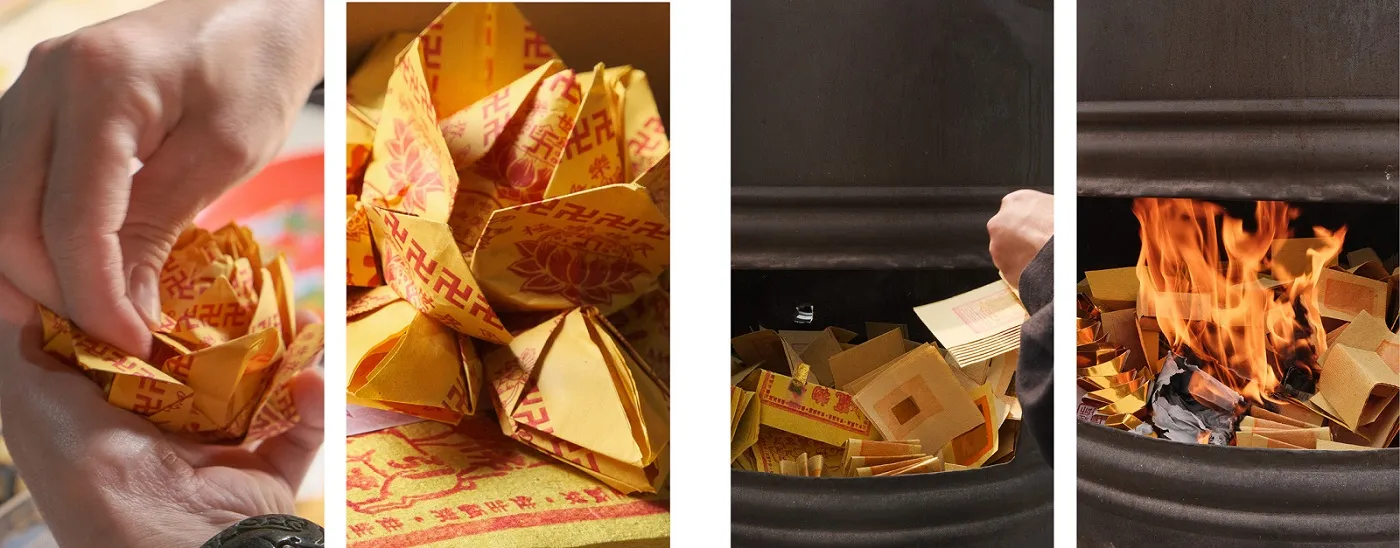
▲Folding and burning of paper money. Photos: Isis Calderon
The carefully arranged feast often includes delicious dishes that were loved by those who have passed away, along with the burning of special paper money called “ghost money.” This symbolic currency is considered the official money in the world after death.
Family members who are still alive give these special paper notes to their ancestors who have passed away. This ritual is done to try and please Yanluo, an important figure in Chinese stories and beliefs. Yanluo is thought to be the ruler of the land of the dead, and he has the authority to decide what happens to souls when they leave the world of the living. By offering ghost money, families hope to make things easier for their ancestors in the afterlife, or even to help them avoid any troubles or punishments. It's like giving them a way to have a more comfortable life in a world beyond our own.
This practice of using ghost money to appeal to Yanluo connects with similar ideas found in different cultures. In Greek stories, Hades has a similar role as the ruler of the afterlife, and in Egyptian stories, Osiris plays a similar part. Giving ghost money is a way that people show their deep beliefs and the importance of honoring their ancestors, a tradition that resonates across many different societies and histories.
Moreover, during the Ghost Month Festival, people come together near rivers, lakes, temples, and open areas to create a magical scene. They light up the surroundings with many lanterns that flicker like stars, and the air is filled with the pleasant smell of incense. This incredible sight is thought to help lost spirits find their way back to their home in the spirit world. It's like a bridge between our everyday world and the mysterious realm of spirits, bringing a unique feeling to the air that's both earthly and otherworldly.
Another meaningful aspect of the Ghost Month Festival involves showing compassion to spirits that have been forgotten. Through gestures of kindness, like adopting these forgotten entities or orchestrating dedicated ceremonies in their honor, the festival underscores the profound values of ancestors, memory, and paying respects. These principles lie at the core of Taiwanese society, encapsulating the essence of unity and shared responsibility within the community.
During the Ghost Month, a series of customs and traditions shape how the living engage and move through this period. While some elders may hold these rules more closely, it's essential to comprehend their origins. Here are some of the customs and social cues observed during this period:
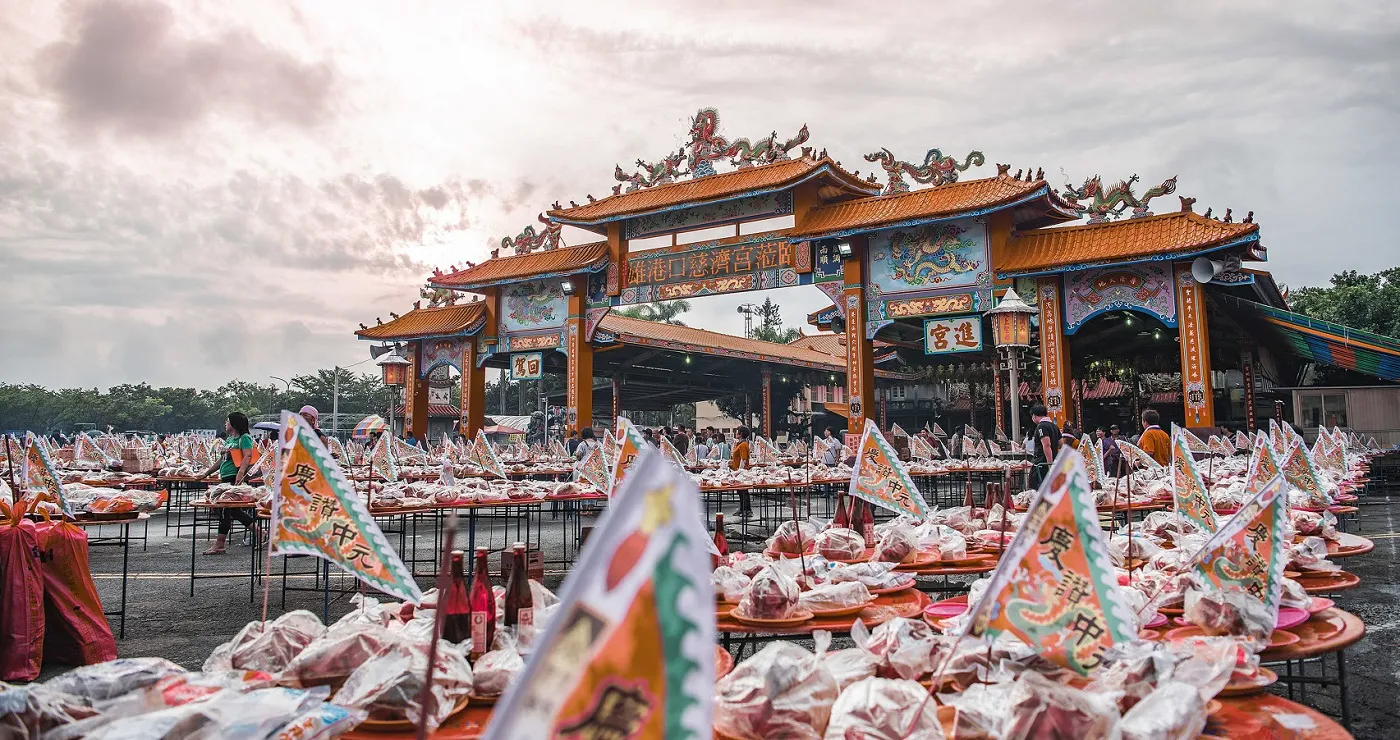

▲Celebration of Ghost Month Festival. Wide arrange of offerings can be observed.
Cautious Around Water: Swimming and water-related activities are usually put on hold during this time. The belief is that hidden spirits below the water's surface might take advantage and unexpectedly grab people.
Nighttime Quiet: Whistling is kept hushed after dark. It's believed that the sound of whistling could draw wandering spirits and encourage them to come closer, something that's best avoided.
Dusk's Caution: As the sun bids farewell and twilight descends, an unspoken curfew gently settles in. People tend to head back home before nightfall, wary of any potentially malevolent spirits that could emerge under the shroud of darkness. After sunset, it is believed that ghosts gain strength, fueled by the yin energy from the moon, making it wise to be safely indoors before the sun disappears.
Respectful Manners: During Ghost Month, people follow polite ways. Hugs and kisses are kept quiet, and saying bad things about those who passed away is not nice during this special time. According to a Chinese story, we all have invisible flames on our shoulders that protect us from bad spirits. So, it's better not to get too touchy with your friends and avoid touching their shoulders, because it might put out their protective flames.
The Ghost Month Festival weaves beliefs, spirituality, and social rituals into a beautiful weaving that is imprinted in Taiwanese culture. Through complex rituals, this ancient tradition links the spirits of the deceased and the living. Discovering the cultural and theological significance of this festival allows us to understand more of the world around us in Taiwan during this time.

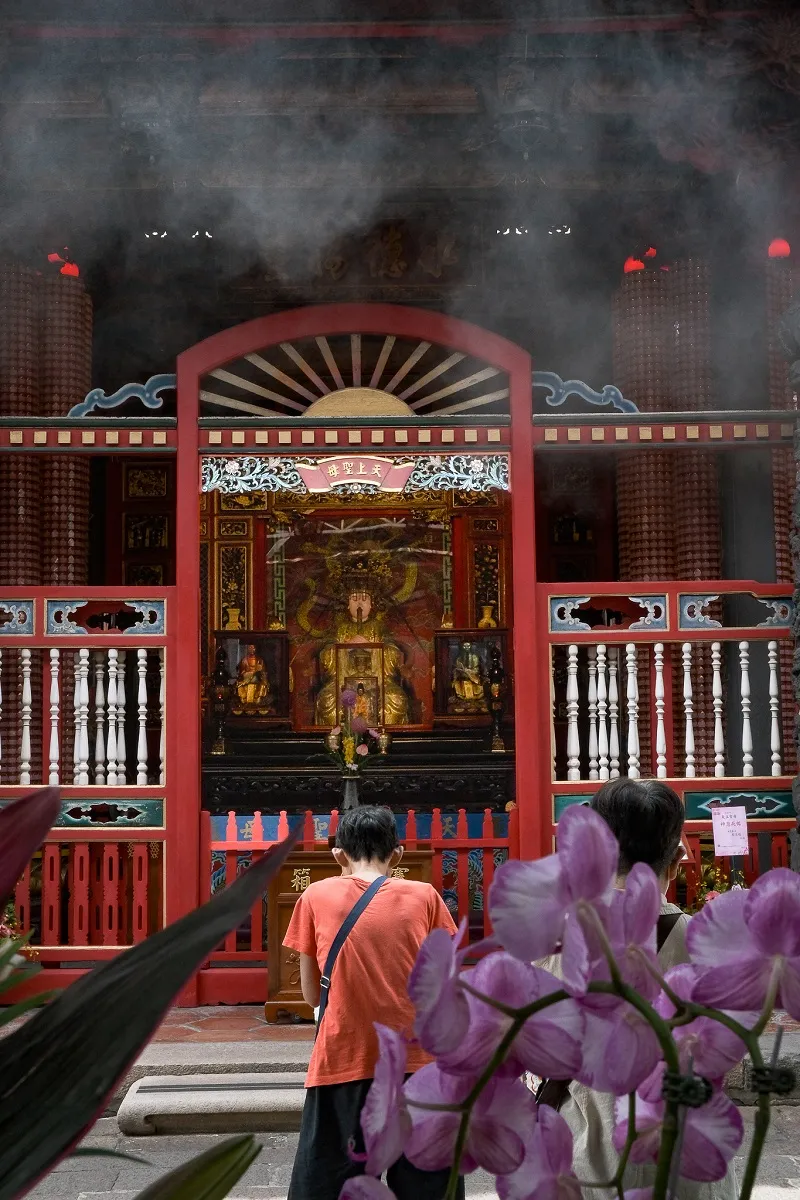
▲A person pays their respects in Longshan Temple during the Ghost Month Festival. Photo: Isis Calderon
Understanding the Ghost Month Festival enables students to appreciate the profound connections Taiwanese people have between the living and their ancestors, the significance of ancestor worship, and the role of spirituality in shaping society. Moreover, this festival showcases the value of unity, collective responsibility, and respect for the departed, serving as a bridge that connects generations and instills a deeper appreciation for cultural heritage.
If you would like to delve deeper into this important cultural and religious festival, make sure not to miss the 2023 Keelung Mid-Summer Ghost Festival - renowned as one of the grandest celebrations of its time, this festival has been officially designated as one of the 12 major festivals by the Tourism Bureau. Spanning approximately a month, the festival hosts daily ceremonies with immense historical and folk cultural significance. It is a great opportunity to get familiarized with many of the rituals done during this time.
Thank you for reading, and don’t forget to share the social cues during this period with your friends!